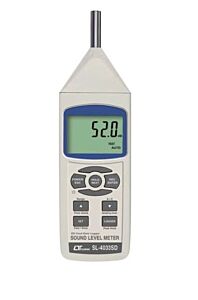
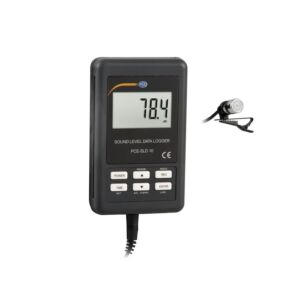
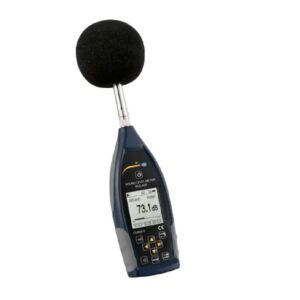
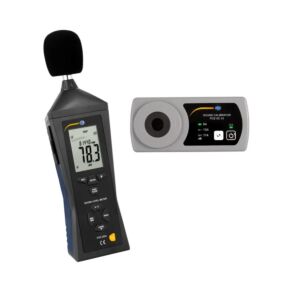
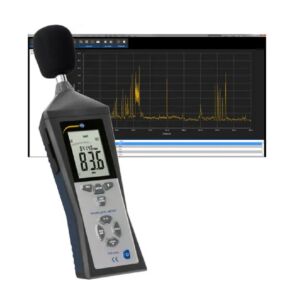
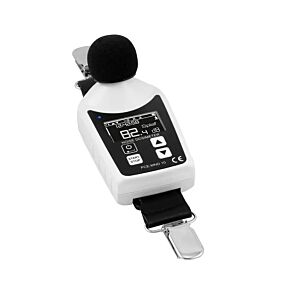
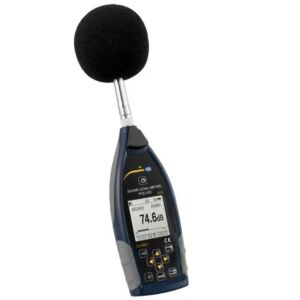
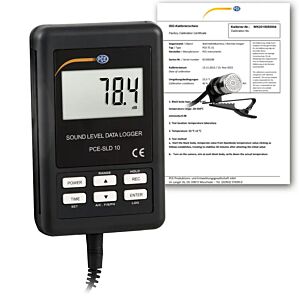
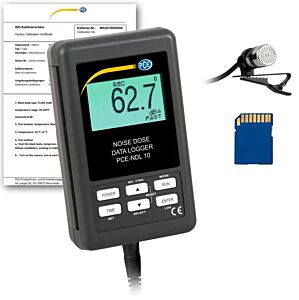
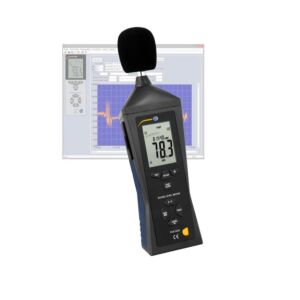
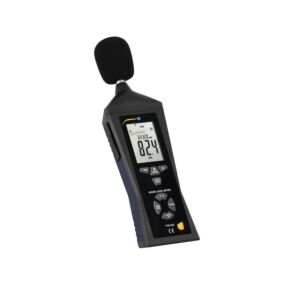
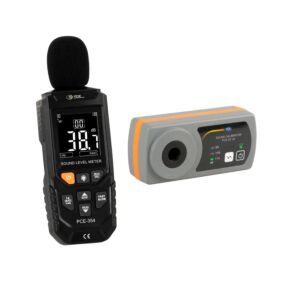
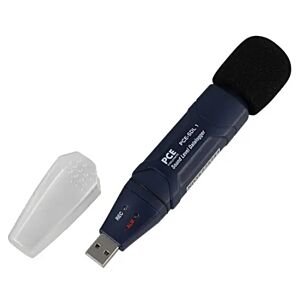
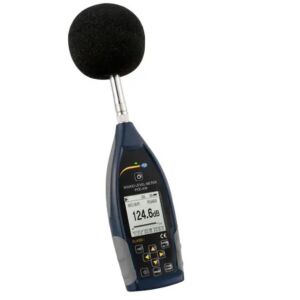
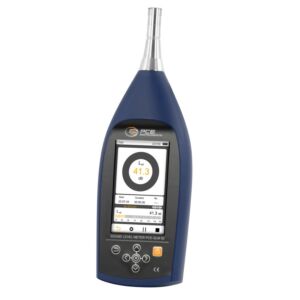
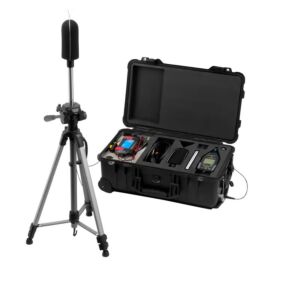
Noise data loggers, sound level recorders, acoustic kits and noise analyzers are professional instruments designed to measure, record and analyze noise over time, providing a much more complete view than a simple instantaneous sound level reading. This category includes devices for environmental and industrial noise monitoring, portable instruments with internal memory, sound level meters with data logging functions, data loggers with analogue or digital output, complete kits for long-term outdoor measurements, analyzers with dedicated software and systems equipped with accessories for continuous monitoring in workplaces, production departments, construction sites, laboratories and HSE applications.
A professional sound level recorder allows sound pressure level to be acquired continuously or according to a programmed interval, storing the measured values for later technical analysis. Unlike a basic decibel meter, which is mainly used for quick checks, an acoustic data logger makes it possible to observe noise trends during a production cycle, a work shift, a test phase, a maintenance operation or long-term environmental monitoring. This function is especially useful when noise is not constant, when sudden peaks occur, when operator exposure needs to be documented or when different operating conditions must be compared over time.
The instruments in this category may include several technical functions, such as A, C or Z frequency weighting, FAST, SLOW and Impulse time response, MIN/MAX recording, HOLD function, SD card storage, USB connection, analysis software interface, 4-20 mA output, backlit display, external microphones, tripods, carrying cases, acoustic calibrators and calibration certificates when available. A-weighting is used to evaluate noise in relation to human hearing and occupational exposure control, C-weighting is useful for high levels, impulsive noise and more technical analysis, while Z-weighting provides a more linear reading of the acoustic signal. The correct instrument depends on the type of measurement, monitoring duration, required accuracy, data storage needs and required level of documentation.
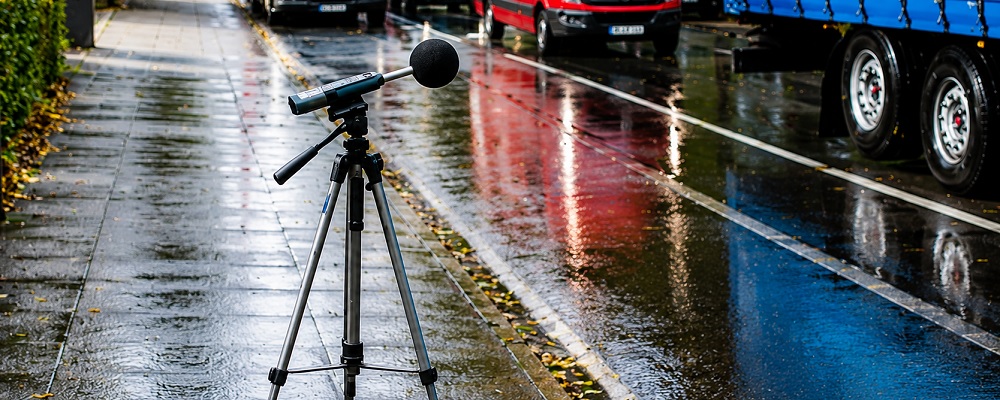
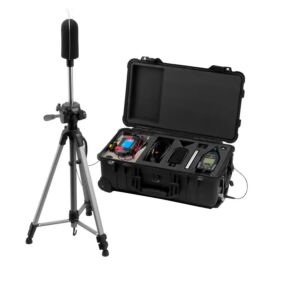
Acoustic kits are particularly suitable when measurements must be structured, repeatable and professional. A kit may include a sound level meter, calibrator, microphone, windscreen, tripod, technical case, power supply and analysis software. This configuration is useful for outdoor measurements, construction site checks, traffic monitoring, industrial noise assessment, plant inspections, machine checks, production departments and workplaces where the instrument must remain stable, protected and correctly positioned. The use of a tripod, for example, helps maintain a constant measurement height and reduces the influence of the operator on the result, improving repeatability.
In industrial applications, noise data loggers and noise analyzers are used to monitor machine tools, compressors, pumps, motors, fans, extraction systems, presses, automated plants, gearboxes, transmissions, pneumatic tools, production lines and environments where noise is an important parameter for safety, comfort, quality and maintenance. Recording noise over time makes it possible to identify progressive changes, intermittent anomalies, peaks during specific work phases and conditions that would be difficult to detect with a single instantaneous measurement. In maintenance activities, an abnormal increase in sound level or a change in the acoustic profile may indicate vibration, transmission play, misalignment, friction, bearing wear, lubrication problems or mechanical imbalance.
To obtain reliable results, an acoustic data logger must be used with a correct measurement procedure. The instrument should be positioned at the appropriate distance from the sound source, oriented according to the manufacturer’s instructions, protected from wind and impacts and kept stable throughout the recording period. It is advisable to always record the measurement point, microphone height, acquisition duration, machine operating condition, production cycle, background noise and any environmental variation. When comparing data recorded on different days or after maintenance work, the same measurement configuration should be maintained, because distance, orientation, reflective surfaces, background noise and instrument position can significantly affect the result.
Accuracy and resolution are essential parameters when selecting a sound level recorder or noise analyzer. Good resolution allows small sound level variations to be observed, while instrument accuracy determines the reliability of the recorded data. For professional applications it is also important to evaluate the dB measuring range, frequency response, instrument class, available memory, sampling rate, battery life, software compatibility, data export options and the possible presence of ISO calibration. In laboratories, HSE checks and environmental assessments, measurement traceability and calibration are essential for producing repeatable, comparable and technically usable data.
It is important to distinguish acoustic measurement from other technical inspections. A noise analyzer does not directly measure heights, dimensional clearances, shape errors or geometric deviations, which require dedicated metrology instruments such as calipers, dial indicators, height gauges, roughness testers or coordinate measuring systems. However, recorded noise can be a very useful indirect indicator for detecting abnormal operating conditions. In mechanical systems, gearboxes and transmissions, a change in sound level can reveal play, impacts, vibration, incorrect contact or wear, giving technicians an initial signal for further investigation with specific diagnostic tools.
For Tadaah, this category represents a selection of professional measuring instruments for companies, technicians and engineers who need to measure noise reliably, record data over time and turn acoustic measurement into useful technical information. From quick workshop checks to long-term monitoring in industrial or outdoor environments, noise data loggers, sound level recorders, acoustic kits and noise analyzers help document sound conditions, improve safety, support preventive maintenance, verify the effectiveness of soundproofing measures and provide objective data to technicians, consultants and quality managers.