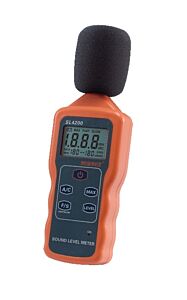
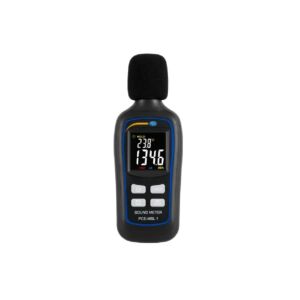
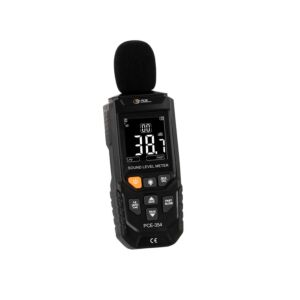
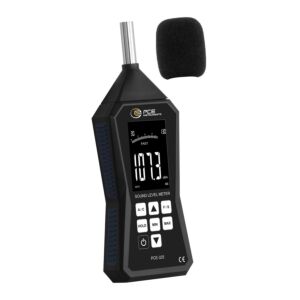
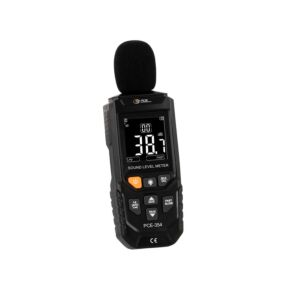
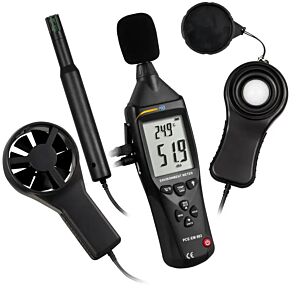
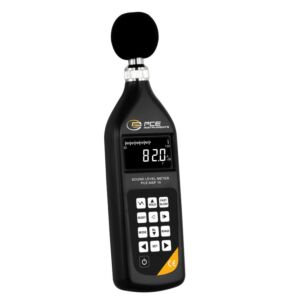
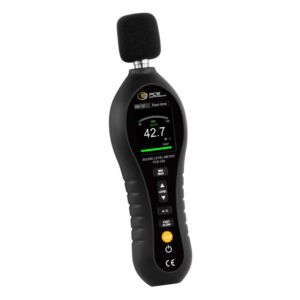
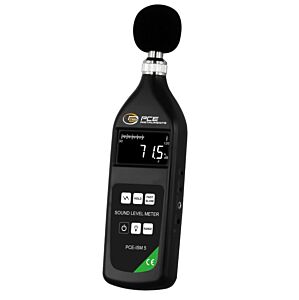
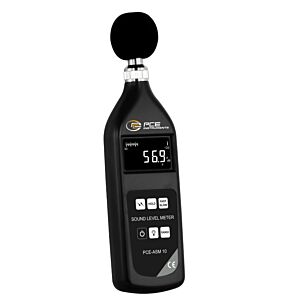
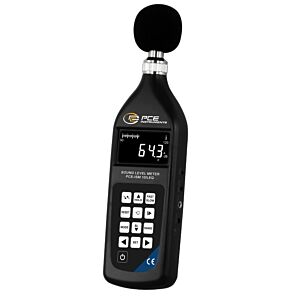
Sound level meters, decibel meters and noise analyzers are professional instruments used to measure, monitor and document noise levels in workplaces, laboratories, workshops, production departments, construction sites, technical plants and all environments where acoustic control is important for safety, quality and operational compliance. This category includes instruments for quick dB checks as well as more advanced devices for detailed environmental and industrial noise analysis, with functions for data logging, peak evaluation, exposure limit assessment and continuous acoustic monitoring.
A professional sound level meter measures the sound pressure level generated by machines, motors, compressors, ventilation systems, tools, production lines, workplaces or specific noise sources. Basic models are suitable for immediate checks and comparative measurements, while more advanced instruments can include A, C or Z frequency weighting, FAST and SLOW response, MIN/MAX storage, HOLD function, data logging, time-based analysis, data interfaces and, in some cases, complete kits with acoustic calibrators. A-weighting is commonly used to evaluate noise as perceived by the human ear and for occupational safety checks, while C-weighting is often used for impulsive noise, high sound levels and more technical analysis of noise sources. Z-weighting, when available, provides a more linear and unfiltered reading of the signal.
The choice between a decibel meter, a sound level meter and a noise analyzer depends on the required level of technical detail. A compact decibel meter is suitable for quick checks, preliminary inspections and indicative noise measurements. A class II sound level meter is appropriate for many professional, industrial and HSE applications where reliability, repeatability and complete functions are required. A class I sound level meter or a noise analyzer is preferable when higher accuracy, better instrumental response, more detailed analysis and structured technical documentation are needed. For repeatable and comparable measurements, it is important to check the instrument class, measuring range, resolution, stated accuracy, available frequency weighting and acoustic calibration capability.
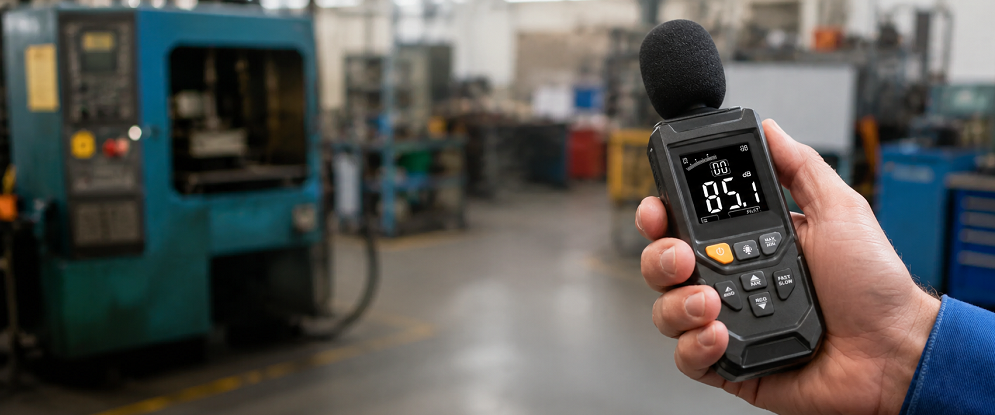
In industrial applications these instruments are used for noise monitoring on machine tools, presses, compressors, pumps, fans, industrial extraction systems, air treatment plants, automated lines, pneumatic tools, electric motors, gearboxes and transmission systems. Noise measurement is not only useful for acoustic comfort or exposure limit verification, but can also provide information about the technical condition of a machine or plant. An abnormal increase in sound level, a change in tone, an impulsive peak or intermittent noise may indicate vibration, friction, transmission play, misalignment, worn bearings, lubrication problems, mechanical imbalance or operating defects. For this reason, acoustic monitoring can support preventive and corrective maintenance, especially when combined with vibration, thermal and dimensional checks.
To obtain reliable measurements, the sound level meter must be used correctly. The instrument should be positioned at the appropriate distance from the noise source, oriented according to the manufacturer’s instructions and protected from wind, impacts, acoustic reflections and environmental interference. In industrial environments, it is advisable to take several measurements at different points, compare values under similar operating conditions and always record the instrument position, measurement height, machine operating status, production cycle and measurement duration. When comparing machines, departments or maintenance interventions, the same measurement procedure should be maintained, because changes in distance, orientation, reflective surfaces or background noise can significantly affect the result.
Resolution and accuracy are key selection factors. Fine reading resolution makes it possible to observe even small variations in sound level, while instrument accuracy determines the reliability of the measured value. For professional applications, it is also useful to evaluate the dB measuring range, frequency response, A/C/Z weighting, response time selection, internal memory, PC connection, report generation options and compatibility with acoustic calibrators. In HSE inspections and laboratory work, measurement traceability and calibration are essential for obtaining repeatable, comparable and technically usable data.
Sound level meters and decibel meters are especially useful in production departments, mechanical companies, workshops, test laboratories, automotive plants, industrial facilities, building maintenance, environmental checks and plant inspections. They can be used to measure the noise generated by a single machine, evaluate the overall sound level of a department, compare conditions before and after a soundproofing intervention, check the effectiveness of acoustic barriers, cabins, sound-absorbing panels or extraction systems, and monitor operator exposure during normal working activities.
For Tadaah, this category represents a selection of professional measuring instruments for companies and technicians who need reliable, easy-to-use tools suitable for real measurement conditions. Choosing the correct sound level meter helps improve safety, document acoustic conditions, optimize maintenance and identify abnormal situations more quickly. From quick workshop noise checks to more structured industrial acoustic analysis, these instruments help technicians, engineers and professionals work with objective, repeatable and useful data for accurate technical decisions.