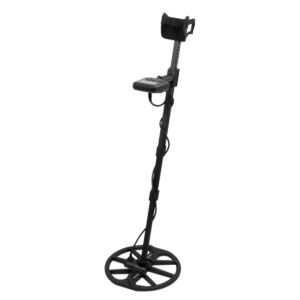
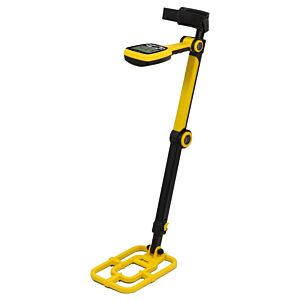
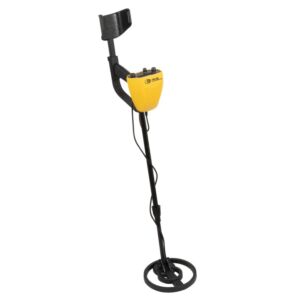
The Metal Detectors category includes professional and technical instruments designed to detect the presence of metal objects hidden in the ground, under surfaces, on construction sites, in industrial areas, outdoor environments, maintenance zones and contexts where ferrous and non-ferrous metals must be located when they are not immediately visible. A metal detector uses a search coil to generate an electromagnetic field and detect variations produced by a metal object. The signal is converted into an acoustic, visual or digital indication, allowing the operator to locate the point where the metal is present and, in more advanced models, obtain useful information about the type of material detected.
These instruments are used for ground searches, preliminary checks in operating areas, technical inspections, maintenance activities, detection of lost metal parts, localisation of buried objects, checks in work areas and situations where the presence of metal is useful information for safety, recovery, analysis or prevention. Depending on the model, a metal detector may include different operating modes, metal discrimination, sensitivity adjustment, material identification, depth indication, acoustic signal, digital display, different coil sizes and functions dedicated to searching on different types of ground.
Correct metal detector operation depends on several technical factors. Detection depth is not a fixed value valid for every object; it varies according to metal size, shape, position in the ground, conductivity, soil mineralisation, humidity, instrument operating frequency, coil diameter and sensitivity setting. A large conductive object can be detected more easily than a small, thin object or one positioned unfavourably. For this reason, the instrument should be selected according to the real application and not only according to the declared maximum depth.
Localisation accuracy depends on signal stability, coil size and scanning method. A larger coil can cover a wider surface and detect deeper objects, but may be less selective when localising small objects or objects close together. A smaller coil allows more precise checking in restricted areas, near obstacles or where several metal signals are present. Resolution, in this context, can be understood as the instrument’s ability to separate nearby signals, distinguish different materials and provide a readable and stable indication to the operator.
Metal detectors with all metal mode are suitable when any type of metal must be detected without exclusion. This mode is useful for general inspections, quick checks and situations where the operator does not want to risk ignoring a metal object. Discrimination functions, on the other hand, allow signals from certain materials to be reduced or excluded, such as small ferrous objects, fragments or metals not relevant to the search. This adjustment is useful when the ground contains many metal residues and the operator needs to focus on more significant signals.
In professional and industrial environments, metal detectors can be used as support tools for preventive and corrective maintenance. On a construction site or technical area, they can help identify buried metal elements, lost objects, hidden components or materials that may interfere with subsequent work. In maintenance activities, they can be useful for locating lost metal parts, checking areas before manual work or inspecting zones where metal presence may create safety, contamination or tool damage problems.
The connection with heights, transmission backlash, form errors and geometry is indirect, but may be relevant in some technical applications. A metal detector does not directly measure heights, mechanical play or geometric errors, but it can help identify hidden metal components that influence the behaviour of a system or structure. In an industrial area, unexpected metal parts may interfere with supports, guideways, surfaces, movements, passages or operations. In maintenance, a lost metal fragment may cause damage, scratches, interference, friction or problems on moving parts. Preventive localisation of these elements therefore contributes to safety and correct technical management of the workplace.
To obtain reliable results, the metal detector must be used with a correct scanning technique. The coil should be kept as parallel to the ground as possible, with regular movement, constant height and overlapping passes. Continuously raising and lowering the coil can affect signal stability and reduce localisation accuracy. It is advisable to proceed slowly, repeat the scan from several directions and verify signals by crossing the detected point. In complex, mineralised ground or areas rich in residues, it may be necessary to reduce sensitivity, adjust discrimination or work more carefully to avoid false signals.
The choice of a metal detector must be based on application, required detection depth, type of metal to be detected, operating frequency, coil size, operating modes, sensitivity, discrimination, weight, ergonomics, autonomy, robustness and ease of use. For simple checks or occasional searches, a compact instrument with basic modes may be sufficient. For more technical applications, a model with several detection modes, material identification, more efficient coil, advanced settings and better signal stability may be more suitable.
Ergonomics is another important aspect. A metal detector is often used for extended periods while moving; therefore weight, balance, handle, shaft adjustment and display readability directly affect work quality. A light and well-adjusted instrument allows the operator to maintain a constant scan, reduce fatigue and improve accuracy. Shaft adjustment is also important to keep the coil at the correct height from the ground and adapt the instrument to the operator’s height.
In quality control, technical laboratories or material inspection environments, metal detectors can be used when the presence of metal elements, contamination, foreign bodies or unexpected parts must be identified. In these cases, the value of the instrument is not only related to ground searching, but also to the ability to quickly identify the presence of metal in an area or on a product. For very specific applications, it is always important to verify that instrument sensitivity is suitable for the minimum size of the object to be detected.
Tadaah presents the Metal Detectors category as a reference for technicians, operators, maintenance specialists, professionals and companies that need portable instruments to detect hidden or buried metals in a practical and reliable way. Choosing the correct product improves inspection effectiveness, reduces search times, prevents interference, supports maintenance activities and makes operating area checks safer. To select the most suitable model, it is advisable to evaluate detection depth, search modes, discrimination, ground type, coil size, sensitivity, ergonomics and real operating conditions.