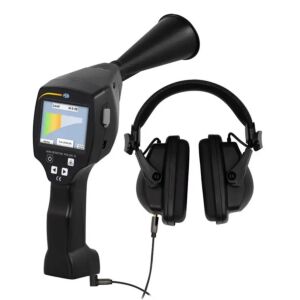
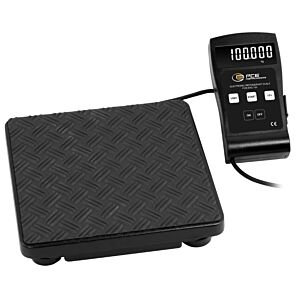
The Refrigerant Gas and HVAC category includes professional instruments designed for installation, maintenance, troubleshooting, recovery, vacuum, pressure control and leak detection on air conditioning systems, refrigeration systems, heat pumps, HVAC systems, refrigerated counters, cold rooms, chillers, technical circuits and machines using refrigerant gases. This category includes leak detectors, digital pressure gauges, manifold gauges, vacuum pumps, refrigerant recovery units, instruments for A1, A2L and A2 gases, connection accessories, filters, hoses and devices required to check refrigeration circuits in a technical, safe and documentable way.
Refrigerant gas and HVAC instruments are used whenever it is necessary to verify whether a system operates under correct conditions. A refrigeration circuit must maintain pressure, temperature, refrigerant charge, vacuum, tightness and heat exchange within values consistent with the gas type, machine and application. A refrigerant leak can reduce system performance, increase energy consumption, trigger protections, damage the compressor and generate environmental or operational non-compliance. Incorrect pressure can indicate insufficient charge, blockages, air in the circuit, saturated filter, incorrect expansion valve, poor heat exchange or mechanical problems.
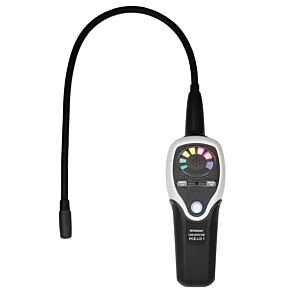
Refrigerant leak detectors are designed to identify leaks on pipes, fittings, evaporators, condensers, valves, compressors, brazed joints, flanges and connection points of the refrigeration circuit. They are especially useful during preventive maintenance, troubleshooting, commissioning after installation or inspection after repair. Adjustable sensitivity allows the instrument to be adapted to the environment and detected concentration, avoiding insignificant readings or difficulty in locating the leak. For reliable results, the probe should be moved slowly along suspected points, air drafts should be avoided and fittings, service valves, joints and vibration-prone areas should be checked carefully.
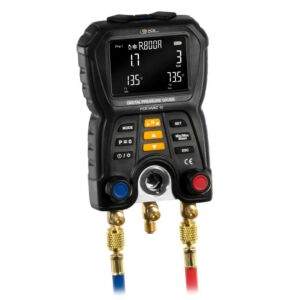
Digital gauges and HVAC manifolds measure pressure, temperature and circuit operating conditions. In refrigeration systems, pressure readings must be interpreted in relation to refrigerant type, ambient temperature, evaporation temperature, condensing temperature, superheat, subcooling and overall system condition. Digital models provide clearer readings, often with dedicated functions for heat pumps, refrigeration and vacuum checks, while traditional manifold gauges remain practical tools for installation and service work.
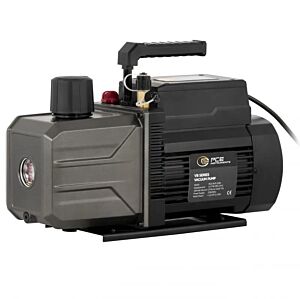
Vacuum pumps are used to evacuate air, moisture and non-condensable gases from the circuit before refrigerant charging. Vacuum is essential because moisture can react with oils and refrigerants, generating acids, ice, corrosion, blockages and compressor damage. A suitable vacuum pump must be selected according to system volume, required vacuum level, flow rate, reliability and compatibility with the job. Before charging, it is good practice to verify vacuum tightness and avoid evacuation that is too fast or superficial.
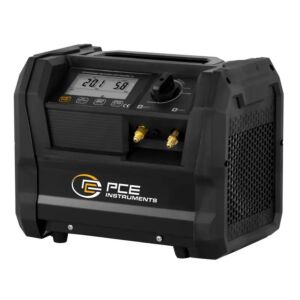
Refrigerant recovery units are used to recover refrigerant from the circuit before maintenance, component replacement, disposal, repair or system decommissioning. Correct recovery is important for technical, environmental and operational reasons. It avoids atmospheric release, allows safe work on the circuit and manages the refrigerant using more controlled procedures. Models with oil-free compressors, LCD displays and automatic self-purging simplify the technician’s work, especially when operating on different systems or with different gases.
This category also includes instruments suitable for modern refrigerants and classifications such as A1, A2L and A2, which require attention in equipment selection and work procedures. A2L refrigerants, for example, are mildly flammable and require compatible instruments and appropriate technical procedures. For this reason, when selecting an instrument, it is important to always check gas compatibility, pressure range, connections, protections, electrical safety, recovery mode, oil type, filters and manufacturer instructions.
Accuracy and resolution are important parameters in HVAC instruments. Accuracy indicates how close the measured value is to the real value, while resolution indicates the smallest variation readable by the instrument. In digital gauges, good resolution helps monitor pressure changes during vacuum, charging, leak testing and operation. In leak detectors, sensitivity determines the ability to detect small leaks. However, the result does not depend only on the instrument: connections, hoses, seals, temperature stability, correct refrigerant selection and measuring procedure are equally important.
In preventive maintenance, refrigerant gas and HVAC instruments help identify anomalies before they become failures. Progressive performance loss may be caused by microleaks, incorrect charge, dirty filters, reduced heat exchange, insufficient ventilation, moisture in the circuit or compression problems. Periodic checking of pressures, temperatures, tightness, vacuum and refrigerant condition helps reduce system downtime, energy consumption, costly repairs and wear on main components.
In corrective maintenance, these instruments are essential for diagnosing existing problems. If a system does not cool, does not heat, trips, forms ice, consumes too much energy or shows abnormal pressures, the technician must measure and interpret circuit parameters. The leak detector can locate leaks, the manifold gauge evaluates pressures, the vacuum pump prepares the circuit after repair and the recovery unit removes gas before intervention. Each instrument contributes to a more complete and technically correct diagnosis.
The connection with heights, transmission backlash, form errors and geometry is indirect but very important in HVAC systems and machines. A refrigeration system does not operate only because of gas: fans, compressors, pulleys, supports, brackets, pipes, heat exchangers and mechanical components must maintain correct alignment, distances, fixing and geometry. Vibrations, play, unsupported pipes, stressed fittings or poorly mounted components can generate microleaks, noise, breakage, wear and performance variation. A leak on a fitting may also be caused by vibration or mechanical stress, not only by sealing defects.
Vacuum and charge quality can also influence the mechanical behaviour of the system. Incorrect pressures can modify compressor load, operating temperature, thermal expansion, vibration and circuit stability. A circuit with insufficient or contaminated refrigerant may work under non-optimal conditions, increasing stress on the compressor and rotating components. A system with dirty heat exchangers or incorrect ventilation may generate high pressures, higher mechanical load and reduced service life. HVAC instruments do not directly measure geometry or backlash, but they help interpret the functional effects of mechanical and system-related problems.
Reliable measurements require a methodical approach. Before connecting instruments to the circuit, refrigerant type, maximum pressure, connection condition, hose compatibility, seals, valves and system condition must be checked. During measurement, contamination must be avoided, different refrigerants must not be mixed, leaks on service fittings must be checked and safety procedures must be followed. After intervention, it is useful to document pressure, temperature, vacuum, recovered or charged quantity, leak point and operating conditions. These data help create a useful history for maintenance and future service.
An important practical recommendation is never to interpret a single value in isolation. Pressure alone does not fully explain system behaviour. It must be read together with temperature, gas type, ambient conditions, heat exchanger condition, airflow, charge, superheat, subcooling and compressor operation. Likewise, a detected leak must be assessed considering vibration, tightening, fitting position, pipe stress and system history. Correct diagnosis comes from the combination of data.
Tadaah presents the Refrigerant Gas and HVAC category as a technical reference for companies, technicians, engineers, maintenance specialists, installers, laboratories and quality departments that need to check, maintain and diagnose air conditioning and refrigeration systems professionally. Correct selection of leak detectors, gauges, manifold gauges, vacuum pumps and refrigerant recovery units helps improve preventive maintenance, fault diagnosis, operational safety, energy efficiency, system reliability and the quality of technical interventions.