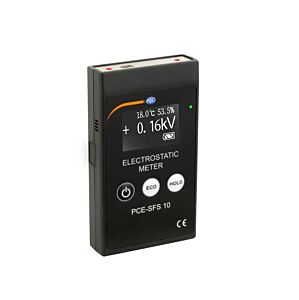
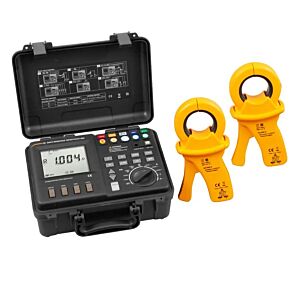
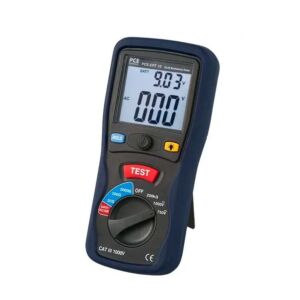
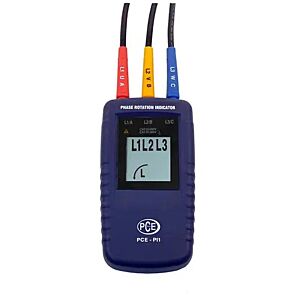
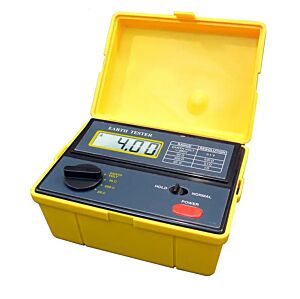
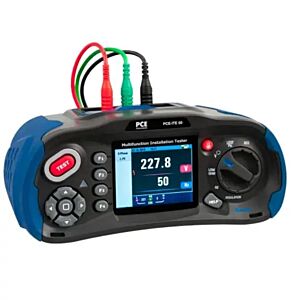
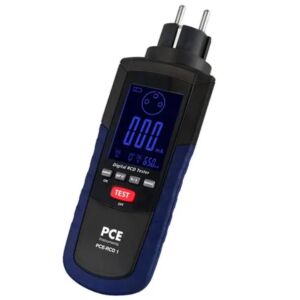
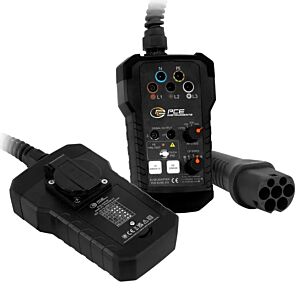
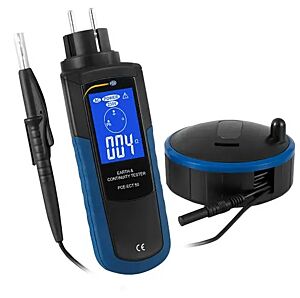
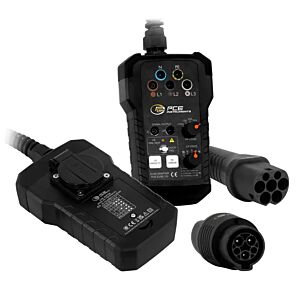
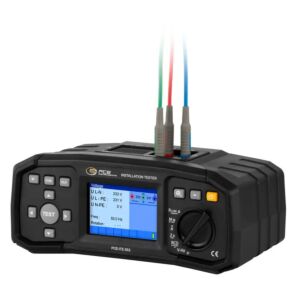
The Electrical Testers category includes professional instruments designed to test, check and diagnose electrical installations, distribution panels, sockets, cables, machines, portable equipment, electrical devices, charging systems, single-phase and three-phase lines, motors, power tools, test benches and components requiring electrical verification. These instruments measure and check voltage, continuity, insulation, earth resistance, impedance, low resistance, correct conductor connection, residual current device operation, leakage, electrical safety and the parameters required to determine whether a system is technically safe, efficient and compliant with inspection procedures.
An electrical tester is essential because many faults are not visible during a simple inspection. A socket may appear to work but have phase, neutral or earth incorrectly connected; a cable may look intact but have degraded insulation; a panel may power a machine correctly while still having leakage, high impedance or unstable connections; a residual current device may be installed but fail to trip within the correct time; an earthing system may be present but not provide a suitable value for protecting people and equipment. Electrical testers convert these conditions into measurable, comparable and documentable technical data.
This category includes several instruments with specific functions. RCD testers check the correct operation of residual current devices by verifying tripping current, tripping time and protection behaviour. VDE testers and multifunction testers allow checks on electrical equipment, portable tools, industrial devices and installations according to structured technical procedures. Insulation testers apply a test voltage to verify insulation quality between conductors or to ground. Earth resistance meters check the efficiency of the earthing system. Impedance, continuity and low-resistance testers verify the quality of connections, protective conductors and supply circuits.
In preventive maintenance, electrical testers identify progressive degradation before it leads to downtime, nuisance tripping or dangerous conditions. Insulation that decreases over time may indicate humidity, dirt, ageing material, micro-damage or thermal stress. Inadequate earth resistance may reduce protection effectiveness. Unstable continuity may result from loose terminals, vibration, oxidation, damaged cables or poorly inserted connectors. Periodic checks make it possible to build a technical history and schedule interventions before the anomaly becomes critical.
In corrective maintenance, these instruments are essential for quickly diagnosing existing faults. If a machine does not start, a protection device trips, a socket does not work, a motor has insulation problems, a panel shows leakage or equipment behaves unstably, the electrical tester helps distinguish a power supply issue from a wiring, earth, insulation, impedance, protection or component problem. This reduces troubleshooting time and allows the technician to act more precisely.
In quality control and laboratories, electrical testers are used to test finished products, electrical devices, panels, cables, tools, machines and equipment before delivery or commissioning. Documented electrical testing verifies that the product is safe and consistent with the required specifications. In production departments and professional laboratories, instruments with memory, visual guidance, certification, recording functions or data export make testing more repeatable, traceable and useful for technical reports, internal procedures and customer documentation.
The correct electrical tester must be selected according to the type of test, measuring range, test voltage, safety category, accuracy, resolution, available accessories, instrument robustness, data recording capability and operating environment. Accuracy indicates how close the measured value is to the real value, while resolution indicates the smallest readable variation. In electrical safety checks, it is not enough to read a value: the instrument must be suitable for the test, installation voltage, CAT category and applied technical procedure.
Reliable measurements require correct test preparation. Before connecting the instrument, the circuit must be understood, the system must be in the required condition, test leads and accessories must be checked, the correct function must be selected and safety procedures must be respected. In insulation tests, sensitive components must be protected or disconnected when necessary. In earth tests, probes must be positioned correctly when required. In RCD tests, the type of residual current device, rated current, distribution system and real installation conditions must be considered. In equipment testing, the procedure must be consistent with the device class and company test method.
The connection with heights, transmission backlash, form errors and geometry is indirect but highly relevant in industrial machines. An electrical tester does not directly measure dimensions, play or geometric errors, but it can verify the circuits and signals controlling position sensors, limit switches, encoders, actuators, motors, safety devices and components linked to the functional geometry of a machine. If an axis does not reach the correct height, a sensor does not read, a limit switch does not operate or a machine reports a travel error, the cause may be electrical rather than mechanical. A tester checks power supply, continuity, insulation, voltage and wiring of the circuits involved.
In systems subject to vibration, movement, cable chains and mechanical transmissions, a damaged cable, oxidised connector, loose terminal or damaged insulation can generate intermittent faults. These defects may be interpreted as position problems, cycle errors, sensor anomalies or inconsistent movements. With an electrical tester, it is possible to verify whether the signal arrives correctly, whether continuity is stable, whether resistance is consistent and whether insulation remains adequate after use, vibration or maintenance interventions.
An important practical recommendation is not to limit checks to the presence of voltage only. A system may have correct voltage but insufficient insulation, inadequate earth, high impedance, inefficient RCD or unstable connections. For complete technical diagnosis, several checks should be combined: voltage, continuity, insulation, earth, impedance, protection testing and load behaviour verification. In industrial panels and complex machines, this complete analysis helps distinguish a real electrical fault from an adjustment, load, wiring, sensor or component problem.
Tadaah presents the Electrical Testers category as a technical reference for companies, electricians, installers, maintenance specialists, engineers, laboratories and quality departments that need to verify installations and equipment professionally, safely and in a documentable way. Choosing the correct instrument improves preventive maintenance, fault diagnosis, electrical safety, testing, quality control and system reliability. To select the most suitable product, it is advisable to evaluate required tests, measuring range, accuracy, resolution, test voltage, safety category, accessories, data memory, certification and real operating conditions.