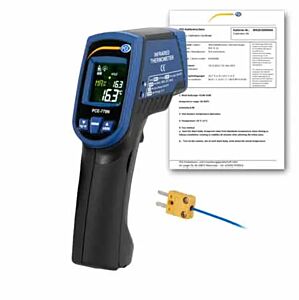
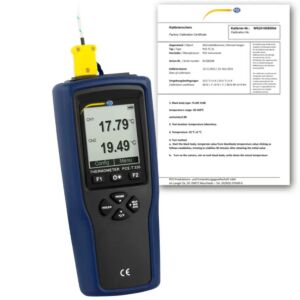
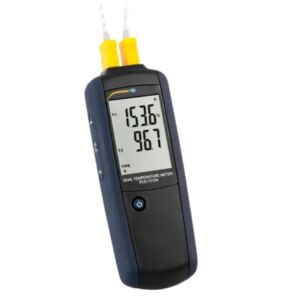
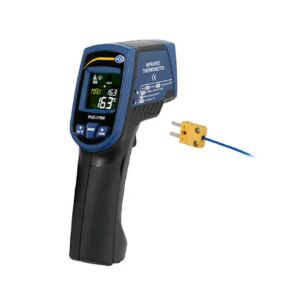
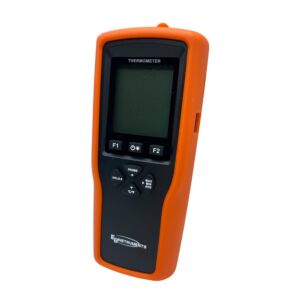
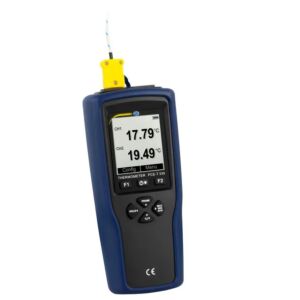
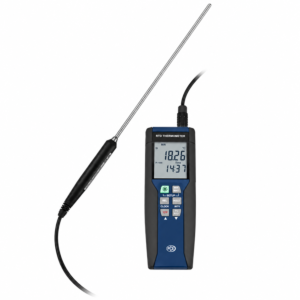
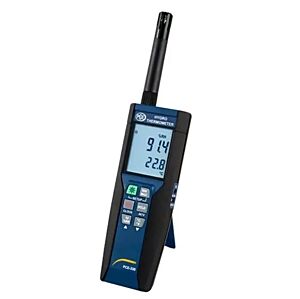
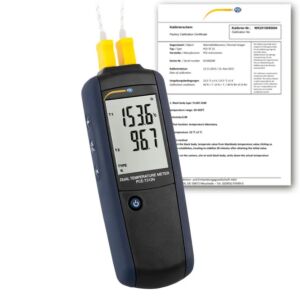
Probe thermometers are professional instruments designed for direct temperature measurement using external sensors, interchangeable probes, thermocouples or precision resistance sensors. Unlike infrared thermometers, which measure temperature without contact and are influenced by surface emissivity, probe thermometers measure temperature through physical contact with the measuring point or by inserting the probe into air, liquids, materials, components or technical environments. This makes them particularly suitable when a stable, repeatable, documentable and technically reliable measurement is required.
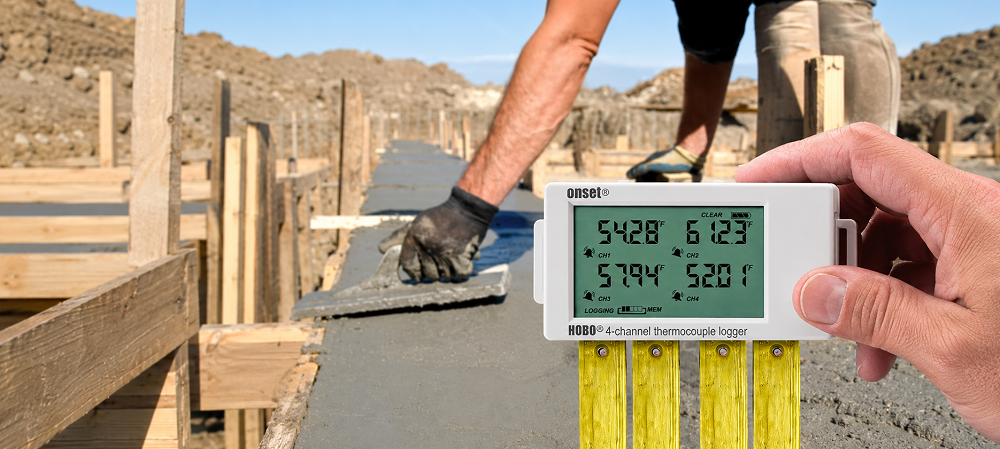
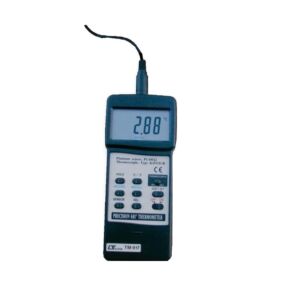
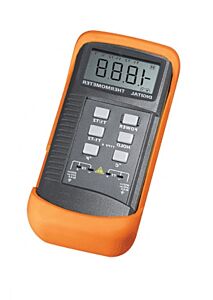
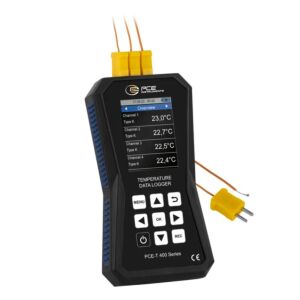
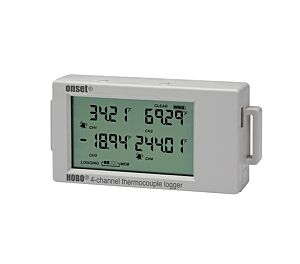
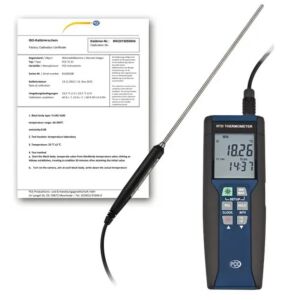
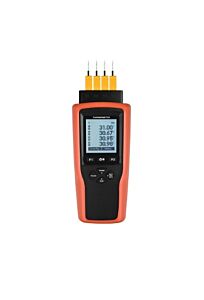
This category includes portable digital thermometers, single-channel and multi-channel instruments, thermocouple thermometers, meters for Pt100 sensors, temperature recorders, multi-channel data loggers, instruments with internal memory, continuous monitoring systems and calibrators for checking probe accuracy. Depending on the model, the thermometer can be used with type K, J, T, E, R, S, N or B thermocouples, or with resistance sensors such as Pt100, which are especially suitable when higher accuracy is required. The possibility of selecting the correct probe allows the instrument to be adapted to surface measurements, air, liquids, high temperatures, ovens, industrial processes, refrigerated environments, mechanical components and technical systems.
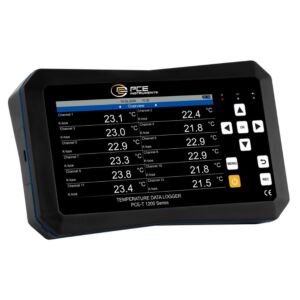
The main advantage of a professional probe thermometer is flexibility. The same instrument can be used to check a liquid in a laboratory, the temperature of a pipe, motor heating, air in an HVAC duct, an industrial oven, a test bench, a mechanical component in operation or a production process requiring traceability. Multi-channel models allow several probes to be connected at the same time and different temperatures to be compared, such as system inlet and outlet, multiple oven points, different machine areas or several sensors distributed across a process.
The selection of the correct thermometer must start from the measuring range. For general applications, maintenance and laboratory use, instruments with intermediate ranges may be sufficient, while ovens, high-temperature applications, thermal processes, heated materials and industrial systems require instruments compatible with wide-range thermocouples. Low-temperature models are suitable for refrigeration, cold rooms, freezers, climate-controlled environments and preservation processes. In addition to the range, it is important to evaluate accuracy, resolution and measurement stability, especially when the value is used for quality control, process validation, technical reports or comparison between repeated measurements.
Thermocouples are widely used in industrial applications because they offer fast response, robustness and a broad temperature range. Type K thermocouples are among the most common for maintenance and general processes, while other thermocouple types are selected according to the thermal range, working environment and required accuracy. Pt100 sensors are often preferred in laboratories and processes where a more precise and stable measurement is needed. The choice between thermocouple and Pt100 therefore depends on the application: thermocouples are suitable for wide ranges and demanding conditions, while Pt100 sensors are better for precision measurements in controlled ranges.
Probes can have different shapes and constructions. A contact probe is suitable for flat surfaces, pipes, moulds and mechanical components; an air probe is used for ducts, rooms, climate chambers and ventilation; an immersion probe is used for liquids, thermostatic baths, oils, emulsions and fluid processes; a penetration probe measures the internal temperature of soft materials, food products or products; a high-temperature probe is required for ovens, heat treatment and industrial processes. Probe geometry, stem length, diameter, material and response time directly influence measurement quality.
To obtain reliable results, the thermometer must be used with a correct method. The probe must be positioned properly, must have good contact with the measuring point and must remain in place until the value stabilises. For surface measurements, partial contact or excessive angles should be avoided; in liquids, measurement should be made in a homogeneous area; in air, non-representative drafts should be avoided; on mechanical components, it is advisable to measure always at the same point to compare data correctly over time. Temperature measurement does not directly detect heights, transmission clearances or form and geometry errors, but it can help interpret phenomena related to expansion, friction, overheating, insufficient lubrication, deformation and dimensional variations caused by heat.
In maintenance, probe thermometers are used to check motors, gearboxes, bearings, spindles, pumps, compressors, power units, pipes, cooling systems, electrical panels and components subject to thermal load. An abnormal temperature increase can indicate excessive friction, incorrect clearance, misalignment, overload, poor lubrication or loss of efficiency. In these cases, the probe thermometer allows the technician to confirm the value with a direct measurement and compare it with historical data, process limits or manufacturer specifications.
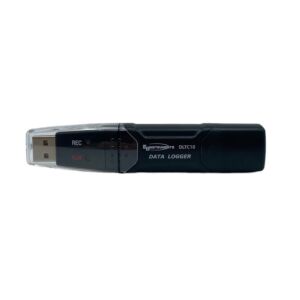
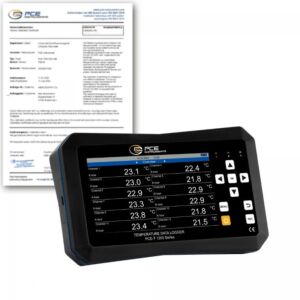
In laboratories, quality departments and test benches, these instruments are used to measure and document temperatures during tests, inspections, material checks, environmental verifications, heating and cooling processes, equipment control and procedure validation. Models with data memory, data logging or analysis software allow temperature trends to be recorded over time, data to be exported, reports to be created and comparable measurements to be archived. This function is particularly useful when temperature must be documented for audits, internal checks, certifications or scheduled maintenance.
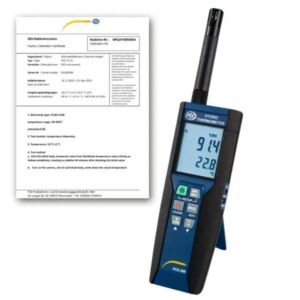
Some instruments include advanced functions such as min/max, average, channel difference, alarms, automatic recording, backlighting, USB connection, Bluetooth, dedicated software and ISO calibration support. In multi-channel systems, the ability to connect several probes makes it possible to monitor multiple critical points simultaneously and evaluate the thermal uniformity of a process. In calibrators and temperature blocks, the purpose is to check probe response and verify that measuring instruments comply with company procedure requirements.
The Tadaah Probe Thermometers category is designed for companies, technicians, engineers, laboratories, maintenance operators, quality managers and machine builders who need reliable instruments for professional temperature control. Tadaah offers solutions for point measurement, continuous monitoring, data recording, process verification and preventive maintenance. Choosing the correct instrument and probe reduces measurement errors, improves control quality and provides more useful technical data for diagnostics, reports, interventions and operational decisions.