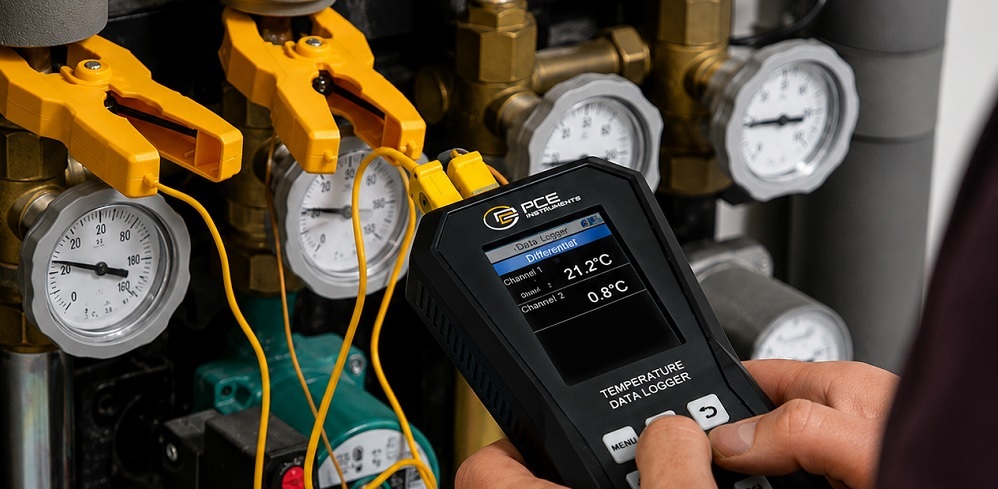
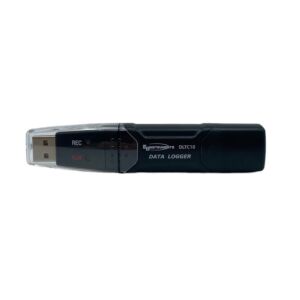
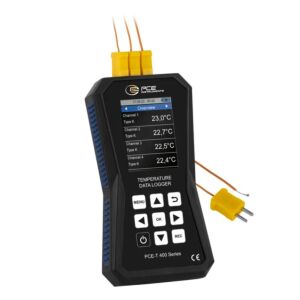
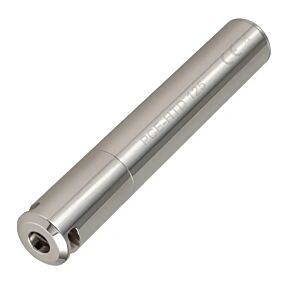
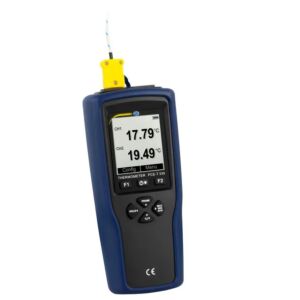
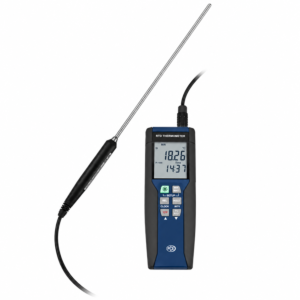
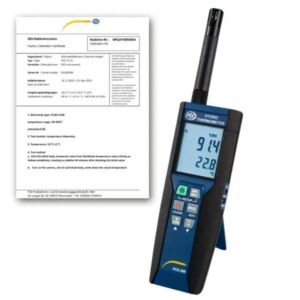
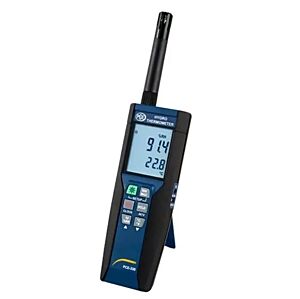
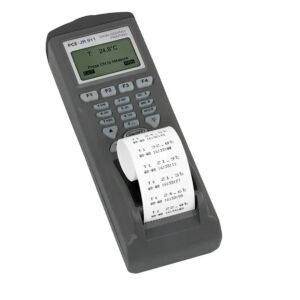
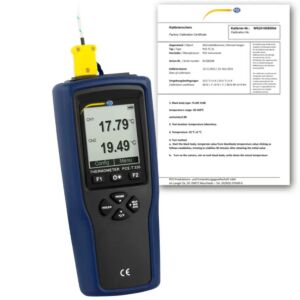
Temperature data loggers are professional instruments designed to automatically record temperature trends over time, storing measured values at programmed intervals and making them available for analysis, reports, quality control and traceability. Unlike a simple thermometer, which provides an instantaneous reading, a data logger reconstructs the complete thermal profile of an environment, product, process or shipment. This function is essential when temperature must remain within defined limits and when it is necessary to prove, with objective data, that operating conditions have been respected.
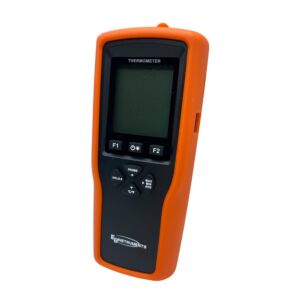
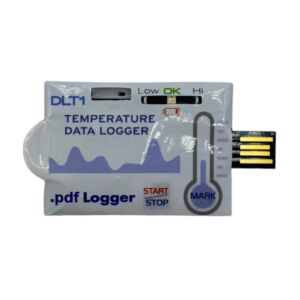
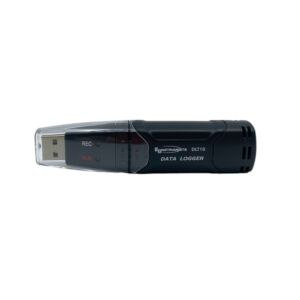
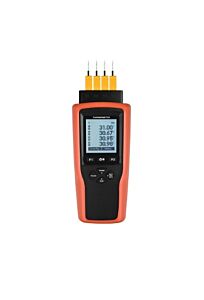
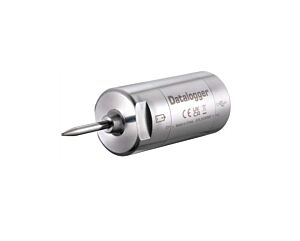
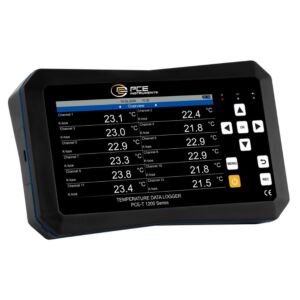
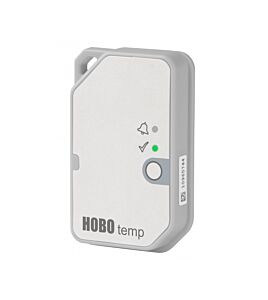
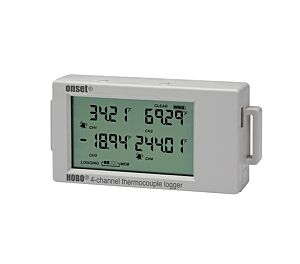
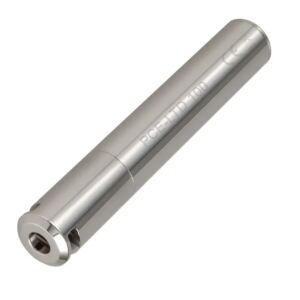
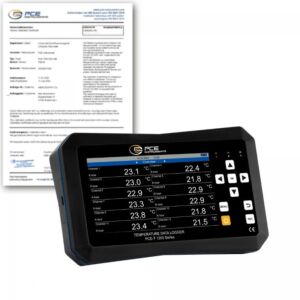
This category includes USB temperature data loggers, single-use PDF recorders for transport, temperature and humidity data loggers, cold chain models, dry ice loggers, instruments with alarms, event marking, automatic PC connection, processing software and multi-channel recorders for thermocouple probes. Compact USB models are particularly practical for warehouses, transport, refrigerators, cold rooms, work environments and simple monitoring because they can be connected directly to a computer to download data and reports. PDF data loggers are widely used in logistics because they quickly generate a readable document without complex software. Multi-channel recorders are suitable for technical tests, industrial processes and laboratory controls where several points must be monitored at the same time.
A temperature data logger works through an internal or external sensor that detects the temperature value and stores it according to a configured sampling frequency. The operator can define recording interval, alarm thresholds, test duration, start date and time, event markers and export mode. At the end of monitoring, data can be displayed as tables or graphs, exported via USB, processed with dedicated software or archived as PDF reports. This makes the instrument highly useful for audits, internal checks, process validation, transport verification, preventive maintenance and technical documentation.
Accuracy and resolution are fundamental parameters when choosing a data logger. Accuracy indicates how close the recorded value is to the real temperature, while resolution indicates the smallest displayable or recordable increment. In professional applications, good resolution makes it possible to identify gradual variations, fluctuations, threshold exceedances and instability that may not be visible with occasional checks. However, data quality does not depend only on the instrument: it also depends on calibration, sensor type, response time, positioning, room ventilation and thermal contact with the monitored point.
The measuring range must be selected according to the application. For monitoring environments, warehouses, technical rooms or cold rooms, instruments with standard ranges may be sufficient. For transport of sensitive products, medicines, food, biological samples or refrigerated materials, reliable devices with alarms and adequate memory are required. For dry ice, deep freezing or cryogenic applications, data loggers with extended low-temperature ranges are needed. For high-temperature industrial processes, ovens, heat treatments, systems and technical tests, recorders with thermocouple probes and multiple channels may be required to manage high temperatures and different sensor types.
In the food, pharmaceutical and logistics sectors, temperature data loggers are essential tools for the cold chain. During transport, storage and distribution, products may be exposed to temperature variations caused by door openings, stops, faults, delays, uneven loading or incorrect vehicle or warehouse management. The data logger verifies whether temperature remained within the expected limits and identifies any critical moments. This helps protect product quality, safety and compliance, reducing disputes and improving traceability.
In industrial environments, data loggers are used to monitor systems, machines, electrical panels, warehouses, climatic chambers, ovens, HVAC systems, drying, cooling, heating, storage and testing processes. Continuous monitoring makes it possible to identify anomalies that a single manual measurement would not detect. For example, a temperature increase occurring only during certain cycle phases, uneven cooling, a nighttime thermal peak or progressive drift can only be recognized by recording the trend over time. This also makes data loggers useful for preventive and corrective maintenance, helping diagnose inefficiencies, intermittent faults and unstable operating conditions.
The main settings concern sampling interval, alarm thresholds, start and stop mode, measurement units, event marking, logger identification, date and time synchronization, report format and channel configuration. A short recording interval makes it possible to observe rapid variations, but consumes more memory and battery. A longer interval is suitable for long-term monitoring, but may fail to detect short peaks. The choice must therefore be consistent with the phenomenon being observed. In professional controls, correct date and time configuration is essential because a report without reliable time reference loses technical and documentary value.
The positioning of the data logger and probes is one of the most important aspects. Installation height, distance from walls, doors, fans, evaporators, heat sources, cold surfaces or air currents can strongly influence the measurement. In a cold room, placing the logger near the evaporator may provide values different from those at the center of the load. During transport, placing it near the door may highlight openings and heat exchange, while inside the pallet it may better measure the real product temperature. For this reason, the measuring point must be defined according to the purpose of the control.
The concept of transmission backlash in this category does not concern mechanical transmission but can be interpreted as stability of the measuring system and reliability of the connection between sensor, electronics and recorded data. An unstable connector, damaged probe, bent cable, incorrect thermal contact or insufficient battery may generate discontinuous readings, delays or unreliable data. In multi-channel data loggers with external probes, correct sensor connection and consistency between channel and measuring point are essential to avoid interpretation errors.
Shape and geometry errors can affect measurement when the environment or product does not have uniform temperature distribution. A thick-walled container, compact pallet, insulated box, thermal shadow zone, cold metal surface or poorly ventilated position can create differences between air temperature and real product temperature. The shape of the chamber, position of vents, accumulation of materials and presence of obstacles can also generate thermal gradients. To obtain representative data, it is often useful to use multiple loggers or probes at different points, especially in validation, stability testing and complex environment monitoring.
To obtain reliable results, the instrument should be configured before use, battery and memory checked, date and time verified, the installation point selected, the device protected if the environment is humid or dirty and its position documented. At the end of recording, data should be downloaded and stored with identification of the batch, shipment, environment or system monitored. In repeated checks, it is useful to maintain a standard procedure so that data can be compared over time and real variations can be distinguished from method-related differences.
Temperature data loggers are therefore essential professional instruments for companies, technicians, engineers, maintenance teams and laboratories that need to monitor thermal conditions continuously, accurately and with documented evidence. The availability of USB, PDF, single-use, reusable, internal sensor, external probe, alarm, software and multi-channel models makes it possible to choose the most suitable device for the application. For Tadaah, a category dedicated to temperature data loggers provides a complete technical reference to support professionals and companies in selecting the correct instrument, improving traceability, quality control, product safety, diagnostics and process reliability.