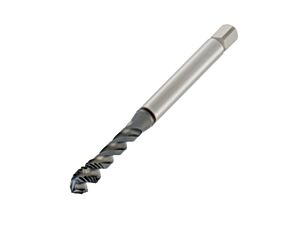
Metric and Gas Thread Taps
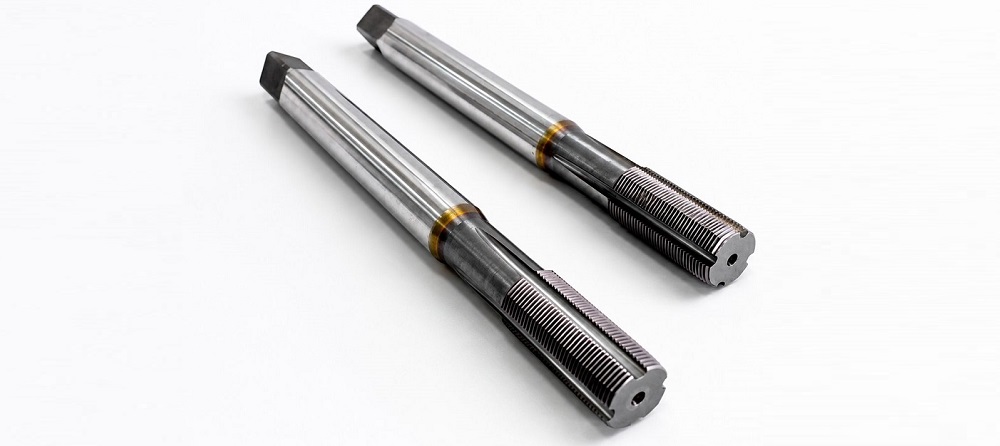
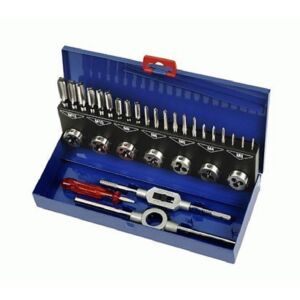
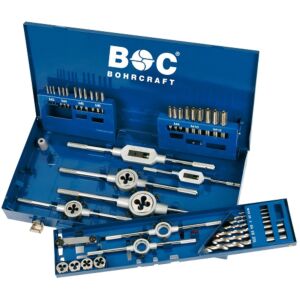
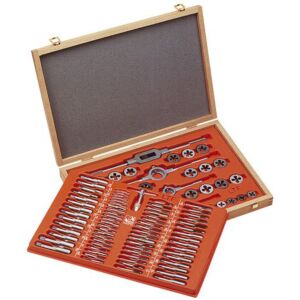
Taps for metric and Gas threads are essential cutting tools for producing precise internal threads, repeatable and compliant with the requirements of modern mechanical production. This category includes taps for M ISO threads, taps for MF ISO fine metric threads, taps for ISO-JIS metric threads, taps for GAS threads, UNC taps and UNF taps, used on automatic lathes, machining centres, tapping machines, CNC machines and production systems dedicated to the machining of mechanical components, fittings, turned parts, automotive components, fastening elements, hydraulic, pneumatic and oil-hydraulic parts, and components intended for industrial assembly.
M ISO metric threads are the most widely used standard in industrial mechanics and are applied to screws, pins, tie rods, inserts, clamping elements, fastening components and assembly parts. M ISO taps are therefore suitable for general machining on steels, light alloys, non-ferrous materials and mechanical parts intended for production, maintenance and assembly. MF ISO fine metric threads, on the other hand, are used when a finer pitch than standard metric thread is required, offering greater adjustment accuracy, improved resistance to loosening and more controlled coupling in limited spaces or on technical components subject to vibration.
The ISO-JIS metric family includes taps designed for machining operations where dimensional references and standards compatible with international applications must be respected, especially on components, machines, equipment or spare parts designed according to ISO and JIS specifications. Taps for ISO-JIS metric threads are useful in workshops and production departments working on components intended for different markets, where thread compatibility, profile precision and coupling consistency are essential to avoid assembly, tightening or interchangeability problems.
Taps for GAS threads are mainly used to produce internal threads on fittings, pipes, valve bodies, manifolds, pneumatic, hydraulic and oil-hydraulic components. In these applications, thread quality directly affects the correct connection between components and the safety of the system. A correctly produced GAS thread reduces the risk of difficult coupling, incomplete threads, deformation, leakage or tightening problems, especially when the component works with compressed air, oil, technical fluids or industrial gases.
UNC taps and UNF taps are intended for producing American inch threads. UNC threads, Unified National Coarse, are coarse-pitch American threads used on machines, equipment, spare parts, fastening elements and mechanical components where a robust and practical coupling is required. UNF threads, Unified National Fine, are fine-pitch American threads, suitable when higher tightening precision, finer adjustment, improved mechanical holding and greater vibration resistance are required. The availability of UNC and UNF taps is particularly important for workshops, maintenance technicians and companies working on American-origin machines, imported components or parts intended for international markets.
The choice of the correct thread tap depends on the type of thread to be produced, the material to be machined, the hole geometry, the thread depth, the rigidity of the machine-tool system and the required precision level. In through holes, taps with a geometry suitable for pushing chips forward are normally used, while in blind holes it is essential to use tools designed to control the chip and extract it correctly from the cutting area, avoiding accumulation at the bottom of the hole, tool breakage, incomplete threads or geometric defects. In high-productivity machining, correct chip management is one of the most important factors for keeping the cycle stable and reducing scrap.
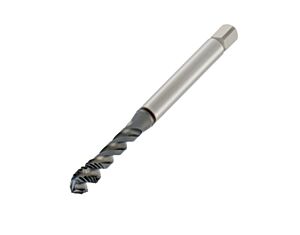
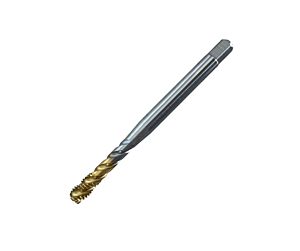
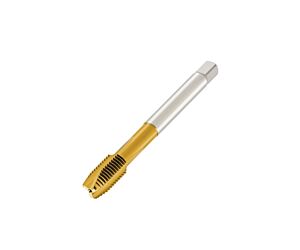
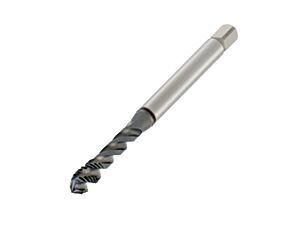
Cutting taps produce the thread by removing material and are available with different geometries depending on the application. Straight-flute taps are suitable for general machining and materials with short chips; taps with a corrected lead and through-hole geometry promote chip evacuation in the feed direction, while spiral-flute taps are particularly suitable for blind holes because they help extract the chip outwards. In production cycles on machining centres and automatic lathes, this choice directly affects machining continuity, thread quality and tool life.
Thread forming is an alternative to cutting tapping when the material allows it. In this process, the thread is not generated by cutting but by plastic deformation of the material. The absence of chips allows a very stable process, especially interesting in automated production, turned small parts and machining operations where hole cleanliness is an important technical requirement. Forming taps are suitable for ductile materials such as mild steels, alloy steels suitable for deformation, aluminium, copper and some non-ferrous alloys. The resulting thread generally has good mechanical strength due to the continuity of the material fibres, but it requires a correctly prepared hole diameter and suitable lubrication.
For professional applications, HSS taps, HSS-E taps, HSS-PM powder metallurgy taps and solid carbide taps are available. Powder metallurgy taps offer a more homogeneous structure and higher performance than traditional high-speed steels, especially in intensive machining, tougher materials and cycles requiring greater wear resistance, dimensional stability and tool life. Solid carbide taps are intended for specific high-rigidity applications, particularly for threading hardened steels, abrasive materials or operations where high profile precision is required even under demanding conditions.
The tap coating is a key technical element for optimising performance, service life and thread quality. Coatings such as TiN, TiCN, TiAlN, AlCrN or specific treatments for steels, stainless steels, cast irons, aluminium and non-ferrous alloys help reduce friction, wear, material adhesion and overheating in the cutting area. The choice of coating must be evaluated according to the material being machined, cutting speed, lubrication/cooling method, hole depth and production cycle continuity.
Thread precision does not depend only on the tap, but on the entire process. Hole preparation, tapping drill diameter, axial alignment, spindle rigidity, tap holder quality, axial compensation, lubrication and control of cutting parameters directly influence the final result. An incorrect tapping drill diameter can generate overload, thread deformation, tap breakage or non-compliant tolerances. In CNC machining, it is important to ensure that feed and pitch are perfectly synchronised, especially in rigid tapping and repetitive production on machining centres and automatic lathes.
Metric threads are widely used in general mechanics, automotive, machine building, industrial equipment and precision components. GAS threads are very common in fittings, pneumatic, oil-hydraulic and hydraulic components, technical systems and applications where standardised connections for fluids or compressed air are required. UNC and UNF threads complete the range for machining inch-based components, industrial spare parts and international applications. The availability of specific taps for M ISO, MF ISO, ISO-JIS metric, GAS, UNC and UNF makes it possible to cover a very wide application field, from the production of small turned parts to the machining of structural components and complex mechanical bodies.
Tadaah selects taps for metric and Gas threads suitable for different production levels, from technical maintenance to continuous industrial production. The objective is not only to supply the tool, but to support technicians in choosing the most suitable geometry according to the material, hole type, machine cycle and required result. Correct tap selection improves thread quality, increases tool life, reduces machine downtime, prevents sudden breakage and optimises cost per part. For this reason, the category is designed as a technical reference for operators, maintenance technicians, production managers, quality control departments and professionals looking for professional taps for precise, stable and repeatable threads.