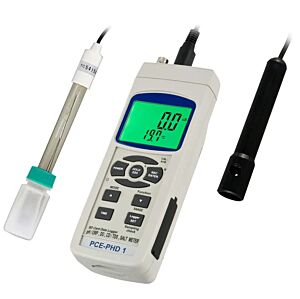
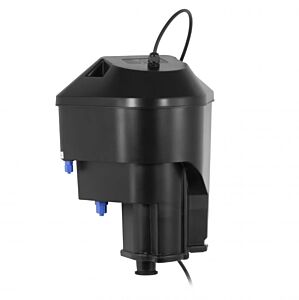
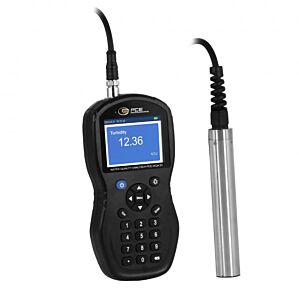
The Water Analysers category includes professional instruments designed to measure, check and document the chemical and physical characteristics of water and liquids used in laboratories, industry, water treatment, agriculture, food production, maintenance and quality control. These instruments verify key parameters such as pH, conductivity, salinity, dissolved oxygen, temperature, turbidity, indirect suspended solids, sample quality, process stability and compliance with expected values. Water measurement is important because even small variations can influence a production process, technical system, crop, tank, washing cycle, chemical treatment or final product quality.
Water analysers are used whenever it is necessary to move from visual or empirical evaluation to technical measured data. Water may appear clear but have high conductivity, incorrect salinity or out-of-range pH. A liquid may appear stable but show low oxygen content, excessive turbidity or contamination from suspended particles. In an industrial system, water can affect corrosion, scaling, washing, cooling, chemical reactions, deposits and component life. In a laboratory or quality department, measurement makes it possible to validate samples, compare batches, check treatments and document real operating conditions.
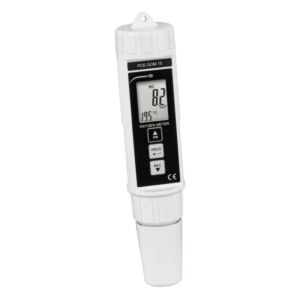
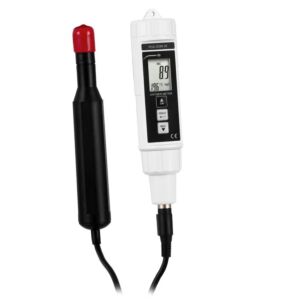
Dissolved oxygen instruments measure the amount of oxygen present in water or other liquids. This parameter is essential in aquaculture, wastewater treatment, environmental control, laboratories, tanks, biological processes and applications where oxygen availability directly influences system behaviour. Insufficient values may indicate poor aeration, high organic load, stagnation, biological problems or conditions unsuitable for specific processes. Models with interchangeable sensors and automatic temperature compensation provide more practical and consistent measurements, especially in field use or on samples with variable temperature.
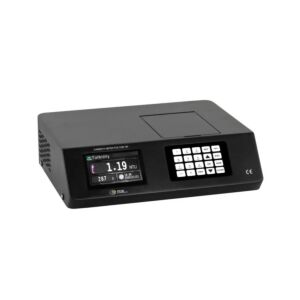
Turbidity meters are designed to measure water turbidity, meaning the presence of suspended particles that reduce sample transparency. Turbidity is important in water treatment, drinking water, wastewater, agriculture, environmental checks, industrial processes and laboratories. A high value may indicate suspended solids, sediment, contamination, insufficient filtration, process instability or the need for further treatment. Turbidity meters according to ISO 7027 use a recognised technical method for turbidity measurement and are suitable when the data must be reliable and comparable.
Conductivity meters measure the electrical conductivity of water, a parameter linked to the amount of dissolved salts, ions and conductive substances in the liquid. Conductivity is very useful for checking technical water, demineralised water, solutions, salinity, washing processes, water treatment, industrial systems, laboratories and applications where ionic composition affects process quality. A value that is too high may indicate salts, contamination or insufficient treatment; a very low value may be required in processes using pure or demineralised water. Multifunction models can combine pH, conductivity, oxygen, temperature and data memory, providing a more complete view of the sample.
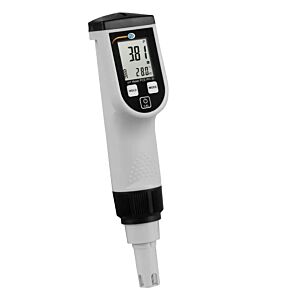
pH instruments measure the acidity or alkalinity of water and solutions. pH is one of the most important parameters because it affects corrosion, chemical reactions, water treatment, material compatibility, fertilisation, biological processes, detergency, sanitation and product stability. Incorrect pH may cause pipe corrosion, ineffective chemical treatments, precipitation, scaling, solution alteration or process problems. To obtain reliable measurements, the instrument must be regularly calibrated with buffer solutions, the probe must be kept clean, properly stored and temperature compensation must be used when necessary.
Portable water analysers are especially useful for technicians who need to work directly in the field, on systems, tanks, reservoirs, process lines, wells, agricultural systems, treatment plants or production departments. Portability allows the sample to be measured at the real point of use, avoiding changes caused by transport or by time between sampling and measurement. Laboratory or mains-powered models are more suitable when repetitive tests, checks on many samples, more structured logging or more stable operating conditions are required.
The correct water analyser must be selected according to the parameter to be measured, measuring range, accuracy, resolution, sensor type, temperature compensation, robustness, data memory, power supply, ease of calibration, liquid compatibility, probe maintenance and result documentation capability. Accuracy indicates how close the measured value is to the real or reference value, while resolution indicates the smallest variation readable by the instrument. In professional applications both parameters must be evaluated, because a display with many decimals does not automatically guarantee correct measurement if the sensor is not calibrated, the sample is not representative or the probe is not maintained correctly.
Reliable results require consistent procedures. The sample must represent the point being checked and must not be contaminated by the container or sampling tools. Probes must be cleaned, rinsed and maintained according to technical instructions. pH meters must be calibrated with suitable buffers, conductivity meters must be verified with standard solutions, turbidity meters must use clean cuvettes without bubbles, and dissolved oxygen instruments must be checked according to sensor type and temperature. Incorrect measurement may be caused by contamination, trapped air, residues on the probe, unstable temperature, incorrect calibration or inconsistent method.
In industrial quality control, water analysers monitor parameters that can influence the final product. In the food sector, water may be used as an ingredient, washing fluid, process medium or sanitation element. In a chemical system, pH and conductivity may affect reactions, stability and material compatibility. In a cooling process, water quality can influence scaling, corrosion, thermal efficiency and system life. In a laboratory, water purity can affect analyses, solution preparation and test results. For this reason, water control is an integral part of technical and operational quality.
In preventive maintenance, these instruments help identify variations before they cause failures or non-conformities. Increased conductivity may indicate contamination or reduced treatment efficiency. Out-of-range pH may indicate corrosion risk or incorrect chemical dosing. Rising turbidity may indicate insufficient filtration, sediment or suspended particles. Incorrect dissolved oxygen may indicate aeration problems or unstable biological processes. In corrective maintenance, water analysers help determine whether a problem on systems, pumps, filters, exchangers, tanks or treatment units is caused by liquid quality.
The connection with heights, transmission backlash, form errors and geometry is indirect but can be relevant in industrial environments and machines. Water and technical liquid quality can influence cooling, lubrication, washing, corrosion, deposits, scaling and process stability. In a machine tool, for example, coolant with incorrect pH or conductivity may promote corrosion, residue deposits, thermal alteration and poorer finish. Unstable cooling can contribute to workpiece expansion, form errors, dimensional variations and geometric instability. In systems with pumps, valves and circuits, water with particles or high turbidity may cause wear, blockages and performance loss.
In transmission, cooling and process systems, uncontrolled liquid can generate indirect mechanical effects. Scaling or sediment may change flow rates, pressures and heat exchange. Corrosion and deposits may alter surfaces, functional clearances, couplings and sealing. Unstable temperature or non-compliant fluid may affect bearings, guideways, seals and components in contact with water. Even though water analysers do not directly measure dimensions, heights or geometry, they help control parameters that can affect process stability and component life.
An important practical recommendation is always to define the measurement objective before selecting the instrument. If clarity and suspended particles must be checked, a turbidity meter is the most suitable tool. If dissolved salts or ionic quality must be evaluated, a conductivity meter is required. If acidity, alkalinity or chemical compatibility must be controlled, a pH meter is essential. If the process depends on oxygen availability, a dissolved oxygen analyser is needed. If several parameters are involved, a multifunction instrument may be the most practical solution. The correct choice always starts from the real application, the sample and the required documentation level.
Tadaah presents the Water Analysers category as a technical reference for companies, technicians, engineers, maintenance specialists, laboratories and quality departments that need to control water and liquids professionally, reliably and in a documentable way. Correct selection of pH meters, conductivity meters, turbidity meters, dissolved oxygen analysers and multifunction instruments helps improve quality control, optimise processes, prevent corrosion and contamination, reduce measurement errors, document inspections and support technical decisions based on real data.