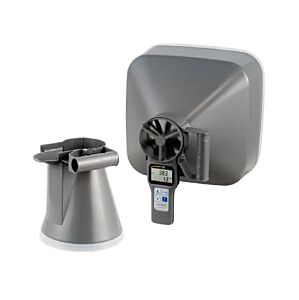
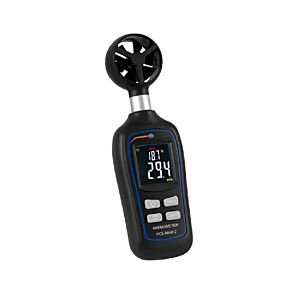
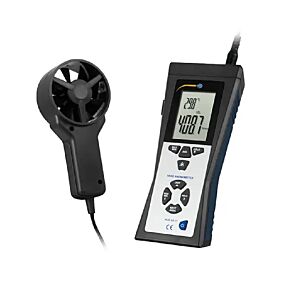
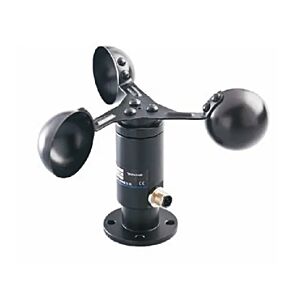
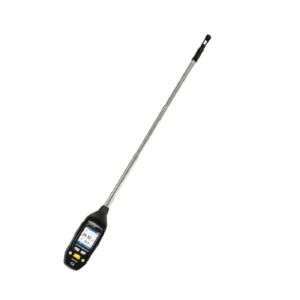
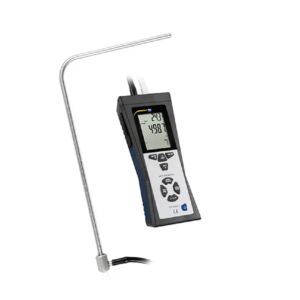
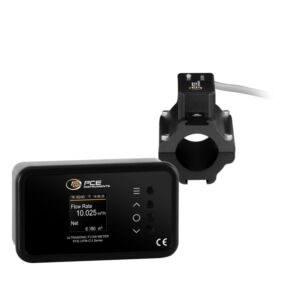
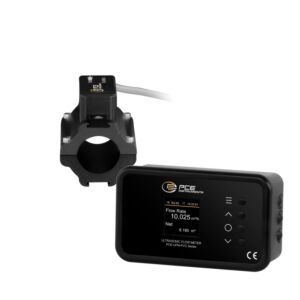
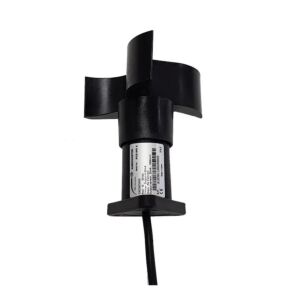
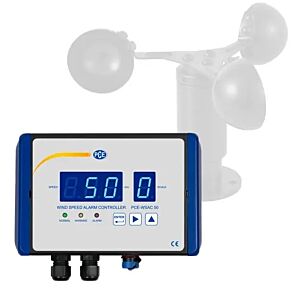
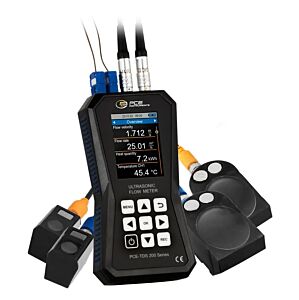
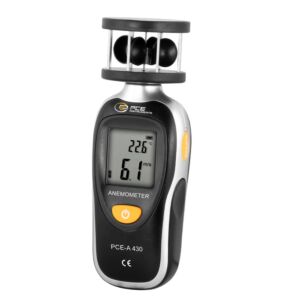
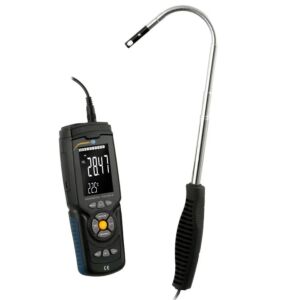
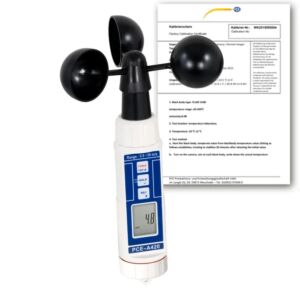
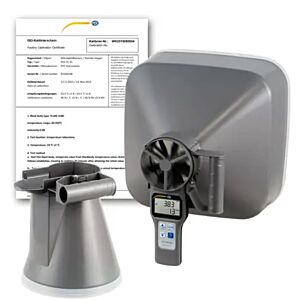
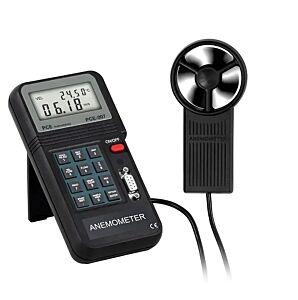
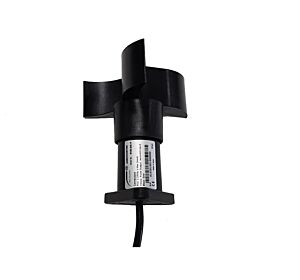
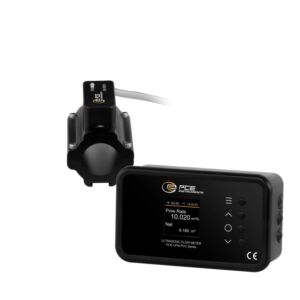
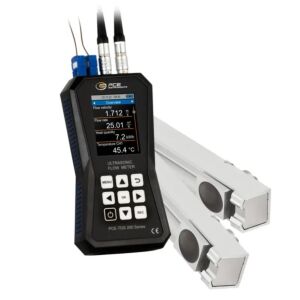
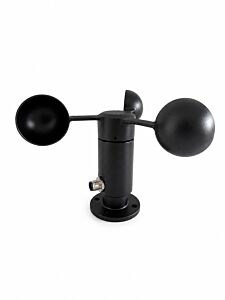
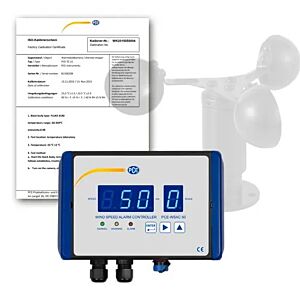
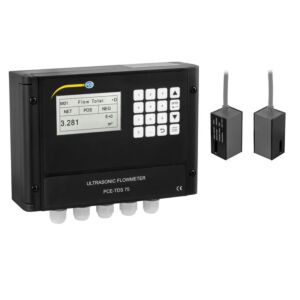
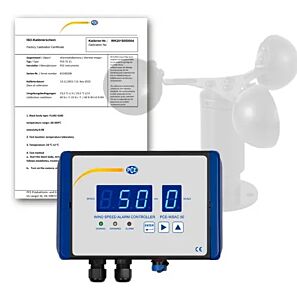
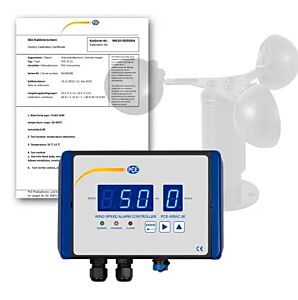
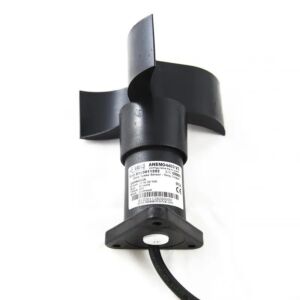
The Flow and Flow Rate category includes professional instruments designed to measure, check and analyse the movement of air, gases and liquids inside industrial systems, process lines, HVAC systems, ventilation ducts, extraction networks, pneumatic circuits, hydraulic circuits, cooling systems, coolant systems, test benches, laboratories and technical applications where the correct quantity of fluid is essential for system operation. This category includes instruments such as flow meters, anemometers, air velocity meters, volumetric flow instruments, duct flow instruments and devices for checking liquids, compressed air, ventilation and process systems.
Flow rate is the quantity of fluid passing through a section in a given time and can be expressed, depending on the application, in volumetric or mass units. Flow describes the behaviour of the fluid during movement, including speed, direction, stability, turbulence, continuity and variations caused by adjustments, restrictions, leaks, bends, filters, valves or pressure differences. In a technical system, knowing the real flow rate is essential because the nominal value shown in a project or machine specification does not always correspond to the actual behaviour during operation.
Flow and flow rate instruments are used whenever it is necessary to verify whether a system correctly supplies a process, whether an air or fluid line has abnormal drops, whether a pump generates the required quantity, whether a fan ensures the expected air exchange, whether a duct is correctly balanced, whether a filter is clogged or whether an adjustment does not produce the expected result. In HVAC systems, anemometers measure air velocity in vents, ducts, grilles, hoods, extraction and ventilation systems. In hydraulic or process circuits, flow meters check liquid flow, technical water, cooling fluids, coolants, gases or compressed air.
In preventive maintenance, these instruments allow progressive variations to be identified before they become failures or efficiency losses. A flow rate that decreases over time may indicate a dirty filter, partially blocked pipe, worn pump, valve not fully open, leak, incorrect adjustment or accumulation of impurities. Non-uniform air flow may indicate problems with fans, ducts, dampers, grilles, hoods or extraction systems. Measuring flow and flow rate regularly makes it possible to create reference values, compare system condition over time and schedule targeted maintenance without waiting for machine shutdown or process deterioration.
In corrective maintenance, flow and flow rate measurement helps diagnose existing anomalies. If a system cools poorly, if a machine does not receive enough coolant, if a booth does not extract correctly, if an air line loses performance, if a test bench returns inconsistent data or if a ventilation system does not maintain the required values, the instrument helps determine whether the problem is related to fluid quantity, air velocity, pressure drop, adjustment, a clogged component or inadequate sizing. This allows technicians to work more precisely on pumps, fans, valves, filters, pipes, nozzles, regulators, dampers or control components.
In quality control and technical laboratories, flow and flow rate instruments are used for testing, functional checks, process verification, validation, component inspection, test benches, pneumatic or fluidic device testing and comparative analysis. Measuring real and repeatable values allows test conditions to be documented, several components to be compared, system compliance to be verified and machines to be checked against defined technical parameters. In processes where flow directly affects the result, such as cooling, extraction, dosing, washing, filtration or ventilation, measurement becomes an integral part of quality control.
The correct instrument must be selected according to fluid type, measuring range, accuracy, resolution, duct or pipe diameter, temperature, pressure, viscosity, installation type and the need to record or export data. Accuracy indicates how close the measured value is to the real value, while resolution indicates the smallest variation readable on the display or recordable by the instrument. For professional applications, both parameters must be evaluated because a very detailed display does not automatically guarantee accurate measurement if the sensor is not suitable for the operating range or if the measuring point is incorrect.
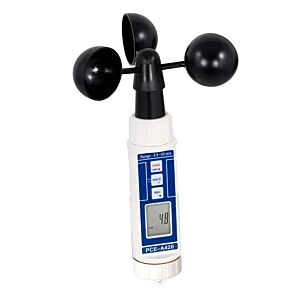
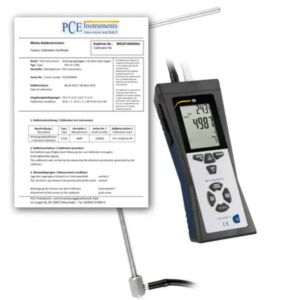
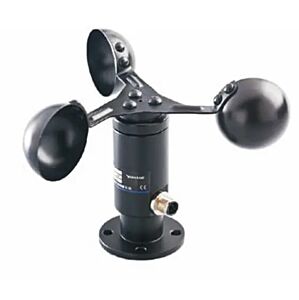
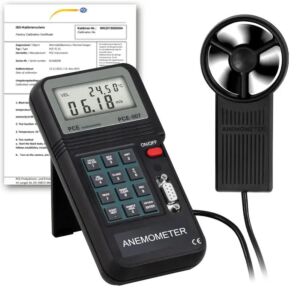
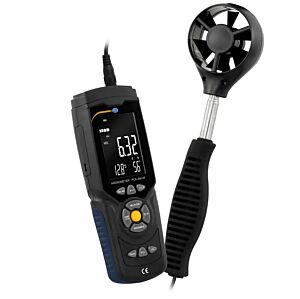
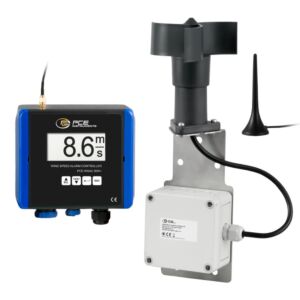
Anemometers are essential instruments for measuring air velocity and, when combined with the duct section, can be used to calculate volumetric flow rate. They are used in ventilation, air conditioning, industrial extraction, hoods, booths, controlled rooms, production environments and systems where air movement affects comfort, safety, process or quality. Measurement must consider probe position, duct section, flow distribution, turbulence, bends, restrictions, grilles or obstacles that may alter the value. In many cases, it is advisable to take several measurements across different areas of the section and calculate a representative average.
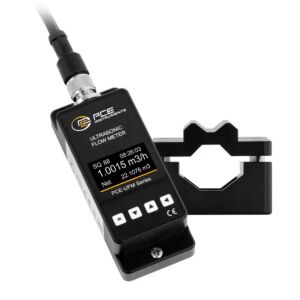
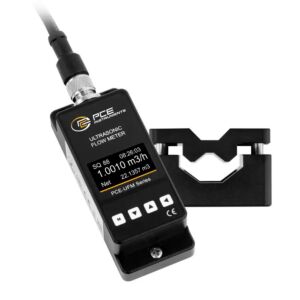
Flow meters are used to measure liquid or gas flow rate in pipes, circuits, systems and test benches. They can be used to check water, technical fluids, compressed air, gases, coolants, process liquids and supply systems. The choice of flow meter depends on measuring principle, fluid, minimum and maximum flow rate, chemical compatibility, working pressure, temperature and connection type. In industrial processes, a flow meter verifies whether the circuit delivers the required quantity and whether adjustment remains stable during the operating cycle.
To obtain reliable measurements, the measuring point must be selected correctly. In air ducts, flow may not be uniform, especially near bends, fans, dampers, grilles, filters or restrictions. In pipes, flow rate may be influenced by valves, bends, diameter changes, air bubbles, impurities, pulsations, viscosity changes or cavitation. For this reason, it is important to position the instrument in a representative section, follow manufacturer instructions, avoid excessively disturbed points and verify fluid compatibility with the sensor. A measurement taken at the wrong point can lead to incorrect interpretation even when the instrument is of good quality.
Flow and flow rate measurement is closely connected to system adjustment. In an extraction system, insufficient flow may reduce the ability to remove dust, vapours, fumes, oil mist or chips. In a cooling circuit, inadequate flow may cause overheating, thermal instability, performance loss and reduced component life. In a coolant circuit, incorrect flow may affect chip evacuation, tool temperature, surface finish and cutting edge life. In a pneumatic system, available flow influences actuator speed, cycle time, available force and movement stability.
The connection with heights, transmission backlash, form errors and geometry is indirect but technically relevant. Flow and flow rate do not directly measure dimensions, backlash or geometry, but they influence operating conditions that can modify accuracy and repeatability. In a machine tool, insufficient coolant flow can increase workpiece and tool temperature, generating expansion, dimensional instability, form errors, poorer finish and dimensional variations. In a pneumatic system, insufficient air flow can make actuator movement irregular, modify final position, create height differences, functional play or poor repeatability. In an extraction system, incorrect flow can leave residues that interfere with supports, guideways, fixtures and reference surfaces.
In automatic systems and test benches, flow stability is often essential for repeatable results. A variable flow rate can alter a test, modify available force, influence pressure, change thermal behaviour or make a cycle unstable. For this reason, flow and flow rate measuring instruments are useful not only for checking a numerical value, but also for understanding the functional behaviour of the entire system. The technician can correlate flow data with pressure, temperature, vibration, energy consumption, noise and process quality.
An important practical recommendation is to define the measurement objective before choosing the instrument. If the goal is to check ventilation, an anemometer suitable for air velocity and duct section must be selected. If the goal is to check a liquid circuit, a flow meter compatible with the fluid and flow range is required. If the problem is intermittent, an instrument with memory or data logging may be useful. If the measurement must be documented, instruments with certification, data output, software or export capability are preferable. If several systems need to be compared, the same method, units and operating conditions should always be used.
Tadaah presents the Flow and Flow Rate category as a technical reference for companies, technicians, engineers, maintenance specialists, laboratories and quality departments that need to measure and document the movement of air, gases and liquids professionally. Choosing the correct anemometers, flow meters and control instruments helps improve preventive maintenance, system diagnosis, process adjustment, energy efficiency, operational safety, quality control and production stability. To select the most suitable instrument, it is advisable to evaluate fluid, measuring range, accuracy, resolution, sensor, installation, operating conditions, data recording capability and compatibility with the real application.