What is a Lithium-Ion battery?
A lithium-ion (Li-ion) battery consists of two electrodes (cathode and anode) and an electrolyte that facilitates ion exchange. During discharge, ions move from the anode to the cathode; during charging, the reverse occurs. An insulator separates the electrodes to prevent short circuits.
What are the dangers associated with these batteries?
Lithium-ion batteries can catch fire. According to INERIS, 12 out of 50 potential accidental scenarios are critical, especially during storage, charging, and use. Fires caused by lithium-ion batteries cannot be extinguished conventionally, as the batteries generate the oxygen and heat needed for combustion, which can only be extinguished using special powders in a confined environment.
How do these fires originate?
Thermal runaway is caused by overcharging or exposure to excessive temperatures, leading to critical overheating. Complete discharge can damage the battery, and if exposed to cold temperatures, it can form flammable gases. Mechanical damage, such as shocks or misuse, can damage the internal structure of the battery and cause fires.
How to store them safely?
Storage recommendations depend on the size and power of the battery. Low power lithium batteries (less than 100 Wh) do not require special safety requirements, just follow the manufacturer's instructions. Medium power lithium batteries (around 100 Wh) used in electric bicycles, electric scooters, and similar vehicles should be stored in separate fire-resistant enclosures. High power lithium batteries (more than 100 Wh) used in electric cars and large appliances must be stored in safe environments with adapted fire protection.
105-Minute safety cabinets for Lithium-Ion battery storage and charging
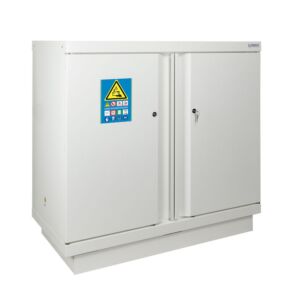
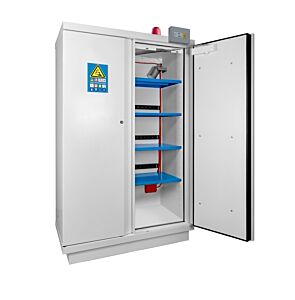
We have created secure storage solutions for lithium-ion batteries. Based on the EN14470-1 standard, we offer models in various sizes with perforated shelves and containment sumps to prevent damage from electrolyte leaks. Batteries can also be charged through integrated power strips.
Features and compliance
The cabinets comply with EN 14470-1 and EN 1363-1 standards. They are constructed of steel with double thermal insulation and triple walls, and are equipped with thermo-expanding seals, self-closing doors, ventilation, and grounding points. Optional accessories include perforated shelves, removable containment sumps, automatic extinguishers, power strips for charging, and fire-resistant cables.
Advantages
The cabinets offer 105 minutes of fire resistance, allowing safe storage and charging of batteries. Available accessories include internal extinguishers, visual and audible alarm systems, and smoke detectors. Ergonomic handles and legs for easy movement with pallet trucks make them user-friendly.
Applications of Lithium-Ion batteries
Lithium-ion batteries are used in a wide range of devices due to their high energy density and long life. Electric bicycles (e-bikes) use batteries to power the electric motor, requiring safe storage and charging systems. Drones, both recreational and professional, need safety cabinets to ensure extended flight times and reliable performance. Battery-powered tools like drills, screwdrivers, saws, and lawnmowers require safe storage in hardware stores. Electric scooters use batteries to power the motors, needing safe management with fireproof cabinets. In warehouses and logistics, batteries must be stored in optimal conditions using fireproof cabinets.
Fireproof cabinets for lithium-ion batteries provide advanced protection against fires, shocks, and leaks, making them ideal for safe storage and charging of lithium-ion batteries in various sectors.