Circular Saws for Woodworking
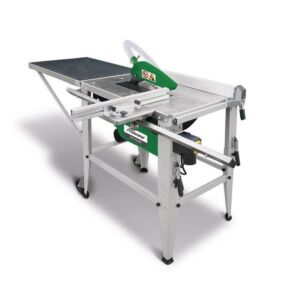
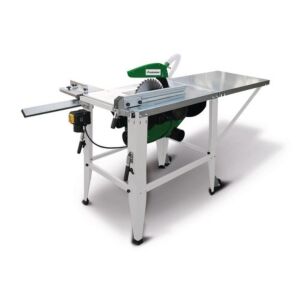
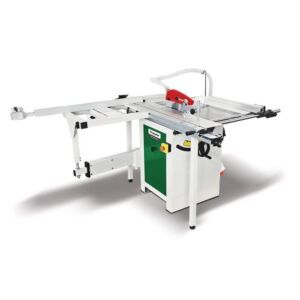
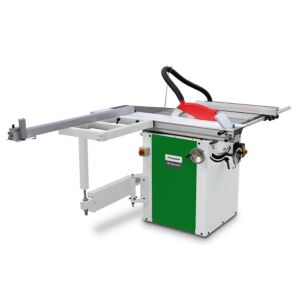
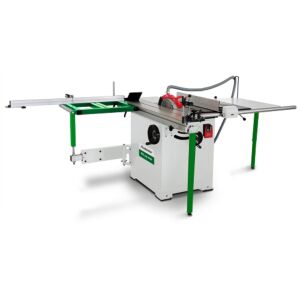
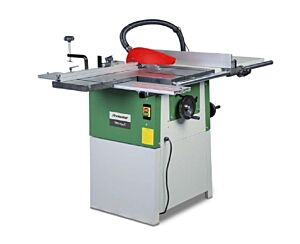
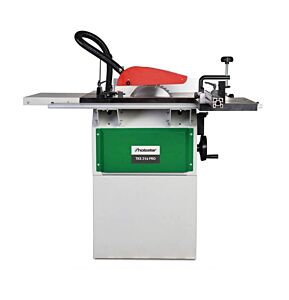
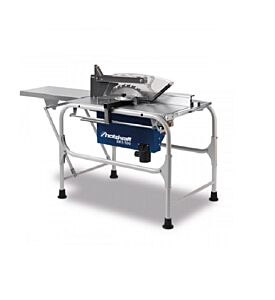
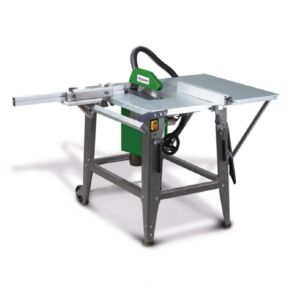
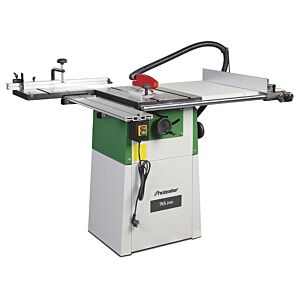
Circular saws for woodworking are machines designed for longitudinal, cross-cutting and, depending on the machine configuration and available equipment, angled cutting operations on panels, boards, solid wood, strips and components intended for furniture and woodworking applications. This category includes bench circular saws and sliding table saws with different configurations in terms of table dimensions, cutting capacity, saw blade diameter, electrical supply and available accessories. The machines shown include compact configurations as well as models equipped with larger work tables and sliding tables, including HOLZKRAFT FKS and TKS configurations, with maximum saw blade diameters reaching approximately 315 mm on the larger models. The range also includes versions designed for 230 V and three-phase 400 V electrical supply.
The main function of a circular saw is to produce a straight cut through the rotation of a toothed saw blade mounted on the machine spindle. The blade removes material mechanically: the teeth penetrate the wood, separate the fibres and create the cutting kerf. The quality of the result depends on the interaction between blade diameter and tooth geometry, number and shape of teeth, material being processed, workpiece thickness, rotational speed, feed rate and overall stability of the machine and guiding system. For this reason, choosing a circular saw should not be based solely on the maximum blade diameter, but should take into account the type of cutting operation that will be performed most frequently.
In professional woodworking machines, the work table and guiding systems are particularly important. A sufficiently large table allows larger panels and boards to be supported securely, while a sliding table enables the workpiece to be guided towards the blade along a controlled path. This configuration is particularly useful when processing furniture panels, doors, cabinet sides, shelves, components for interior design and other parts requiring repeatable and dimensionally accurate cuts. The sliding table also reduces the need to apply lateral pressure to the workpiece during feeding, improving control of the operation and consistency from one workpiece to another.
The rip fence is used for longitudinal cuts, maintaining a constant distance between the edge of the workpiece and the saw blade. The fence must be adjusted carefully and its alignment relative to the cutting path should be checked. Incorrect positioning of the fence can result in dimensional variations, increased friction and unsuitable cutting conditions. For repetitive production work, stable dimensional references should be used and the relationship between the graduated scale, fence position and actual blade position should be checked periodically.
The saw blade can operate vertically or, when the machine is equipped with an inclination mechanism, at an angle relative to the workpiece surface. Changing the blade angle makes it possible to produce bevel cuts and angled components used, for example, in furniture manufacturing, frames, finishing elements, joints and non-orthogonal components. The required angle should be set according to the geometry of the component and checked before production begins, particularly when the cut part must be accurately joined to another component. For repetitive operations, it is advisable to perform a test cut and verify the actual angle with a suitable measuring instrument before starting series production.
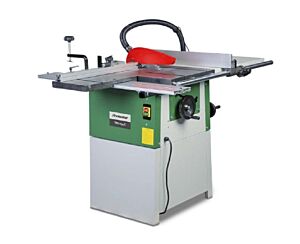
Saw blade diameter directly affects the available cutting capacity, but a larger blade is not necessarily the best choice for every application. The blade must be compatible with the machine spindle, mounting system and operating characteristics. Bore diameter, blade body thickness, tooth geometry and permitted rotational speed must also be compatible with the machine. The models shown include configurations with maximum blade diameters of approximately 315 mm and others with blades around 254–255 mm. This difference demonstrates how the same product category can include machines intended for significantly different woodworking requirements.
Tooth configuration should be selected according to the material and cutting operation. A blade designed for ripping is generally optimised for cutting along the grain, while cross-cutting blades use tooth geometries intended to interrupt the wood fibres differently. When processing coated panels, laminated boards or engineered wood products, particular attention should be paid to tooth geometry and the required quality of the finished edge. An unsuitable blade can cause chipping, burning or a cutting surface that does not meet the requirements of subsequent assembly or finishing operations.
Feed rate must be adapted to the material, thickness, blade characteristics and available machine power. Excessive feed speed can increase cutting forces and reduce surface quality, while feeding too slowly can contribute to blade overheating and burning marks. Blade condition is equally important. A worn blade requires greater cutting force and can generate more heat in the cutting area. For professional woodworking, blade maintenance and sharpening should therefore be considered an integral part of the production process.
Another important factor is the possibility of connecting the machine to an extraction system. Cutting wood generates a considerable quantity of chips and dust, particularly when processing panels and engineered wood products. Correct extraction helps keep the working area clear, reduces material accumulation around the blade and improves visibility of the cutting area. Extraction efficiency depends not only on the extraction unit itself, but also on the correct configuration of extraction points, hoses and ducts, together with regular cleaning and maintenance.
When selecting a circular saw for woodworking, it is therefore necessary to evaluate the dimensions of the workpieces normally processed, maximum material thickness, cutting frequency, need for bevel cuts, useful table and sliding-table dimensions, maximum blade diameter, available motor power, electrical supply and compatibility with the workshop extraction system. A small craft workshop may benefit from a compact and versatile configuration, while a professional woodworking company processing large panels on a regular basis may require a machine with a larger sliding table and greater cutting capacity.
The difference between a compact machine and a more fully equipped configuration is therefore not simply a matter of overall dimensions. A larger work table, longer rip fence and larger sliding table can significantly improve the handling of large panels and the repeatability of cuts. A compact machine, on the other hand, may be more suitable where workshop space is limited or where most workpieces are relatively small. The range shown includes both approaches, allowing the machine to be selected according to the actual capacity required.
For maximum accuracy, it is advisable to periodically check the alignment of the saw blade, rip fence and sliding table, as well as the correct adjustment of blade height and inclination. Before starting a series of identical cuts, a test cut should be made and the resulting dimensions measured. When manufacturing furniture components, even small dimensional deviations can become significant when several parts are subsequently assembled together. Correct initial machine setup reduces the need for manual corrections during later production stages.
Operational safety must always be considered together with cutting accuracy. The workpiece must be adequately supported and guided through the cutting area without placing hands near the blade. For ripping operations, the rip fence and, where provided, push devices should be used correctly. Long or large workpieces should be supported with suitable side or rear supports to prevent loss of stability as the material exits the cutting area. The machine should always be operated with all manufacturer-specified guards and safety devices correctly installed and adjusted.
Circular saws for woodworking are therefore versatile machines suitable for different levels of production, from craft workshops to professional manufacturing of furniture and interior-design components. The availability of different machine sizes, tables, sliding tables, blade diameters and electrical configurations makes it possible to select a solution according to the material, workpiece dimensions and expected workload. Tadaah combines machine availability with a technical approach focused on selecting the appropriate machine configuration, saw blade and accessories according to the intended application, with particular attention to correct machine setup, cutting accuracy and process optimisation.