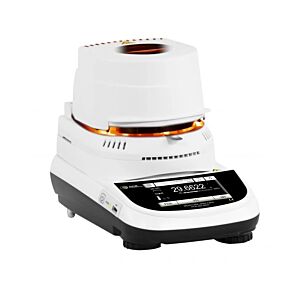
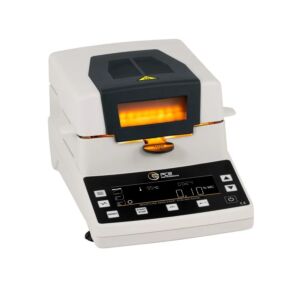
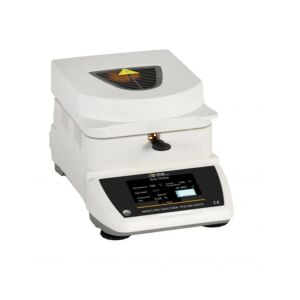
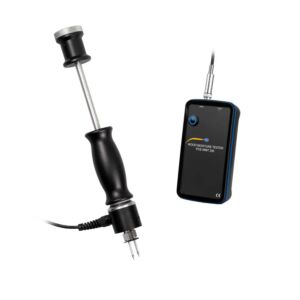
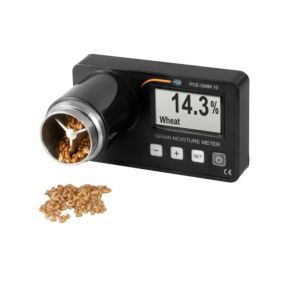
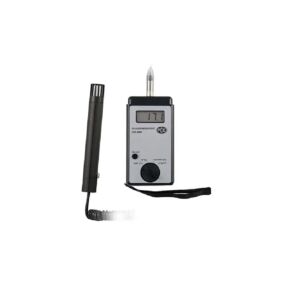
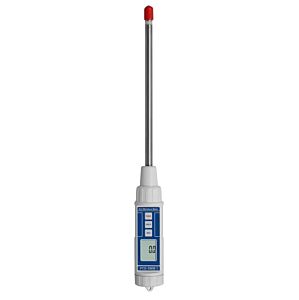
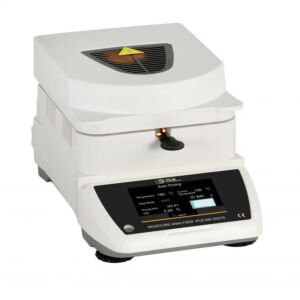
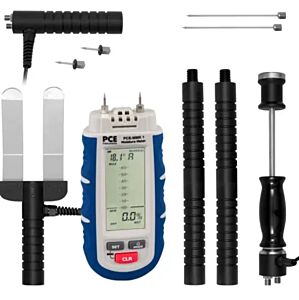
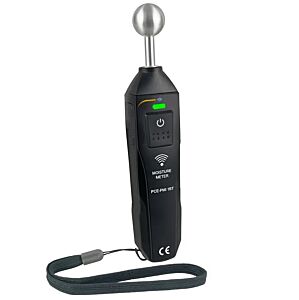
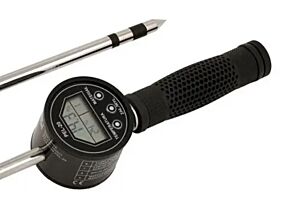
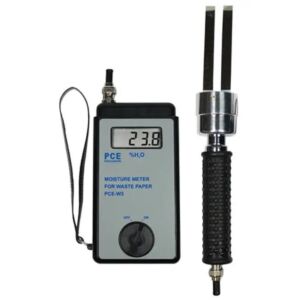
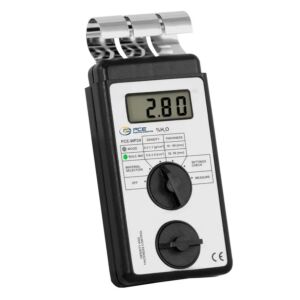
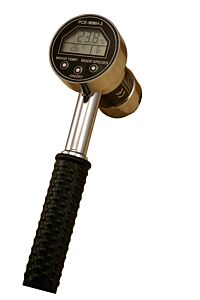
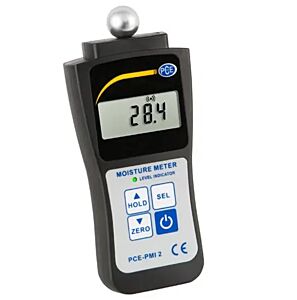
The Material Moisture Meters category includes professional instruments designed to detect, measure and monitor moisture content in construction materials, wood, paper, cardboard, porous materials, screeds, plaster, concrete, masonry, soil, industrial products, sensitive components and laboratory samples. These instruments are used whenever it is necessary to verify whether a material is sufficiently dry, stable, workable, suitable for storage or compliant with the required process conditions. Uncontrolled moisture can cause deformation, swelling, cracking, loss of adhesion, coating defects, dimensional changes, corrosion, mould, surface degradation, reduced mechanical strength and quality problems in the finished product.
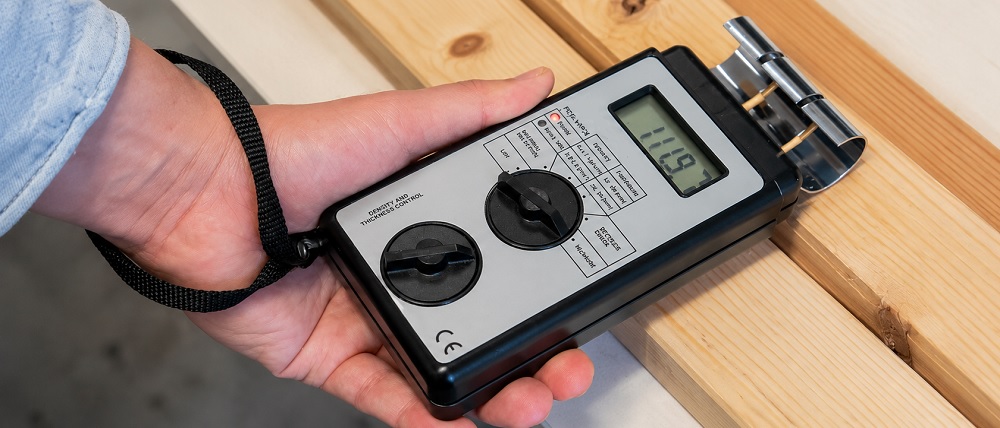
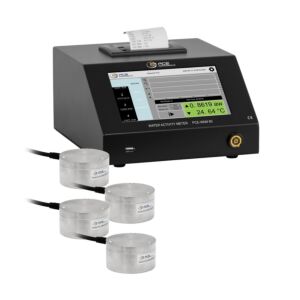
A material moisture meter measures the water content present in a material using different measuring principles. Some instruments use pin probes or needle electrodes to penetrate the material and measure electrical resistance, which is particularly useful for wood, fibrous materials, paper, cardboard and certain construction materials. Other instruments use contact sensors or non-destructive systems, suitable for checking finished surfaces, floors, walls, panels, packaging or components without damaging them. Laboratory models and more advanced analysers can measure water activity, handle samples with higher accuracy, store results, export data and generate technical documentation for quality control and certified processes.
In construction and maintenance, material moisture meters are used to check masonry, screeds, plaster, concrete, substrates, floors, coatings and structures affected by water infiltration, capillary rise, condensation or incomplete drying. Before laying floors, coatings, resins, paints or adhesives, it is essential to verify that the substrate has a moisture level compatible with the material to be applied. A screed that is too wet can compromise adhesion, cause swelling, detachment, stains, deformation and aesthetic or functional defects. In corrective maintenance, the instrument helps locate damp areas, check the result of a drying process, verify leaks and document the material condition before and after repair.
In the wood industry, moisture is one of the most important parameters for dimensional stability, workability and final quality. Wood absorbs and releases moisture according to the environment, and this can cause shrinkage, deformation, warping, cracking, dimensional changes and assembly problems. A moisture meter allows boards, panels, beams, semi-finished products, packaging, furniture components and materials intended for further processing to be checked. In production, moisture control reduces waste, improves gluing and painting, prevents deformation after delivery and ensures greater stability of the finished product.
In paper, cardboard, packaging and fibrous materials, moisture affects weight, stiffness, flatness, strength, adhesion, printability and behaviour during storage. Paper or cardboard with incorrect moisture content may curl, deform, lose stability, absorb ink unevenly or cause packaging problems. Moisture meters allow fast checks of incoming material, the production process and the finished product, providing useful data for quality control and warehouse environmental management.
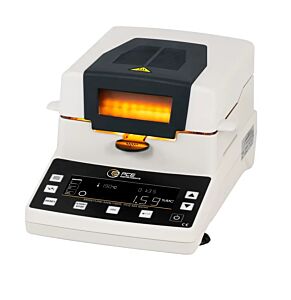
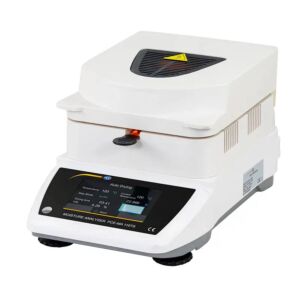
In laboratories and industrial processes, moisture analysers and water activity analysers are used to check samples, raw materials, semi-finished products and finished goods. Water activity is an important parameter when the concern is not only the total amount of water present, but also the availability of water within the product, which is relevant for stability, storage, chemical processes, hygroscopic materials and quality control. Benchtop instruments with memory, touch screen, software and ISO calibration are suitable for professional laboratories requiring repeatable, documentable and comparable measurements over time.
The choice of a material moisture meter must be based on the type of material, measuring range, resolution, accuracy, detection depth, probe type, calibration capability and possible need for data export. Accuracy indicates how close the measured value is to the real value, while resolution indicates the smallest variation readable on the display. For professional use, it is important not to select the instrument only according to price or shape, but according to the material to be checked and the criticality of the application. A quick check on a wall requires different characteristics from a measurement on processing wood, a laboratory sample or an industrial material intended for a certified process.
To obtain reliable measurements, the instrument must be used correctly. The measuring point should be selected in a representative area of the material, avoiding dirty, treated, superficially wet or locally altered surfaces. When using needle probes, it is important to insert them with adequate depth and pressure, maintaining consistent spacing between measurements and considering that the reading may vary depending on density, temperature, internal structure and fibre direction. With non-destructive instruments, the surface should be as uniform as possible and free from metal elements, voids, abnormal coatings or layers that may affect the value.
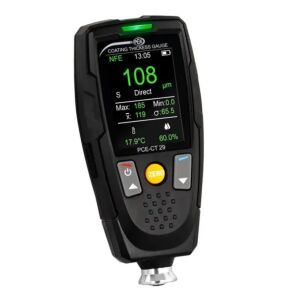
Moisture measurement is also connected to dimensional stability, heights, assembly clearances and form and geometry errors. A material that absorbs moisture can change its dimensions, generate thickness variations, deform, warp or lose flatness. In wood, paper, cardboard, composite materials or construction substrates, these variations may affect dimensions, fits, tolerances, flatness, parallelism and assembly conditions. In a technical context, moisture control is not only used to know whether a material is dry, but also to prevent geometric changes that could compromise assemblies, machining operations, finishes or subsequent dimensional checks.
In industrial processes and quality control departments, material moisture meters help identify the causes of defects that are not always immediately obvious. Paint that does not adhere correctly, unstable bonding, a material that deforms after processing, packaging that loses stiffness or a component that changes dimensions during storage may all be linked to incorrect moisture. For this reason, measurement should be part of a preventive control strategy, together with ambient temperature, relative humidity, material acclimatisation time and storage conditions.
An important practical recommendation is to create internal references for each material and process. There is not always one universal value valid for all applications: the acceptable moisture level depends on the material, its intended use, the type of processing and the subsequent environmental conditions. It is therefore useful to record values on compliant materials, compare them with defective materials and build a technical history that allows reliable operating thresholds to be defined. In laboratories and structured companies, instruments with data memory, CSV or PDF export and calibration certificate improve traceability and documentation quality.
Tadaah presents the Material Moisture Meters category as a technical reference for companies, technicians, engineers, maintenance specialists, laboratories and quality departments that need to measure moisture professionally, reliably and in a documentable way. Choosing the correct instrument helps prevent defects, protect sensitive materials, optimise processing, improve maintenance and quality control, reduce waste and support technical decisions based on real data. For correct selection, it is always advisable to evaluate the material to be measured, measuring method, range, accuracy, resolution, probe, calibration, data memory, robustness and compatibility with the industrial or laboratory environment.