Holzstar planer knives and accessories include replacement components designed to maintain the cutting efficiency, correct setup and chip-collection performance of combined surface planers and thicknessers. The category includes Holzstar replacement knives made from high-speed steel and Holzstar filter bags for the collection systems fitted to compatible machines. Although these products serve the same family of planers, they differ in dimensions, geometry, mounting system and model compatibility.
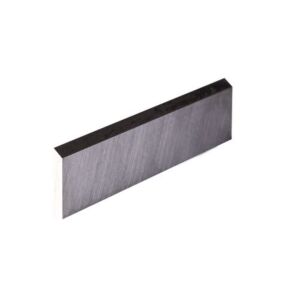
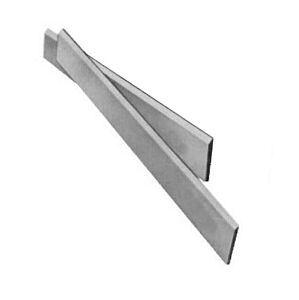
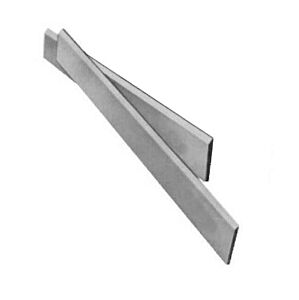
Holzstar planer knives are the cutting tools that remove material directly from the timber. They are installed in the planer cutterblock and rotate across the direction in which the workpiece travels. During each revolution, the cutting edge progressively engages the surface and removes a chip whose form depends on cutting depth, feed rate, timber hardness, grain direction and edge condition.
The high-speed steel used for Holzstar knives provides a practical balance between cutting performance, resistance to wear and the possibility of resharpening where permitted. A correctly sharpened Holzstar knife severs the fibres without requiring excessive pressure, reduces machine load and helps produce a consistent surface. A worn edge compresses and tears fibres, increases feeding effort and may leave ripples, dull areas or repeated defects.
Holzstar knife compatibility cannot be determined from length alone. Before purchasing, users must verify the planer model, knife length, height and thickness, back profile, bevel geometry, clamping arrangement and position within the cutterblock. Two knives that appear similar may not be interchangeable if their thickness, usable height or retention method differs.
Holzstar knives must be replaced as the complete set specified for the cutterblock. Installing one new knife alongside worn or differently sharpened elements can create imbalance and unequal cutting-edge projection. Every knife fitted to the same cutterblock must have equivalent characteristics so that the cutting work is distributed correctly during rotation.
Knife position relative to the Holzstar cutterblock and planer tables is critical. Each cutting edge must project evenly along its complete length, and all knives must reach the same cutting circle. In surface-planing mode, this cutting circle must be correctly referenced to the outfeed table supporting the newly machined face. A knife positioned higher than the others removes more material and may lift the board, while a lower knife contributes little to the cut.
The inclination of a Holzstar knife must also match the cutterblock design. The bevel must face and sit in the direction specified by the manufacturer so that the cutting edge engages the wood at the correct angle. The knife must not be reversed or arbitrarily tilted to change cutting aggressiveness. Incorrect orientation can compromise clamping, alter clearance geometry and make operation irregular or unsafe.
Before installing Holzstar knives, the cutterblock slots, clamping wedges and seating surfaces must be cleaned thoroughly. Chips, dust, resin and residue beneath a knife can prevent correct seating and produce varying projection across its length. Cleaning methods must not scratch or deform the precision surfaces.
Adjustment must be performed with the Holzstar planer disconnected and the cutterblock completely stationary. Edge height should be checked at several points rather than only at the two ends. A setting device suitable for the machine makes uniform positioning easier. Clamping screws or wedges must be tightened progressively in the specified sequence to prevent the knife from moving during final locking.
After installation, the Holzstar cutterblock should be rotated manually to confirm that the knives clear the tables, guards, extraction hood and other components. Before machining a production component, a test should be made on scrap timber. A longitudinal line may indicate local edge damage, while a repeated wave pattern can be associated with unequal knife height, irregular feeding or vibration.
Grain direction affects the result even when Holzstar knives are sharpened and adjusted correctly. If the board is fed against the rising grain, the cutting edge may lift fibres before severing them and produce tear-out. The timber should therefore be oriented, whenever possible, so that the knives cut with the grain. Knots and reversing grain require shallower cuts and steady feeding.
Cutting depth must suit knife condition and workpiece characteristics. Excessive stock removal increases pressure on the Holzstar edge and may promote vibration, tearing and reduced feed performance. If surface quality deteriorates, additional hand pressure or slower manual feeding is not a reliable solution. Knife sharpness, adjustment, grain direction and table cleanliness should be checked.
Wear on Holzstar knives is not always uniform. Hard timber, abrasive species, bonded panels, dirty surfaces and mineral residue accelerate edge deterioration. Nails, screws, staples and other foreign objects may cause immediate chipping. Every board should be inspected and cleaned before planing, including reclaimed or apparently prepared timber.
When Holzstar knives are suitable for resharpening, every element in the set should be ground together to maintain equivalent geometry. Uneven grinding can change knife height, weight and cutting-edge position. The original bevel should be preserved without overheating the steel. Excessively worn, bent, corroded or chipped knives should be replaced.
Spare Holzstar knives should be stored with their cutting edges protected from contact, moisture and impact. They should not be left loose among other tools because the edge may be damaged before installation. A rigid case or divided packaging protects the surfaces and reduces handling risks.
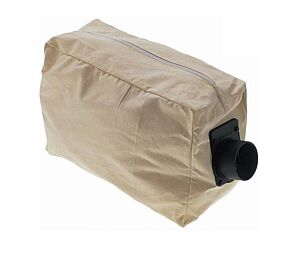
The Holzstar filter bag supports management of the waste produced by planing. The cutterblock generates chips and dust that must be removed from the cutting area through the machine’s extraction outlet. In a compatible arrangement, the Holzstar filter bag receives the material carried by the airflow while allowing air to pass through the filter fabric.
Filter-bag compatibility depends on the Holzstar planer model, outlet shape and diameter, attachment system and airflow requirements. An unsuitable connection can cause leakage, detachment or reduced collection performance. Buyers should confirm that the Holzstar filter bag is intended for the machine or corresponding collection system.
The Holzstar filter bag must be fitted with its connector fully engaged and its retention system secured. The fabric must have enough room to expand without touching hot parts, moving components or sharp edges. Sufficient space around the planer must also be provided so that the bag is not compressed as it fills.
An overfilled Holzstar filter bag reduces available volume, increases resistance to airflow and can impair chip evacuation. The collected material should therefore be removed before it restricts performance. Emptying must be performed with the machine stationary, and the bag must not be squeezed while the system is operating.
The filter fabric must remain clean and permeable. Fine dust can accumulate between the fibres and progressively reduce airflow. The Holzstar filter bag should be cleaned according to the manufacturer’s instructions without using methods that may tear the material or alter filtration performance. A bag with holes, open seams, a damaged connector or weakened fabric must be replaced.
A Holzstar filter bag does not remove the need to keep the extraction hood, outlet and discharge path clean. Long chips, damp material and resin deposits may obstruct the system before waste reaches the bag. If collection performance decreases, the complete path must be inspected with the Holzstar planer disconnected and without reaching near the cutterblock.
Before purchasing Holzstar knives and accessories, the planer model must be identified precisely and compared with the original replacement specifications. Holzstar knives must match in dimensions, material, geometry and clamping system. A Holzstar filter bag must match the outlet, attachment method and collection configuration.
Correctly sharpened and aligned Holzstar knives allow the planer to operate with reduced effort and greater surface consistency. An efficient Holzstar filter bag helps keep the chip path clear and the working area more orderly. Selecting the correct replacement components maintains machine performance, reduces planing defects and supports continuity in joinery, furniture production and professional woodworking.