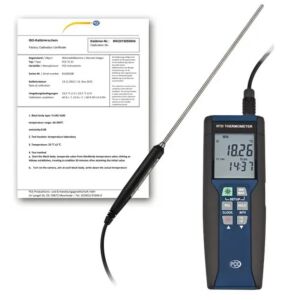
Temperature measuring instruments include a complete range of professional devices designed to measure, monitor and document temperature in industrial environments, laboratories, production departments, HVAC systems, cold rooms, food processes, electrical maintenance and mechanical maintenance. Temperature is a key technical parameter because it affects material stability, component behaviour, plant efficiency, operator safety, final product quality and compliance with control procedures. For this reason, selecting the correct instrument should not depend only on the measuring range, but also on the application, required accuracy, resolution, response time, sensor type and need for data recording or calibration documentation.
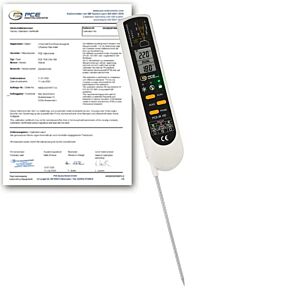
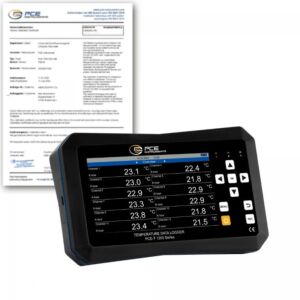
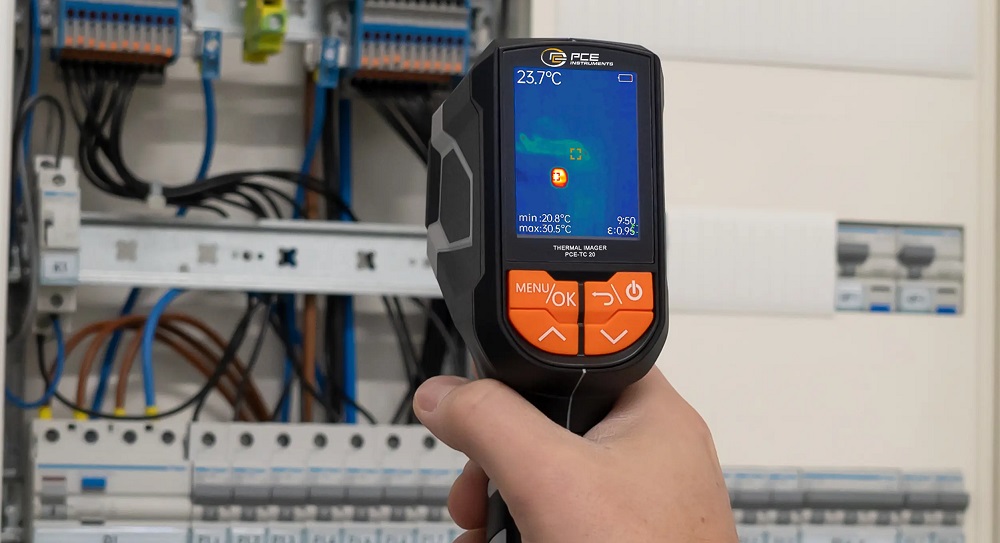
This category includes temperature data loggers for continuous monitoring, probes and thermocouples for measurements with external sensors, thermal imaging cameras for thermographic inspection, infrared thermometers for fast non-contact checks, penetration thermometers for food, liquids and soft materials, refrigeration instruments and probe thermometers for direct point measurements. Each product family answers a different technical requirement: an infrared thermometer allows quick surface checks on motors, electrical cabinets or pipes; a thermal camera helps detect overheating, heat loss, thermal bridges or hidden anomalies; a data logger records temperature trends over time; a penetration probe measures the internal temperature of products or materials where surface measurement is not enough.
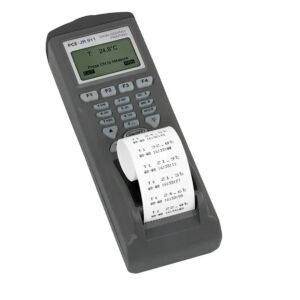
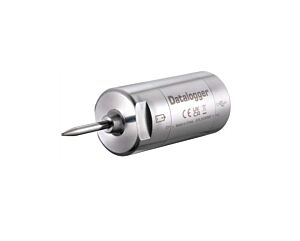
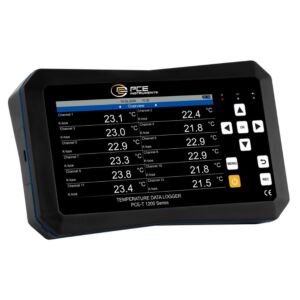
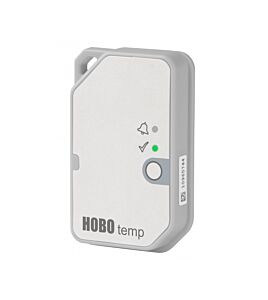
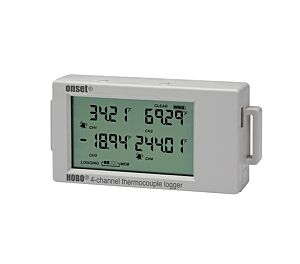
Temperature data loggers are suitable when an environment or process must be monitored for hours, days or weeks with continuous value recording. They are used in cold rooms, warehouses, refrigerated transport, laboratories, production areas, technical rooms, HACCP applications and climate monitoring. Depending on the model, they can include internal memory, USB connection, Bluetooth, dedicated software, PDF or Excel data export, alarm thresholds, internal sensors or thermocouple inputs. They are particularly useful when a company must prove cold-chain continuity, verify environmental stability or document a process with traceable data.
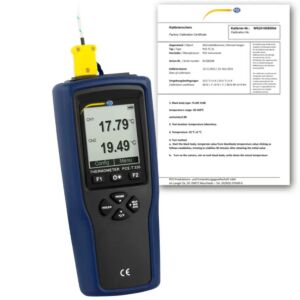
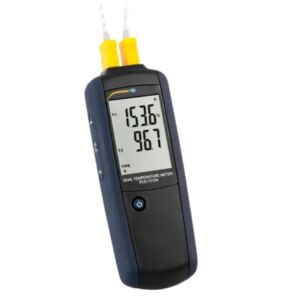
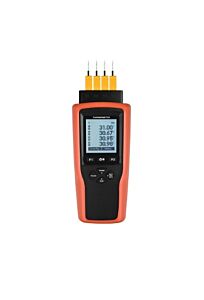
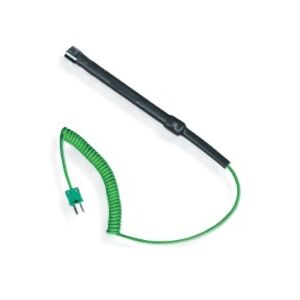
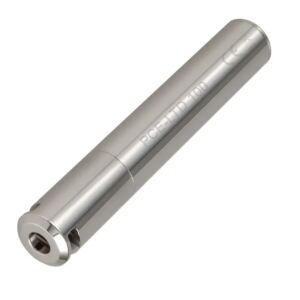
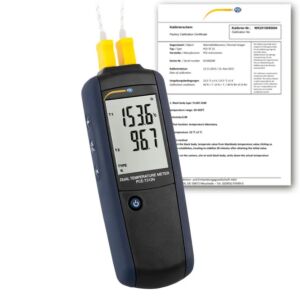
Probes and thermocouples are the sensing part of the measuring system and must be selected according to the temperature range, the material being checked, the shape of the measuring point and the required response speed. Type K thermocouples are widely used in industrial applications because they offer a broad measuring range and good robustness, while specific probes can be designed for surfaces, liquids, air, pipes, contact measurement, penetration or high-temperature applications. Choosing the correct probe improves measurement reliability and reduces errors caused by poor contact, thermal inertia, incorrect positioning or insufficient heat transfer.
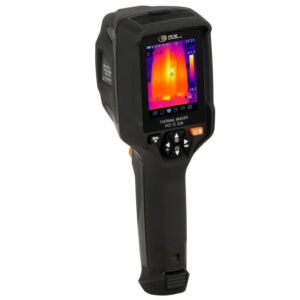
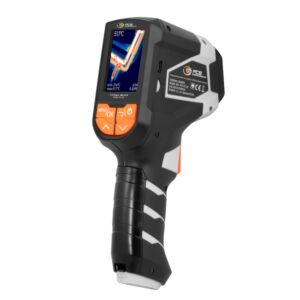
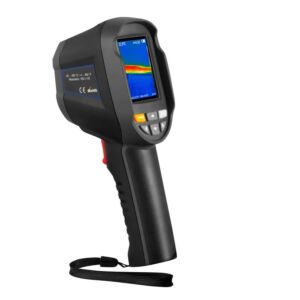
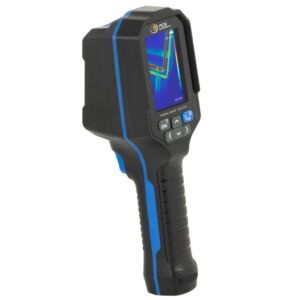
Thermal imaging cameras are advanced instruments for visual temperature analysis. They convert temperature differences into images, making overheating, heat dispersion, critical points, insulation defects, electrical problems, bearings with abnormal temperature, stressed motors or thermally loaded components immediately visible. They are used in preventive maintenance, industrial diagnostics, electrical inspection, fault finding and energy checks. A thermal camera does not always replace contact measurement, but it allows the operator to quickly identify the areas that require deeper investigation with more specific instruments.
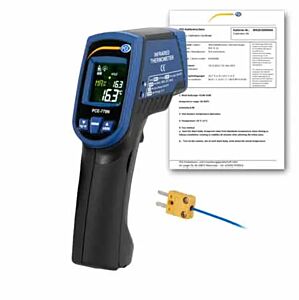
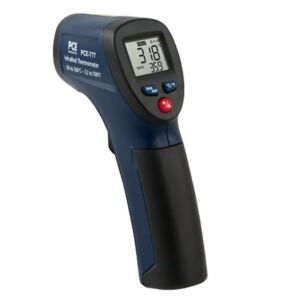
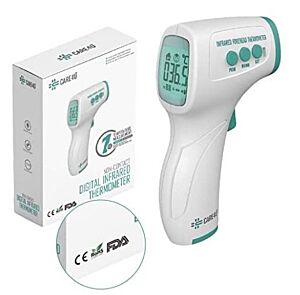
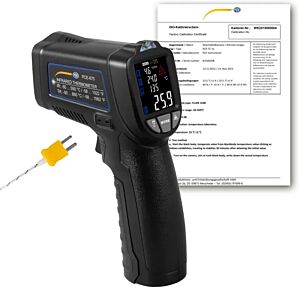
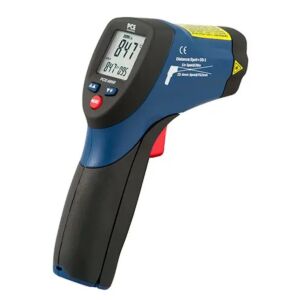
Infrared thermometers and pyrometers are ideal for fast non-contact measurements, especially when the target is hot, moving, difficult to access or must not be contaminated. They are used on metal surfaces, plants, pipes, electrical panels, motors, moulds, ovens, ventilation systems, processed materials and general maintenance checks. When choosing one, it is important to evaluate the distance-to-spot ratio, adjustable emissivity, temperature range, laser pointer, optical resolution and the possibility of connecting an external probe. Infrared measurement must always be interpreted correctly, because shiny, reflective or angled surfaces can generate unreliable readings if the instrument is not adjusted or used properly.
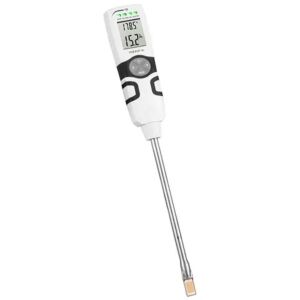
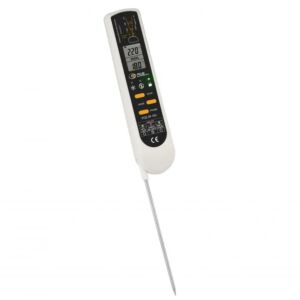
Penetration and refrigeration instruments are designed for direct checks in food, liquids, cold rooms, refrigerated counters, professional kitchens, food laboratories, temperature-controlled transport and processes where the internal product temperature is more important than the surface temperature. In HACCP applications and cold-chain control, these instruments help verify storage, cooling, freezing, preservation and product compliance. The choice depends on probe length, response time, accuracy, ease of cleaning, instrument protection and the possibility of documenting measurements.
Probe thermometers are practical and versatile instruments for point temperature measurements with integrated or external sensors. They can be used in laboratories, maintenance, quality control, HVAC systems, workshops, refrigerated environments, production processes and general technical checks. Compared with non-contact thermometers, they provide direct measurement on the point or inside the material, reducing the influence of surface emissivity. They are particularly useful when a stable, repeatable and comparable measurement is required, especially on liquids, ducted air, components, closed environments or materials where physical contact is necessary.
To choose the right temperature measuring instrument, the real application must be evaluated first. For quick surface and component checks, an infrared thermometer is suitable; for detecting anomalies over an area, a thermal camera is preferable; for continuous monitoring and value documentation, a data logger is recommended; for food, liquids and refrigeration, penetration thermometers or dedicated probes are more suitable; for flexible industrial measurements, a thermometer with thermocouple input and interchangeable probes is often the best solution. In technical applications, it is also important to check accuracy, resolution, ISO calibration, calibration interval, instrument protection, data memory, alarms, display type and software compatibility.
This macro-category is intended for technicians, engineers, maintenance operators, laboratories, quality managers, refrigeration technicians, HVAC professionals, food industries, manufacturing companies, machine builders and professionals who need reliable and repeatable measurements. Tadaah offers temperature measuring instruments suitable for professional use, with solutions for point checking, continuous monitoring, thermal diagnostics and data documentation. The aim is to provide a clear and technically useful category that supports both purchasing decisions and correct instrument selection.