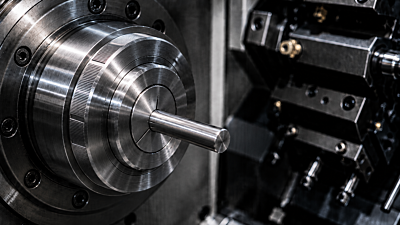
Bar Clamping and Dimensional Stability in Automatic Machining Operations
Bar clamping is a fundamental factor for ensuring dimensional stability, vibration reduction and production continuity on automatic lathes, CNC machines and sliding-headstock lathes. The quality of the bar clamping collet directly affects part accuracy, tool life and the overall performance of the machine.

Process Industrialization in Multi-Spindle Lathes Through the Design of Special Cam Systems
In multi-spindle automatic lathes, productivity, quality and process reliability depend on the balance between machine, tooling, material and machining cycle. In this context, the design of special cam systems allows the machine kinematics to be optimized and supports the industrialization of the manufacturing process.

Regulations and Coolants: The Real Impact on Machining
Health, safety, and environmental regulations directly influence the composition of coolant-lubricants used in machining operations. The presence or restriction of specific additives alters cutting performance, affecting process stability, tool life, and chip management. This article analyzes the relationship between regulations, fluid behavior, and the actual impact on machinery and production.
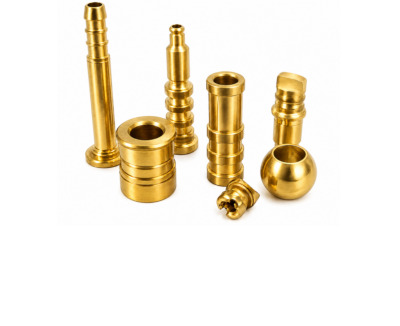
Differences in machining between CW510 and CW614 brass on multi-spindle lathes
Machining CW510 brass requires a completely different approach compared to CW614 brass on multi-spindle automatic lathes. In this article, we analyze the main differences between the two alloys, focusing on chip control, thermal management, machining parameters, and production process stability.

Chip control and dimensional stability in the machining of CW510 brass on multi-spindle lathes
Chip control during the machining of CW510 brass on multi-spindle automatic lathes is critical to ensuring dimensional stability, production continuity, and reduced scrap. In this article, we analyze the main challenges and the technical approach for optimizing the process and improving machine efficiency.
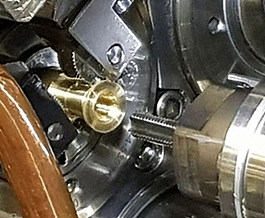
Machining of lead-free CW510 brass on a multi-spindle lathe: issues and process optimization
The machining of lead-free CW510 brass on multi-spindle automatic lathes can present challenges related to chip control, dimensional stability, and productivity. In this article, we analyze the main causes and the technical solutions adopted to stabilize the process, improve quality, and reduce cycle times.