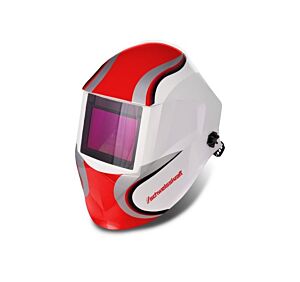
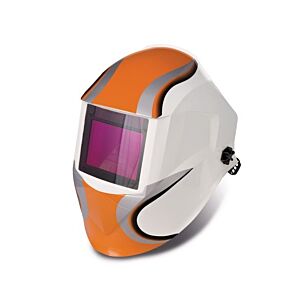
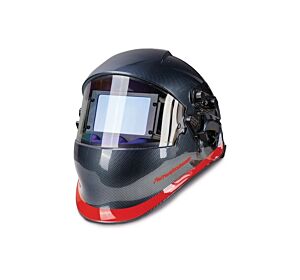
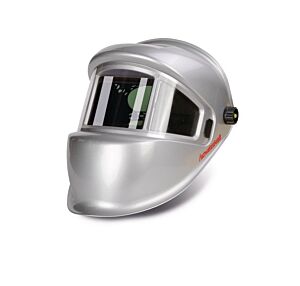
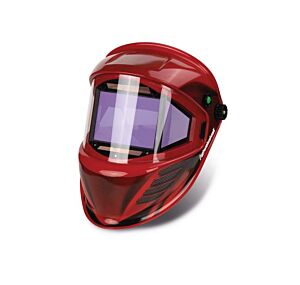
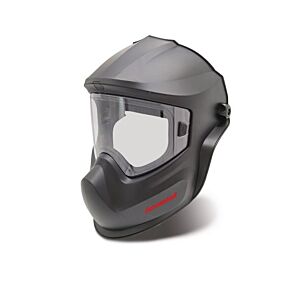
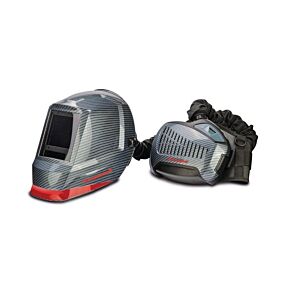
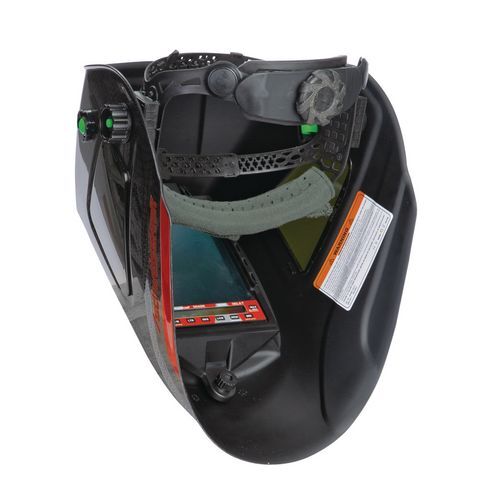
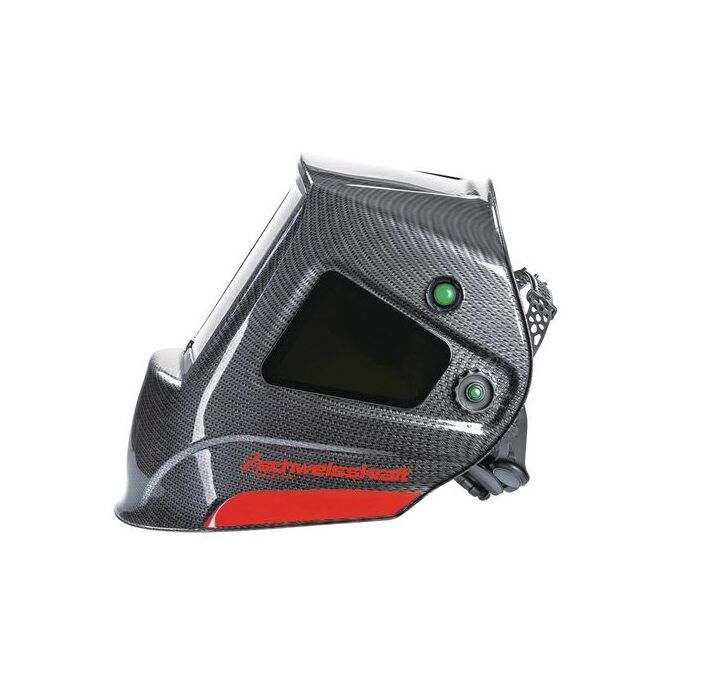
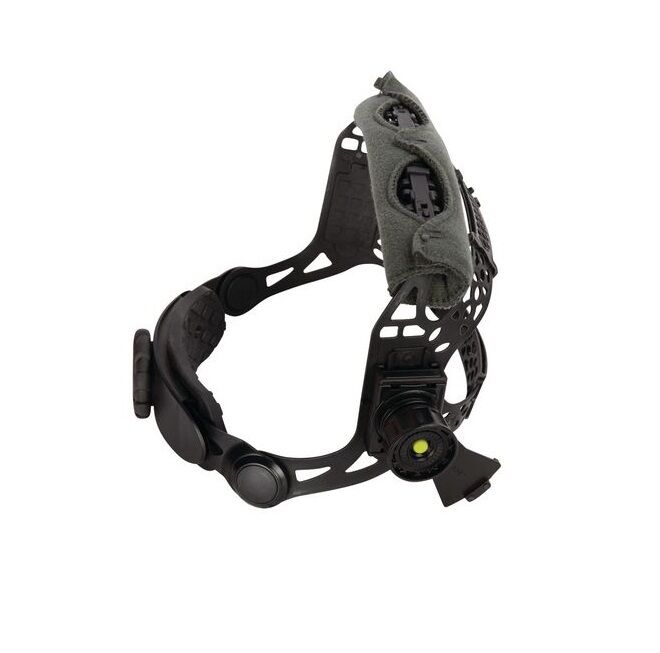
SCHWEISSKRAFT 1654030 Protective automatic welding helmet suitable for electrode, MIG/MAG and TIG welding, suitable for professional use, 180° self-darkening visor
(Incl. Tax: €192.15)
- VarioProtect 3XL-W DIGITAL TC
- Ideal for MIG, MIG/MAG and TIG welding processes and grinding operations
- Large 180° viewing area thanks to side protection glasses
- Digital mask filter for easy and intuitive operation
- Switching between grinding/welding modes without having to raise and/or lower the helmet between the different work processes, thus allowing freedom of manual action
- Reliable eye protection
- Visor material Nylon

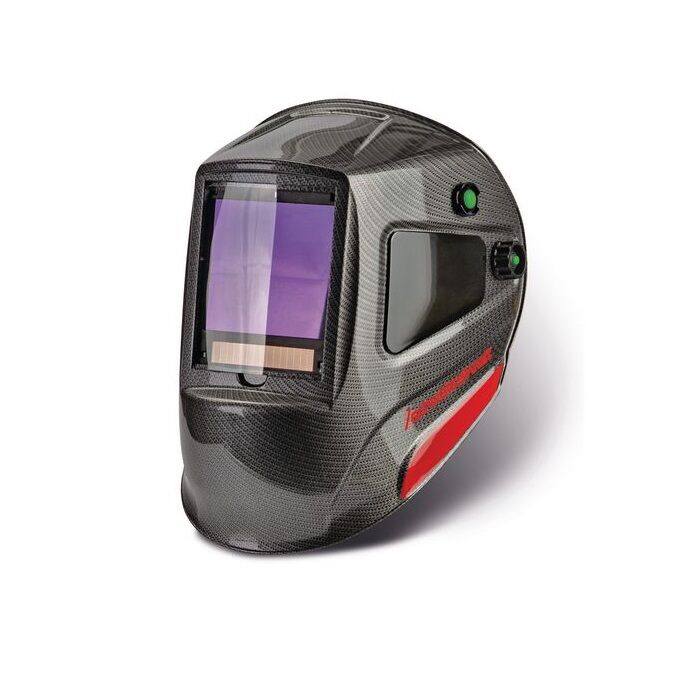
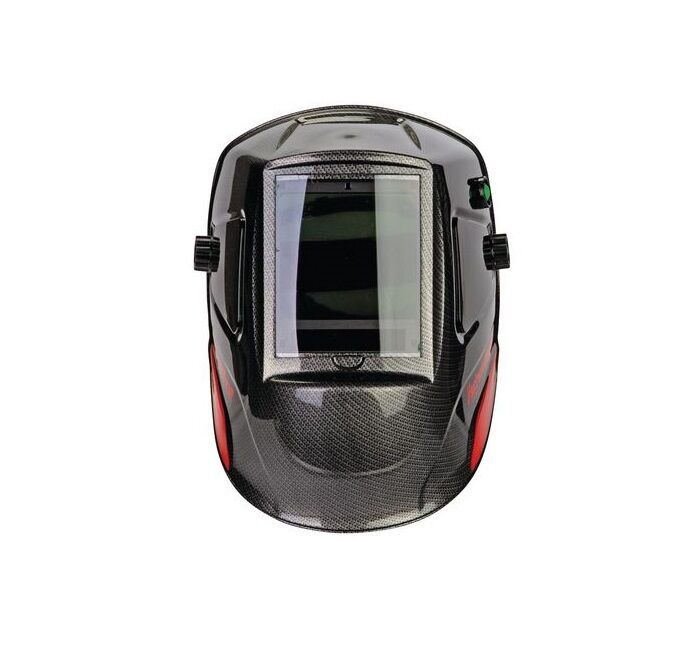
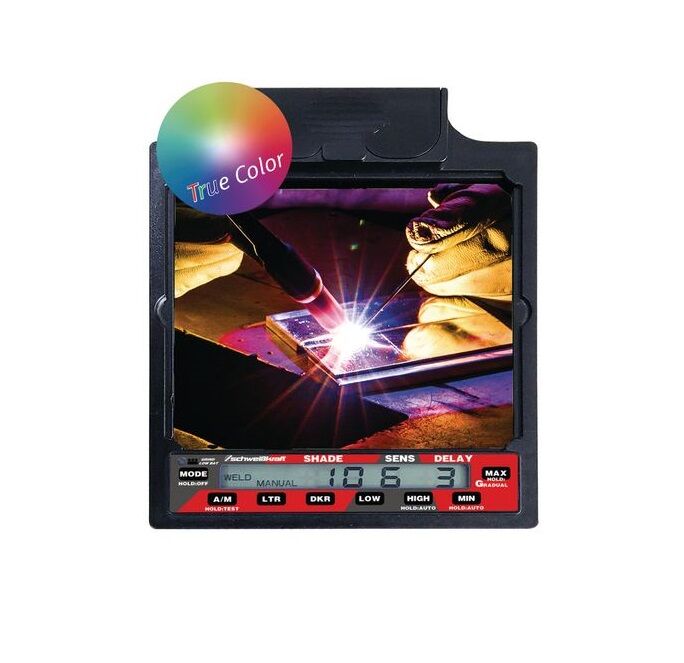
| Viewing Area (mm) | 100 x h 93 |
| Light/Dark Response Time (ms) | 0.04 |
| Dark/Light Response Time (ms) | 60 – 1200 |
| Dimming Level |
DIN 4 - 8/8 -13 |
| UV/IR Protection | Protection Class 16 (fixed) |
| Light Shade | Protection Level 4 |
| Solar Cells | Yes |
| Battery Type | Lithium 3V CR2032 |
| Replaceable Battery | Yes |
| Number of Sensors | 5 |
| * EN 371 Rating | 1/1/1/1 |
| Visor Material | Nylon |
| Dimensions (mm) | 252 x 289 x h 336 |
| Weight (g) | 550 |
- Full visibility, effective eye protection; automatic darkening takes place immediately after the arc is ignited
- Electronically controlled liquid crystals act as sensors that detect the welding arc and respond immediately by displaying a dark or bright image
- UV/IR filter blocks harmful radiation
- On some models it is possible to continuously adjust the level of protection from the outside of the helmet without having to remove the helmet itself
- Automatic darkening can be deactivated, thus also becoming usable for grinding (grinding mode)
The choice of the helmet is mainly made through the evaluation of the classes according to EN 379 standard which specifies the requirements, test methods, and marking for automatic darkening filters (ADF) used in welding helmets.
The evaluation of welding masks is essential to ensure the safety and effectiveness of protection during welding operations. Masks are classified according to various criteria that measure their performance in different areas:
1. Optical Class:
Assesses the optical quality of the welding mask filter, including aspects such as visual clarity and image distortion through the filter. A good optical class ensures that the welder can clearly see the work area without distortion.
2. Scattering Class:
Measures the amount of scattered light through the mask filter. A low scatter class indicates a better ability of the filter to reduce scattered light, improving visibility and reducing eye fatigue for the welder.
3. Homogeneity Class:
Evaluates the uniformity of the filter in terms of light transmission across the entire surface of the filter. A high homogeneity class means that the filter transmits light uniformly, with no darker or lighter spots that could disturb the welder's vision.
4. Angle Property Class:
Measures the performance of the filter in relation to viewing angle, assessing how well the filter maintains its protective and light transmission properties when viewed from different angles. This is crucial for welders who often have to work in awkward positions or at varying viewing angles.
Test Methods
The EN 379 standard specifies various test methods to ensure that the filters meet the above-mentioned requirements. These include tests to evaluate optical quality, reaction speed, impact resistance, and UV and IR radiation protection. Each filter complying with the EN 379 standard must be clearly marked with specific information, including:
- 1 represents the highest level of performance.
- 2, 3, 4 represent progressively lower levels.
- EAN Code:
- 4036351276807
- Typology:
- Welding Helmet
- Brand:
- SCHWEISSKRAFT