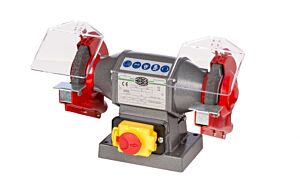
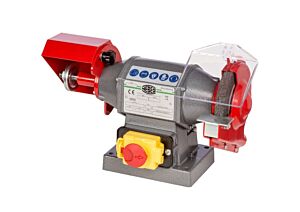
Original NEBES 125/10G Grinding wheel grey corundum G36 or G60 for S-125 and C-125 Bench Grinders - Dimensions 125x16x20mm
(Incl. Tax: €23.18)
- Buy 2 for €17.10 each and save 10%
- Buy 5 for €15.20 each and save 20%
- Buy 10 for €13.30 each and save 30%
- Dimensions: 125 x 16 x 20 mm (Diameter x Thickness x Hole)
- Compatibility: Suitable for S-125 grinders and C-125 combination machines
- Material: High-quality grey aluminium oxide, ideal for precise and long-lasting grinding
- Grit G 36 (coarser)
- Grit G 60 (finer)

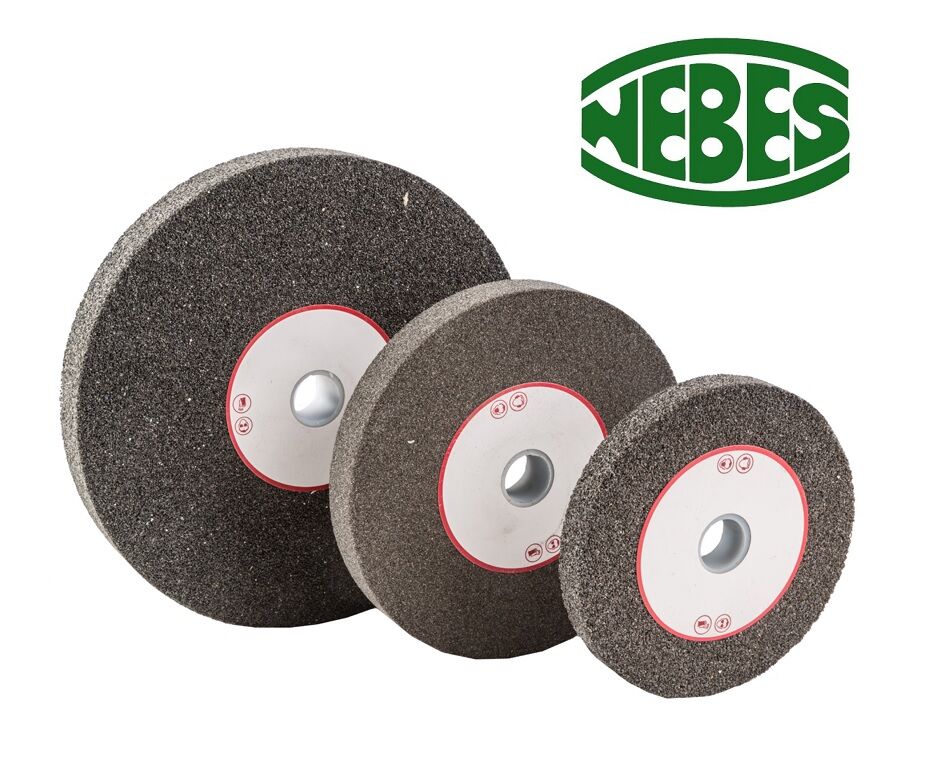
ORIGINAL NEBES GRINDING WHEELS
Why choose an original NEBES Elettromeccanica grinding wheel?
NEBES original grinding wheels are designed to guarantee maximum compatibility with machines of the same brand, ensuring optimum performance and safety during use. Made from high quality materials and precision-machined, they offer longer life and consistent workmanship. Choosing an original NEBES spare part means getting the most out of your equipment, improving the efficiency and quality of every process.
Brown-grey Aluminum Oxide (A)
Due to its higher toughness, brown aluminum oxide is widely used in foundries for deburring cast iron or steel parts, where dimensional tolerances are less strict but mechanical stress is high. In shipyards or railway maintenance, resinoid cutting discs enable heavy-duty grinding, with stock removal up to 0.2 mm/pass on rough welds.
A typical risk is loading (metal buildup) when pressure is excessive or the grit is too fine for the material. For example, undressed G60 wheels on cast iron can accumulate metal on the abrasive surface, reducing cutting efficiency and increasing energy consumption. To prevent this, star dressers and wheel concentricity checks are essential after each use.
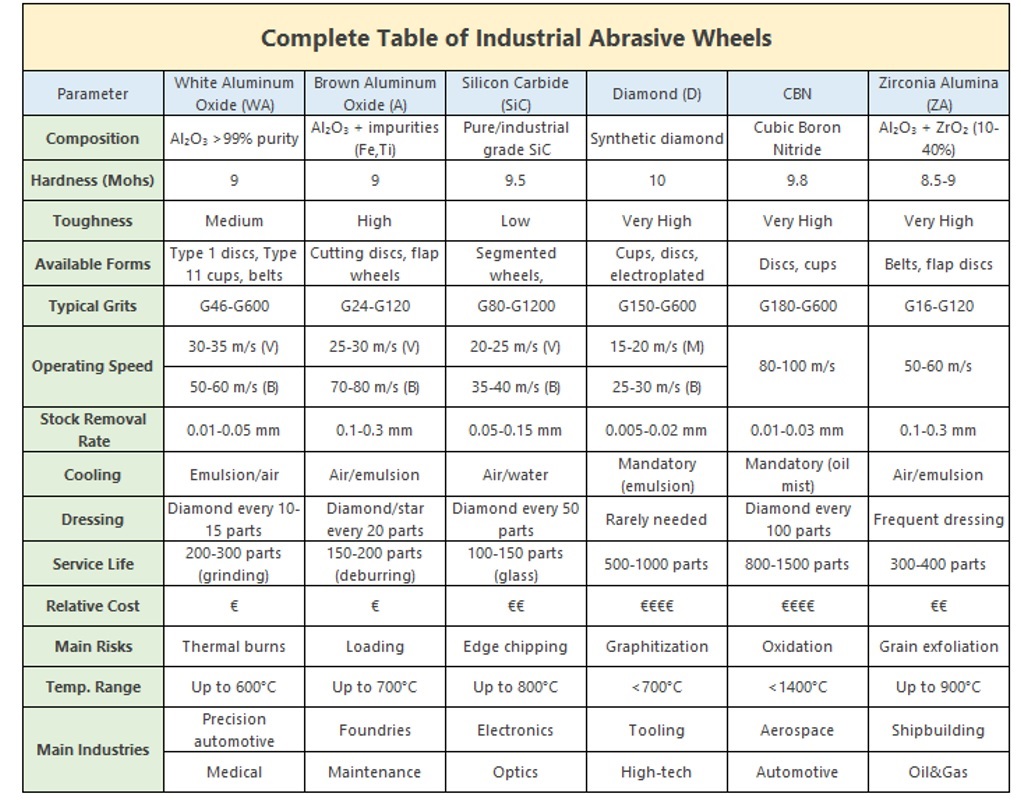
Complete Guide to Abrasive Wheels
Abrasive wheels are fundamental tools in manufacturing, where precision, efficiency, and durability are critical factors for final product quality. This manual aims to provide a detailed overview of different types of abrasive wheels, analyzing their composition, applications, operational parameters, and maintenance best practices.
The correct wheel selection depends not only on the material being processed but also on the type of machining, required surface finish, and specific operating conditions. A poorly chosen abrasive can lead to unsatisfactory results, premature equipment wear, or, in the worst cases, damage to the workpiece. Therefore, this guide explores not only the technical characteristics of each wheel but also the risks associated with their use, such as loading, overheating, and loss of flatness.
Special attention is given to dressing, an often-underestimated but essential operation for maintaining optimal wheel performance. Proper dressing ensures stable machining, reduces downtime, and extends the abrasive's service life.
This manual is structured to offer quick reference through summary tables while also providing in-depth explanations for those needing a comprehensive understanding of the processes. From automotive and aerospace applications to non-ferrous metals and ceramics, each chapter covers specific aspects with practical examples and operational advice.
Whether you are a technician, machine operator, or designer, this guide serves as a reliable technical reference to optimize production processes and improve machining quality.
Comparative table of abrasive grits:
| Grit (G) | Particle Size (µm) | Type |
|---|---|---|
| G 12 | 1815 | Very Coarse |
| G 16 | 1324 | Very Coarse |
| G 20 | 1000 | Coarse |
| G 24 | 765 | Coarse |
| G 30 | 609 | Medium |
| G 36 | 511 | Medium |
| G 46 | 356 | Medium |
| G 54 | 299 | Medium |
| G 60 | 251 | Fine |
| G 80 | 190 | Fine |
| G 100 | 140 | Very Fine |
| G 120 | 115 | Very Fine |
| G 150 | 100 | Extra Fine |
| G 180 | 82 | Extra Fine |
| G 220 | 68 | Super Fine |
| G 240 | 58 | Super Fine |
| G 280 | 48 | Ultra Fine |
| G 320 | 40 | Ultra Fine |
| G 400 | 29 | Ultra Fine |
| G 500 | 20 | Ultra Fine |
| G 600 | 16 | Ultra Fine |
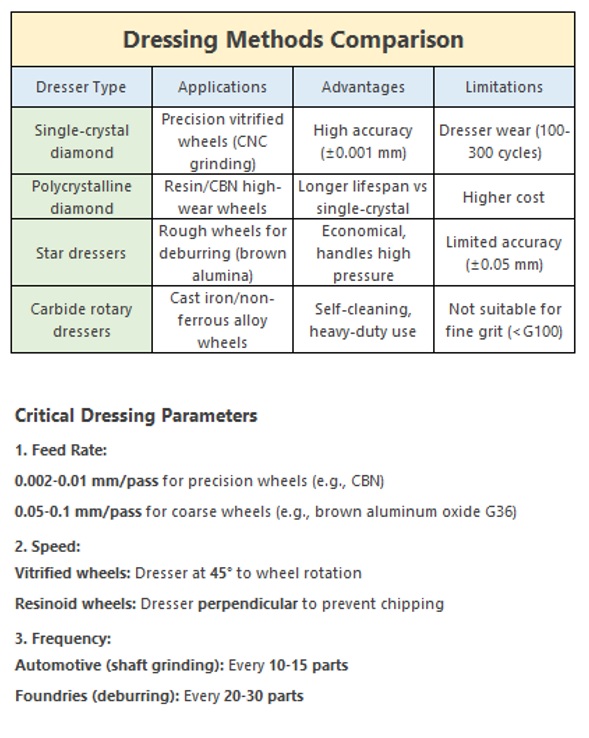
Dressing of Abrasive Wheels
Dressing is a fundamental operation in abrasive wheel machining, consisting of restoring the wheel's geometry, flatness, and cutting ability when it becomes worn, dull, or clogged.
A proper dressing operation determines 70% of a wheel's performance. Perfect dressing can increase a wheel's average lifespan by 50%, while also improving workpiece quality.
Dressing is performed to sharpen and reshape a wheel through the following actions:
- Removal of dull grains (exposed but no longer sharp)
- Elimination of loading (accumulations of workpiece material embedded in the wheel)
- Restoration of porosity (to allow chip evacuation)
If dressing is not performed, several issues arise:
- Reduced performance: Decreased material removal rate and overheating
- Poor quality: Irregular surfaces, thermal burns (on steels)
- Safety risks: Dynamic imbalances that may fracture the wheel
Common Errors to Avoid in Dressing
Due to insufficient precision in dressing, the following problems may occur:
- Insufficient dressing: The wheel appears "glazed" but does not cut (sign of still-dull grains)
- Excessive pressure: Chipping of abrasive grains
- Asymmetric dressing: Uneven wear causing vibrations
Proper dressing is essential for maintaining optimal cutting efficiency, surface finish, and wheel longevity.
- Brand:
- NEBES Elettromeccanica
- Spare type:
- Original
- Typology:
- Grinding wheels
- Machine Type:
- C-125, S-125
- Size:
- 125x16x20mm