VOGEL 935.110 Portable surface roughness tester with probe, external measurement, 4 roughness scales, 0.01μm resolution
(Incl. Tax: €1,351.39)
The product is a new portable rugosimeter characterised by high accuracy, wide range of applications and simple operation. Applicable to surface testing of all types of metals and non-metals. Made of aluminium moulds, durable, anti electromagnetic interference.
Unbreakable ABS case: 110x81x32
Probe supplied
4 measurement parameters (μm): Ra, Rz, Rq, Rt.
Weight: 150 g

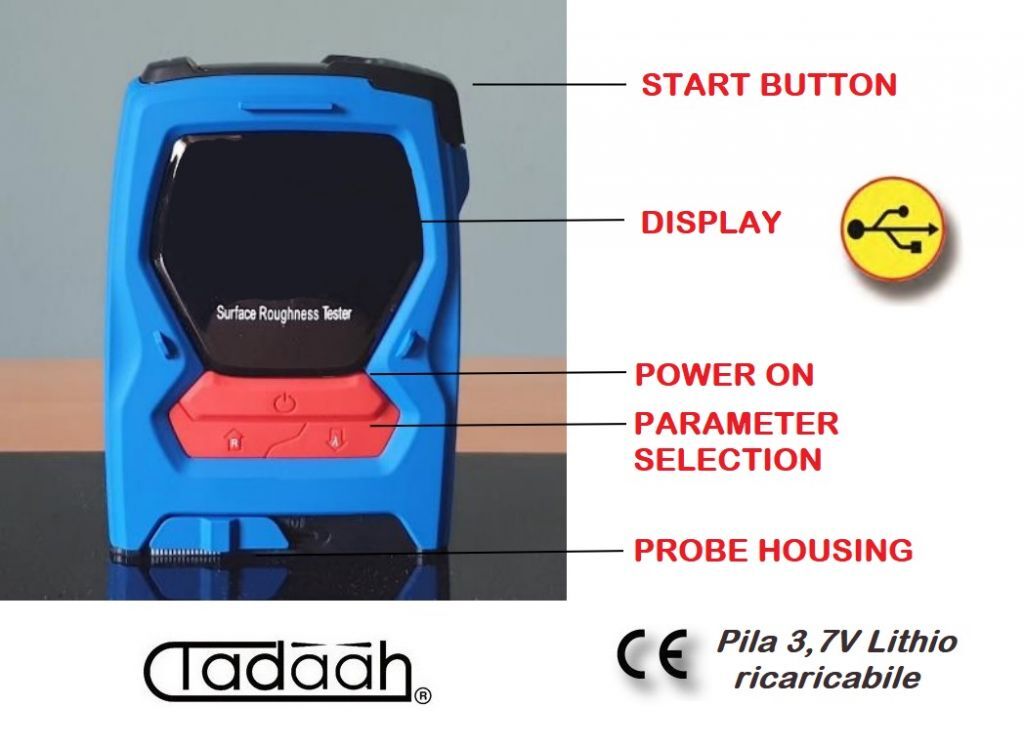
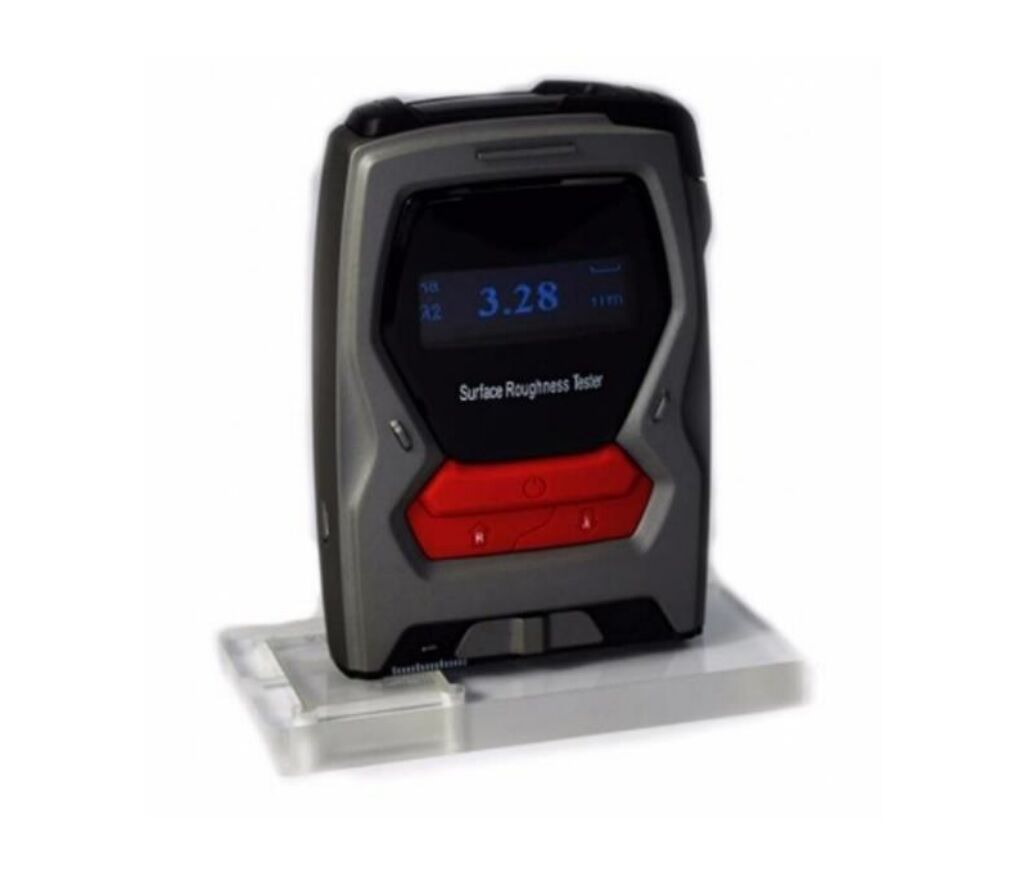
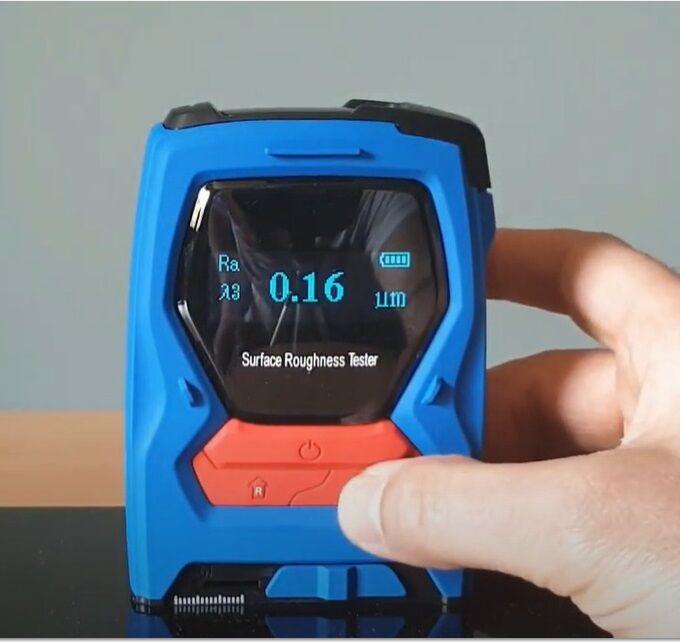
| Physical Characteristics | |
|---|---|
| Dimensions (mm) | 110 x 81 x 32 |
| Probe Included | Built-in |
| Weight (g) | 150 |
| Technical Specifications | |
| Roughness Parameters (μm) |
Ra, Rq: 0.05 ~ 15.0 |
| Sampling Length | λ1: 0.25 mm λ2: 0.80 mm λ3: 2.50 mm |
| Evaluation Length | λ1: 1.25 mm λ2: 4.00 mm λ3: 5.00 mm |
| Stroke Length | 6.00 mm |
| Precision | 0.01 μm |
| Deviation | 7-10% |
| Stylus Radius | 10 μm ± 1 μm |
| Contact Force | < 0.016 N |
| Operating Temperature | -10°C to +50°C |
| Power Supply | Rechargeable lithium battery |
| Language | English |
The Piezoelectric Stylus in Portable Roughness Testers
The piezoelectric stylus is the key component of portable roughness testers, instruments used to measure the surface roughness of a material with high precision. It works based on the piezoelectric effect: when the stylus comes into contact with the surface to be analyzed, it undergoes micro-movements that generate an electrical potential difference proportional to the deformation. This variation is then processed by the roughness tester to calculate roughness parameters such as Ra, Rz, Rt, etc.
Sensitivity and Precision of the Stylus
The piezoelectric stylus is extremely sensitive and capable of detecting minute variations in the range of a few nanometers. This precision is crucial for ensuring reliable and repeatable measurements, especially in critical industries such as mechanical and aerospace manufacturing.
However, due to its extreme delicacy, the stylus must be handled with great care. Any impact, drops, or collisions can damage it irreparably, compromising the measurements and necessitating a costly replacement.
Importance of Handling the Stylus During Transport and Use
The piezoelectric stylus is a very fragile component. To avoid damage, the following precautions should be taken:
- Safe Transport:
- Always use the protective case provided.
- Avoid placing the roughness tester in a way that could cause the stylus to hit hard surfaces.
- Do not transport the roughness tester in environments with excessive vibrations or shocks.
- Avoid Impacts and Drops:
- Never leave the roughness tester in an unstable position.
- Do not apply excessive pressure to the stylus during measurement.
- Ensure the operator uses the instrument with steady hands and without sudden movements.
- Proper Storage:
- After each use, store the instrument in a rigid case.
- Avoid exposure to dust, humidity, or extreme temperatures.
Why the Stylus is the Most Expensive Spare Part of the Roughness Tester
The piezoelectric stylus is the heart of the roughness tester and its most technologically advanced component. Its high precision and sensitivity depend on high-quality piezoelectric materials and meticulous mechanical construction.
When the stylus is damaged, the entire instrument becomes unusable, as the roughness tester can no longer accurately detect roughness variations. Replacement is costly for several reasons:
- High-Precision Materials: The piezoelectric sensors are made from special crystals that generate electrical signals with extreme accuracy.
- Advanced Micro-mechanics: The stylus must ensure minimal and repeatable movements, with perfectly calibrated geometries.
- Complex Calibration Process: Each stylus undergoes rigorous testing to ensure compliance with metrological standards.
For this reason, it is essential to handle the stylus with the utmost care. Accidental damage can not only result in high replacement costs but also render the instrument unusable and disrupt quality control activities.
Definitions
Roughness refers to a surface's property characterized by micro-geometric imperfections, consisting of peaks and valleys that form small gaps.
- Sampling Length: The reference length used to determine the surface's roughness.
- Evaluation Length: The length required to evaluate the roughness profile, which may include one or more sampling lengths.
Measurement Parameters:
- Ra: Arithmetic mean of the roughness, expressed in microns, representing the average deviation (in absolute value) of the actual surface profile from the mean line.
- Rz: Maximum height of irregularities, i.e., the distance between the highest peak and the deepest valley within the sampling length.
- Rq: Root mean square deviation of the profile points from the mean line.
- Rt: Total peak-to-valley height, representing the sum of the highest peak and the deepest valley over the evaluation length.
- Brand:
- VOGEL
- Typology:
- Roughness meter