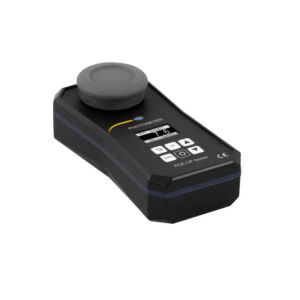
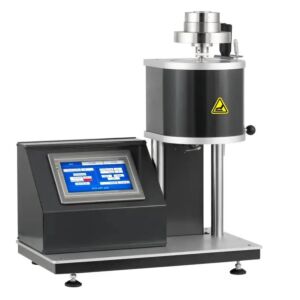
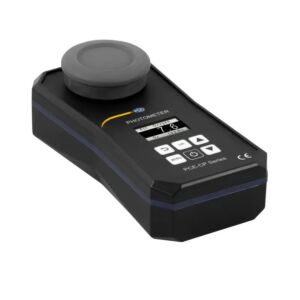
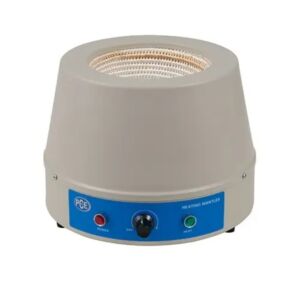
The Laboratory Instruments category includes professional devices designed for the preparation, measurement, heating, treatment, control and verification of samples, liquids, solutions, materials and substances used in technical, industrial, food, environmental, chemical and quality control laboratories. This subcategory includes heating mantles, portable and multiparameter pH meters, instruments for pH and conductivity measurement, sterilizers, muffle furnaces, material testing devices and support equipment for sample handling. These instruments are intended for technicians, engineers, maintenance specialists and professional operators who need repeatable measurements, controlled preparation and reliable technical data.
Laboratory instruments are used whenever a sample must be processed under controlled conditions. A liquid may need uniform heating before a test, a solution may require pH or conductivity measurement, a material may need heat treatment, a probe may need sterilization, and a sample may need preparation before quality control or technical testing. In all these cases, the instrument allows the technician to move from an approximate manual procedure to a more stable, verifiable and documentable method.
Heating mantles are used to heat flasks, beakers or laboratory containers more uniformly than direct heat sources. They are used in chemistry, analysis, sample preparation, evaporation, distillation, process control and tests where a liquid or substance must be brought to a defined temperature. Temperature regulation is essential because heating that is too rapid or uneven can alter the sample, change viscosity, cause uncontrolled evaporation, influence reactions or compromise test repeatability. For this reason, the heating mantle should be selected according to container volume, power, temperature range and required stability.
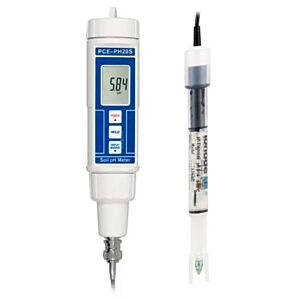
pH meters and multiparameter instruments measure essential parameters such as pH, conductivity, temperature, redox potential and other values related to the quality of solutions, water, technical liquids, environmental samples, food products, chemical treatments and industrial processes. pH indicates the acidity or alkalinity of a solution and is essential in laboratories, quality control, water treatment, agriculture, food production, chemistry and plant maintenance. A solution with incorrect pH can cause corrosion, chemical instability, unwanted reactions, compatibility problems with materials or process non-compliance.
Conductivity measurement makes it possible to assess dissolved salts, ionic contamination or indirect concentration in liquids and solutions. It is useful in water control, industrial processes, verification of technical solutions, plant maintenance and laboratories that need to check sample quality and stability. In many cases, pH, conductivity and temperature must be evaluated together because temperature can influence the reading and modify the chemical behaviour of the sample.
Infrared sterilizers and sample treatment instruments are used when contamination must be reduced, tools prepared or materials treated before analysis. In the laboratory, cleanliness and correct handling of accessories are integral parts of measurement quality. A dirty probe, contaminated container, non-representative sample or incorrectly prepared tool can generate wrong results even when the main instrument is accurate. For this reason, the category includes not only measuring instruments but also support devices that help technicians work in a more controlled way.
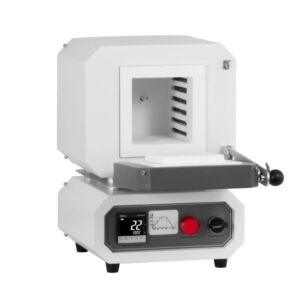
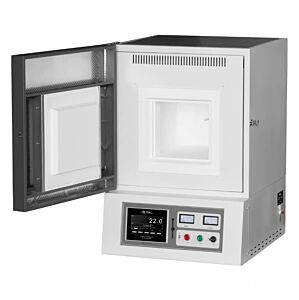
Muffle furnaces are used for high-temperature heat treatments, incineration, calcination, material testing, residue control, sample preparation, industrial analysis and laboratory tests. They are important instruments when a material must be exposed to high temperatures in a controlled and stable way. They can be used in chemical, ceramic, metallurgical, environmental, food and industrial laboratories. The choice of furnace must consider maximum temperature, internal volume, thermal uniformity, chamber material, temperature control, safety, ventilation and sample type.
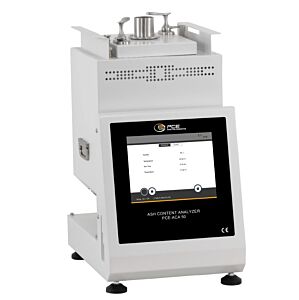
Instruments for testing plastic materials or technical samples allow material behaviour to be verified under specific test conditions. They can be used to evaluate melting, deformation, thermal stability, material quality or compliance with internal procedures. In industrial laboratories, these instruments help check raw materials, semi-finished products and finished goods, reducing the risk of production defects.
The correct instrument must be selected according to sample type, parameter to be checked, measuring range, accuracy, resolution, working temperature, chemical compatibility, robustness, ease of cleaning, calibration, data memory, result export and operating context. Accuracy indicates how close the measured value is to the real or reference value, while resolution indicates the smallest variation readable by the instrument. In laboratories both parameters must be evaluated, because a very detailed reading does not automatically guarantee a correct result if the sample is not properly prepared, the probe is not calibrated or the temperature is not stable.
To obtain reliable measurements, consistent operating procedures must be followed. pH meters must be calibrated with suitable buffer solutions, rinsed after use and stored correctly. Probes must be clean and compatible with the sample. Heating mantles must be used with suitable containers and settings consistent with the volume and substance being treated. Furnaces must be loaded correctly, avoiding overloads and respecting times, temperatures and cooling conditions. Optical or electronic instruments must be kept clean, protected from impacts and used within the range specified by the manufacturer.
In industrial quality control, laboratory instruments verify parameters that directly influence the final product. pH can affect chemical reactions, preservation, corrosion and material compatibility. Conductivity can indicate contamination or incorrect concentration. Temperature can modify viscosity, density, reactivity and stability. Incorrect heat treatment can alter structure, mass, residues or material behaviour. For this reason, these instruments are essential for companies that need to control processes, materials and products in a technical and repeatable way.
In preventive and corrective maintenance, laboratory instruments can be used to check technical fluids, water, process solutions, washing liquids, coolants, reagents and substances used in plants. Out-of-range pH may indicate contamination, degradation or preparation error. Abnormal conductivity may reveal salts, impurities or process changes. A variation in the thermal behaviour of a sample may indicate material degradation or non-compliant treatment. These checks allow action to be taken before the problem becomes plant downtime, production rejects or component damage.
The connection with heights, transmission backlash, form errors and geometry is indirect but technically relevant. Laboratory instruments do not normally measure mechanical dimensions or transmission play, but they control substances and conditions that can influence process accuracy. A coolant with incorrect pH or concentration can increase tool wear, workpiece temperature, machining instability, form errors and poorer finish. Altered oil or technical fluid can modify lubrication, friction and sliding of guideways, bearings and transmission systems. Poorly heated or prepared resin, adhesive or paint can create thickness differences, height variations, deformation, poor adhesion or uneven surfaces.
In a machine tool or automatic plant, the quality of the substances used can affect system geometry and stability. A non-compliant fluid can modify friction, temperatures, functional clearances and transmission behaviour. A material incorrectly heat-treated may deform, lose stability or fail to meet final dimensions. An uncontrolled chemical solution may attack surfaces, coatings or components. Even if a laboratory instrument does not directly measure geometry, it helps control parameters that can have real effects on dimensions, heights, flatness, fits and final quality.
An important practical recommendation is always to define the purpose of the test before choosing the instrument. If a solution must be checked, it is necessary to understand whether the main parameter is pH, conductivity, temperature or concentration. If a sample must be heated, volume, maximum temperature, uniformity and safety must be evaluated. If materials must be treated at high temperature, the furnace must be selected according to the thermal cycle and material type. If repeated checks are required, instruments with memory, software or data export capability are useful. The correct choice always depends on the test method and the technical result required.
Tadaah presents the Laboratory Instruments category as a technical reference for companies, technicians, engineers, maintenance specialists, laboratories and quality departments that need to prepare, measure and control samples and substances professionally. Correct selection of pH meters, multiparameter instruments, heating mantles, sterilizers, muffle furnaces and testing equipment improves measurement quality, reduces errors, standardises procedures, prevents non-conformities, optimises processes and supports technical decisions based on real and repeatable data.