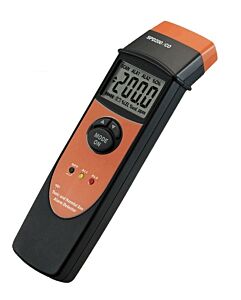
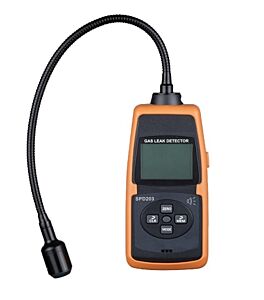
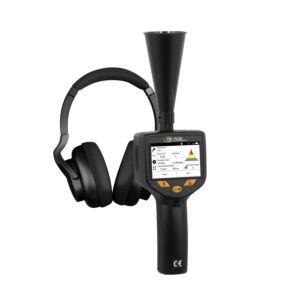
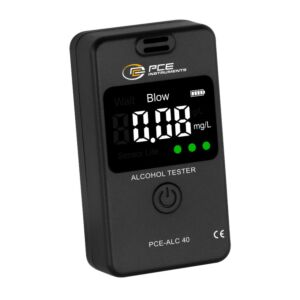
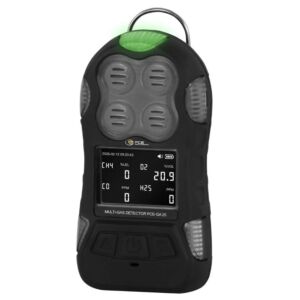
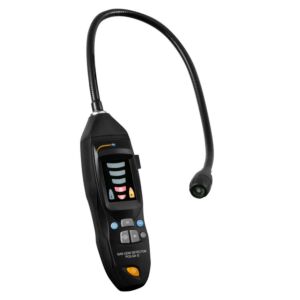
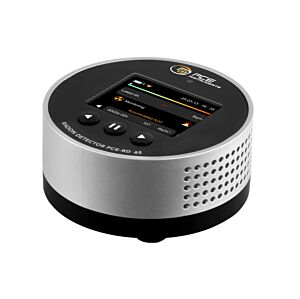
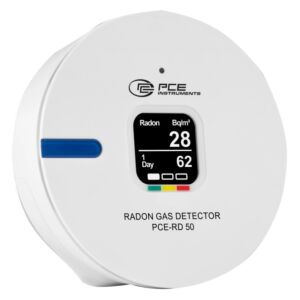
The Gas Detectors category includes professional instruments for searching, monitoring and signalling the presence of gas in industrial, civil, technical and laboratory environments. These instruments are used to detect leaks of combustible gases, refrigerant gases, carbon monoxide, hydrogen, compressed air, process gases, vapours or potentially hazardous mixtures. Their function is to convert a condition that is often invisible and not immediately perceived into a measurable, readable and manageable signal, allowing fast and targeted intervention.
Gas detectors are essential for safety, maintenance and technical control because many leaks are not visible and may develop in hard-to-reach points such as fittings, valves, pipes, joints, compressors, exchangers, tanks, HVAC systems, technical rooms, pneumatic lines and process circuits. Some gases are flammable, others toxic, while others may reduce air quality or indicate system malfunction. Carbon monoxide, for example, is especially dangerous because it can accumulate in enclosed spaces without being clearly perceived. Flammable gases require rapid control to prevent fire or explosion risk.
Carbon monoxide detectors are used to check environments where combustion may occur, such as boilers, generators, engines, furnaces, technical rooms, heating systems or areas where incomplete combustion can generate hazardous gas. CO measurement is important because this gas can accumulate in enclosed areas and create a direct health risk. Portable instruments allow technicians to perform quick checks during maintenance, plant inspection, safety verification and troubleshooting.
Combustible gas detectors are used to identify leaks on pipes, fittings, valves, gas systems, burners, supply lines, tanks and systems containing flammable gases. Models with flexible probes are particularly useful for reaching hidden or difficult inspection points. Acoustic, optical or vibrating alarms help the operator quickly identify the critical area, even in noisy environments or poor visibility. In preventive maintenance, these instruments detect microleaks before they become dangerous or cause plant shutdown.
Hydrogen detectors are specific instruments for detecting H2 leaks, a very light gas with characteristics that require particular attention. They can be used in industrial applications, laboratories, energy storage systems, batteries, technical plants, chemical processes and areas where hydrogen is produced, stored or used. The ability to detect low concentrations allows action to be taken before critical conditions develop. Semi-rigid or flexible probes make it easier to inspect technical points, joints and connections.
Ultrasonic detectors for compressed air are used to locate leaks in pneumatic systems, pipes, fittings, valves, cylinders, compressors and air distribution networks. A compressed air leak does not always create an immediate safety risk, but it can cause energy waste, reduced efficiency, increased compressor work, higher costs, process instability and lower available pressure. The ultrasonic detector captures the high-frequency noise generated by the leak and allows it to be located even when it is not easily audible to the operator.
Gas detectors with digital display, adjustable alarms, Wi-Fi, data logging and programmable thresholds are particularly useful when the inspection must be documented or when an environment needs continuous monitoring. Visual and audible alarms warn the operator when a threshold is exceeded. Models with app connection, memory or graphic display allow trends over time to be analysed, peaks to be checked, operating conditions to be recorded and a useful history for safety and maintenance to be created.
The correct gas detector must be selected according to the gas to be detected, measuring range, sensitivity, accuracy, resolution, sensor type, response time, probe shape, alarms, portability, autonomy, robustness, operating environment and need for measurement documentation. Accuracy indicates how close the measured or indicated value is to the real condition, while resolution indicates the smallest variation or concentration distinguishable by the instrument. In gas detectors, sensitivity and response time are also fundamental parameters because they allow a leak or abnormal concentration to be identified quickly.
Reliable results require methodical use. The technician must know the gas to be searched for, the most probable leak point, airflow direction, room ventilation, position of valves and fittings and the physical behaviour of the gas. Some gases tend to rise, others accumulate low, while others are quickly dispersed by ventilation. The detector must be moved slowly near suspected points, avoiding movements that are too fast and may not allow the sensor to stabilise. When checking pipes and fittings, it is advisable to follow the line path and inspect every joint.
In preventive maintenance, gas detectors make it possible to identify microleaks, degraded seals, loose fittings, defective valves, damaged pipes, inefficient pneumatic circuits and conditions that could develop into failures. Periodic checking reduces plant shutdown risk, improves safety, optimises consumption and allows interventions to be planned before the problem becomes critical. In compressed air systems, for example, a small constant leak can generate significant energy costs over time.
In corrective maintenance, these instruments are essential for diagnosing existing problems. If a system loses pressure, if a gas line smells, if an alarm is triggered, if a compressor works too much, if an environment shows abnormal values or if a machine does not maintain expected performance, the detector helps identify the cause more quickly. Leak measurement or signalling allows action to be taken on fittings, valves, seals, pipes or specific components, avoiding unnecessary replacements or random searches.
In quality control and laboratories, gas detectors can be used to verify tightness, test assemblies, check components, validate systems, monitor environments and document operating conditions. A product or system containing gas must guarantee tightness over time; even a small leak can compromise safety, functionality and compliance. Instruments with data logging and alarms help make the control more traceable and repeatable.
The connection with heights, transmission backlash, form errors and geometry is indirect but technically relevant. A gas leak can be caused by a geometric error, misalignment, deformation, non-flat sealing surface, fitting mounted under mechanical stress, vibration or excessive play. In a system or machine, if a pipe is subject to movement, vibration or traction, connections may lose tightness. If a flange does not seat correctly or a seal works on non-parallel surfaces, leakage may occur even with components that appear intact.
In systems with compressors, pumps, fans, motors or moving elements, play, vibration and misalignment can stress fittings, pipes and joints, generating microcracks or loosening. A compressed air leak can also reduce pressure available to actuators, modifying cycle times, pushing force, repeatability and machine behaviour. In this sense, the gas detector does not directly measure geometry or backlash, but it helps identify functional effects caused by mechanical errors, incorrect assembly or progressive system degradation.
Measurement height and sensor position are also important. In an enclosed environment, the detection point can change the result because gas may stratify, accumulate near the ceiling, stagnate low, concentrate near a source or be moved by air currents. For this reason, the measuring position must be chosen according to gas type, environment and inspection objective. In continuous monitoring, sensor installation must be studied carefully to avoid non-representative readings.
An important practical recommendation is not to consider a gas detector as a generic instrument suitable for any gas without verification. Each instrument has specific sensors and fields of use. Before purchasing or using it, gas compatibility, measuring range, sensitivity, alarms, response time, environmental conditions, calibration and sensor maintenance must be checked. A combustible gas detector is not automatically suitable for carbon monoxide, hydrogen or refrigerant gases, and an ultrasonic compressed air leak detector works on a different principle from a chemical sensor.
Tadaah presents the Gas Detectors category as a technical reference for companies, technicians, engineers, maintenance specialists, laboratories and safety managers who need to detect gases, leaks and abnormal conditions professionally, quickly and in a documentable way. Choosing the correct instrument helps improve safety, preventive maintenance, fault diagnosis, energy efficiency, quality control and system reliability. To select the most suitable product, it is advisable to evaluate gas type, operating environment, required sensitivity, probe type, alarms, portability, data logging and need for continuous monitoring.