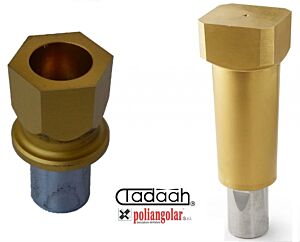
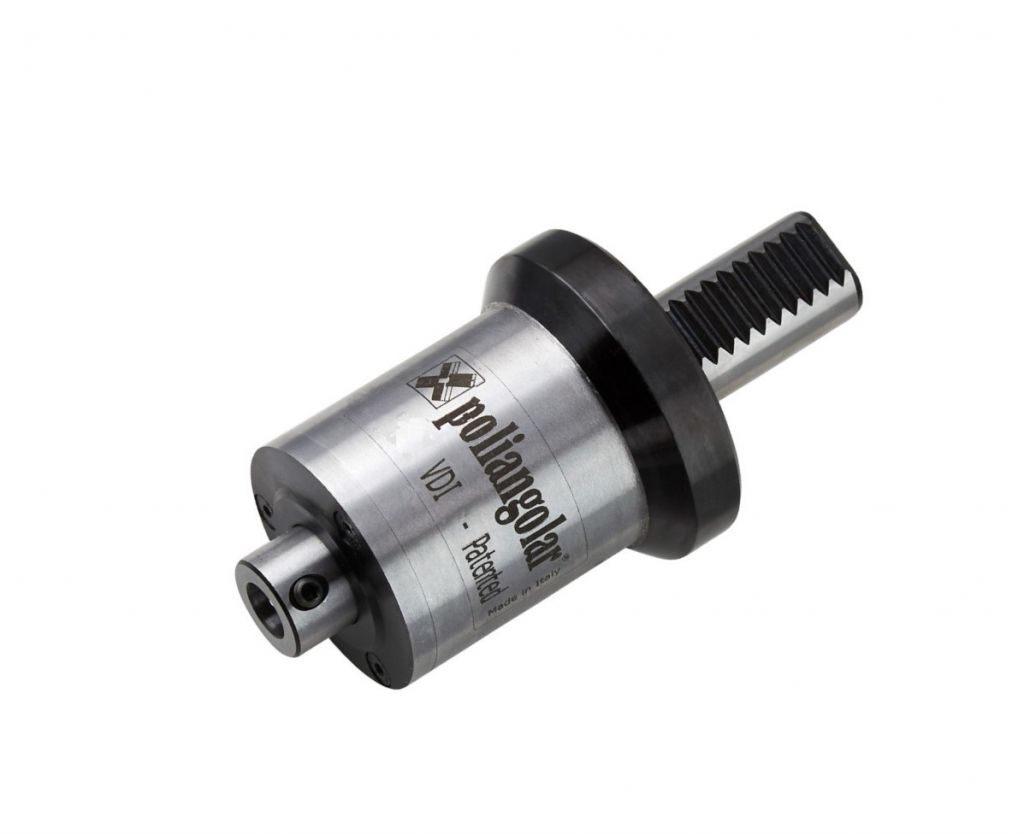
2100N-VDI Poliangolar Internal broacher Model 2100N with VDI30 or VDI40 shank and length of choice
In stock
Only %1 left
SKU
PA-2100N-VDI
As low as
€1,124.07
Regular Price
€1,263.00
(Incl. Tax: €1,371.37)
(Incl. Tax: €1,371.37)
Hexagonal internal broaching capacity: max 24mm
Square internal broaching capacity: max 16mm
Torx internal broaching capacity: max T100mm
Broaching depth: max 25mm
Type of broaches used: NG16
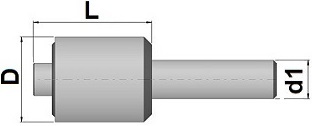
The dimensions correspond to the selected product, but the drawing and images shown are indicative and not to scale.

Broaching
Broaching is a machining process that enables the production of moulded internal profiles in an existing bore. This method is particularly valued for its high precision, repeatability and speed of execution, making it ideal for applications in areas such as precision engineering, automotive, aerospace and manufacturing. Used on CNC lathes and automated machining centres, broaching ensures consistent results, reduces production time and improves the final quality of machined components.
Broaches
When the broach is used in conjunction with its broaching tool, the machining process becomes extremely efficient. The broach is a tool equipped with a progressive tooth sequence that removes material in a controlled manner and brings the inner bore into the desired shape. This system ensures a precise fit between the machined component and other mechanical elements such as shafts or polygonal couplings and improves the stability and functionality of the assembled parts.
When the broach is used together with the broaching tool, the machining process becomes extremely efficient. The broach is a tool equipped with a progressive tooth sequence that removes material in a controlled manner and brings the inner bore into the desired shape. This system ensures a precise fit between the machined component and other mechanical elements, such as shafts or polygonal couplings, and improves the stability and functionality of the assembled parts.
Internal profiles
These internal broaches are used in advanced industries such as precision engineering, aerospace, automotive and manufacturing, where precise internal fits are essential for the proper functioning of gears, shafts and other critical components. Used on CNC lathes and automated machining centres, they ensure consistent performance and dimensional repeatability even during high-speed machining. Engineers and professionals choose these tools for their reliability, wear resistance and versatility, making them an indispensable element in optimising production processes and improving the efficiency of internal broaching operations. The most common internal profiles used in broaching are square profile broaches, which are used to hold bars or handles and levers with square shanks. Internal hexagon broaches are typically used to create an internal hexagon on threaded screws, valves and inserts, where the internal shape allows actuation using Allen keys. A final common internal profile is the Torx profile, which is widely used in the automotive, medical and aerospace sectors, and is increasingly found in many other industrial applications. The Torx shape is created on threaded components such as screws, valves and inserts, where the internal geometry allows tightening and releasing with specific Torx wrenches, facilitating assembly and maintenance in various mechanical assemblies.
These internal broaches are used in advanced industries such as precision engineering, aerospace, automotive and manufacturing, where precise internal fits are essential for the proper functioning of gears, shafts and other critical components. Used on CNC lathes and automated machining centres, they ensure consistent performance and dimensional repeatability even during high-speed machining. Engineers and professionals choose these tools for their reliability, wear resistance and versatility, making them an indispensable element in optimising production processes and improving the efficiency of internal broaching operations. The most common internal profiles used in broaching are square profile broaches, which are used to hold bars or handles and levers with square shanks. Internal hexagon broaches are typically used to create an internal hexagon on threaded screws, valves and inserts, where the internal shape allows actuation using Allen keys. A final common internal profile is the Torx profile, which is widely used in the automotive, medical and aerospace sectors, and is increasingly found in many other industrial applications. The Torx shape is created on threaded components such as screws, valves and inserts, where the internal geometry allows tightening and releasing with specific Torx wrenches, facilitating assembly and maintenance in various mechanical assemblies.
The broach
The broach is a rotating device that is usually mounted on automatic CNC lathes. It consists of a fixed part that is clamped in the fixture or machine shaft and a rotating part on which the broach is mounted. Broaches are divided into ‘rotating’ broaches, in which the shank and broach rotate synchronously with the main spindle, and ‘self-driven’ broaches, in which the attachment or shank is fixed and the broach only starts to rotate synchronously with the workpiece when it comes into contact with the workpiece and exerts pressure on it.
Self-propelled broaches can also be used on milling machines or machining centres, both on conventional and CNC machines. Using an alignment lever clamped onto the broach shaft, the entire outer body can be rotated while the broach is stationary. With this method, it is possible to create the necessary oscillation to facilitate penetration even when the broach is stationary.
Method for operating the broaching machine.
The broaching machine is a device that produces profiles by removing excess material by applying a compressive force.
In this sense, the pressure forces involved are very important, so the broaching machine is designed in such a way that the profile produced by the broach is generated by the lowest possible pressure force.
The broach oscillates around its axis on contact with the workpiece so that the pressure removal is always generated by this oscillation with a variable contact point until the profile is completed over the entire circumference. By repeating this process n times, we produce the profile in the desired length.
Considering the thrust and frontal force loads, there are very precise settings and rules to maintain the proper functioning of the machine tool and prevent it from breaking irreparably. When selling broaching tools, Tadaah provides technical support to the customer in the selection of the most suitable broaching tool based on the profile and material of the workpiece, in the correct preparation of the workpiece before the broaching operation, in the calculation of the most suitable cutting parameters based on the rigidity of the machine and the workpiece, and in the correct assembly of the broaching tool.
Tadaah offers its customers the necessary technical support if the following problems occur during the broaching process after purchasing the broaching machine.
1) The machine tool goes into alarm or stops during broaching
2) The broach slips or leaves the witnesses
3) The broaching process is screwed up
4) The broaching process contracts in depth
5) The workpiece falls back into the machine during broaching
6) The broach splinters and is short-lived
7) Broaching is performed off-centre
8) The chip remains on the underside of the workpiece
- Brand:
- POLIANGOLAR
- Typology:
- Brocciatore interni