Food analyzers are professional instruments designed to measure, monitor and document key parameters in food processes, analytical laboratories, production departments and quality control activities. This category includes pH meters, frying oil testers, portable or waterproof pH testers, precision digital thermometers, data loggers with PT100 probes, temperature monitoring instruments and systems with data memory and software interface. They are used whenever it is necessary to verify food quality, control process stability, monitor a critical temperature, assess the condition of an oil or measure the chemical behavior of a liquid, semi-solid or food sample.
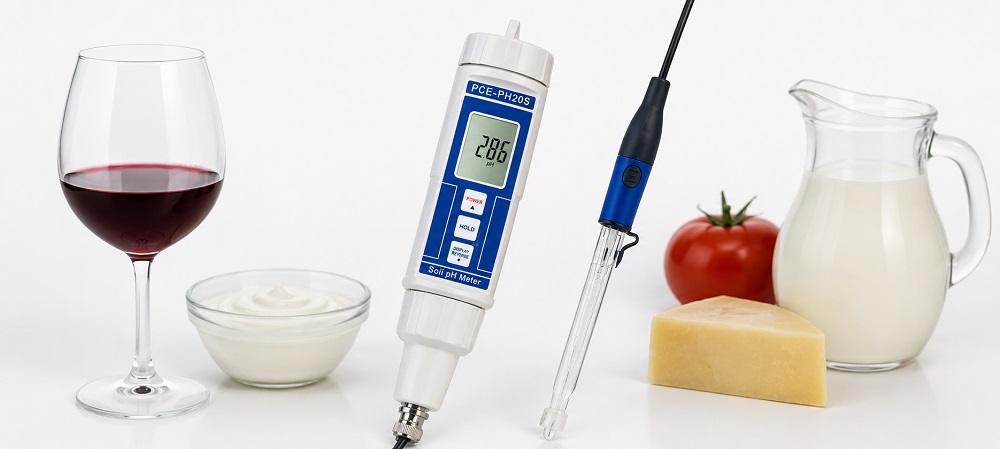
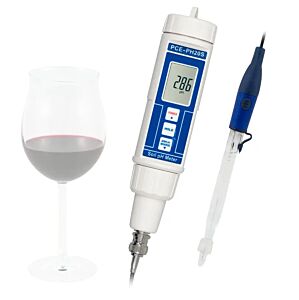
In the food sector, measurement is not just a numerical check, but an essential element for safety, repeatability and product conformity. pH, for example, is a critical parameter in many foods because it affects preservation, fermentation, microbiological stability, taste, production process and suitability of the final product. A food pH meter allows operators to check solutions, preserves, beverages, liquid preparations, creams, doughs, dairy products, fermented products and technical samples. Portable models are suitable for quick checks directly in production, while models with memory, data interface and software are ideal when measurements need to be stored, traced and compared over time.
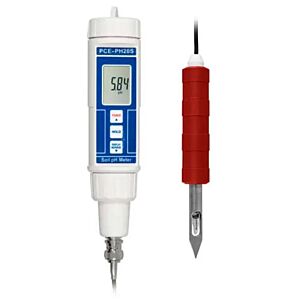
Waterproof pH testers for food applications are especially useful when the instrument is used in humid environments, production areas, professional kitchens, laboratories or departments where washing and cleaning are frequent. A high protection rating reduces the risk of damage caused by splashes, residues or accidental contact with liquids. The electrode is one of the most important parts of the instrument and must be selected according to the type of sample, product consistency and measurement method. For semi-solid foods, creams, meat, cheese, doughs or products that are not fully liquid, an electrode with a tip suitable for penetration or direct contact may be required. For food liquids and solutions, correct immersion, adequate stabilization time and regular calibration are essential.
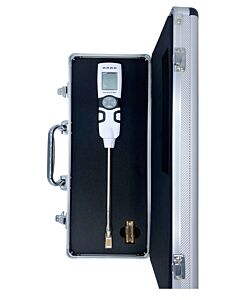
Frying oil testers are specific instruments used to evaluate oil condition during professional use. During frying, oil changes due to temperature, operating time, food residues, oxidation and degradation. An instrument that measures temperature and total polar materials makes it possible to quickly verify whether the oil is still suitable for use or needs replacement. This control is important for restaurants, canteens, food industries, control laboratories and production departments, because it helps maintain constant product quality, reduce the risk of non-compliant processing and optimize oil consumption without relying only on visual or subjective evaluations.
Data loggers and digital thermometers with PT100 probes are used when temperature must be measured with high accuracy and documented over time. Temperature is a critical parameter for preservation, cooking, cooling, transport, storage, pasteurization, fermentation and monitoring of production environments. A 4-wire PT100 probe, when available, provides a stable and accurate measurement because it reduces the influence of cable resistance and improves reading reliability. The data logger records the temperature trend, analyzes variations, identifies anomalies, checks compliance with operating thresholds and provides useful data for audits, internal controls, preventive maintenance and process validation.
Correct use of food analyzers requires attention to sample preparation, instrument calibration, probe cleaning and measurement stability. Before a pH measurement, it is advisable to check the condition of the electrode, use suitable buffer solutions, wait for value stabilization and clean the probe carefully after each use. With dense or semi-solid food samples, excessive pressure must be avoided to prevent damage to the electrode or alteration of the measurement point. With oil testers, the probe must be immersed at the correct depth, avoiding direct contact with the bottom of the container or with solid residues that could affect the reading. With thermometers and data loggers, probe positioning must match the critical point to be monitored, avoiding non-representative areas, cold surfaces, hot walls or areas affected by air currents.
Accuracy and resolution are fundamental elements in this category. Accuracy indicates how close the measurement is to the true value, while resolution indicates the smallest increment readable by the instrument. In professional food control, good resolution allows small variations to be observed, but measurement quality also depends on calibration, probe stability, temperature compensation and correct operating procedure. For example, a pH measurement may be affected by sample temperature, electrode condition, contamination between different samples or insufficient response time. For this reason, professional instruments must be selected not only according to display type or measuring range, but also according to probe quality, calibration simplicity and long-term repeatability.
The field of application for food analyzers is very broad. They are used in the food industry for the control of finished and semi-finished products, in laboratories for conformity analysis, in production departments for rapid checks, in professional catering for frying oil control, in food logistics for temperature monitoring, in plant maintenance to verify operating conditions and in research and development to compare formulations, raw materials and processes. They are also useful for incoming goods inspection, when it is necessary to quickly check the quality of a raw material or the temperature of an incoming product.
Adjustments and functions vary according to the type of instrument. In pH meters, important features include calibration, automatic or manual temperature compensation, electrode selection, data storage and measurement export. In oil testers, key aspects are reading stability, test speed and simultaneous indication of temperature and oil quality. In data loggers, recording frequency, memory capacity, probe accuracy, battery life, analysis software and real-time monitoring are decisive. In professional thermometers, response time, probe robustness, useful probe length, protection rating and display readability are important factors.
Although this category does not involve transmission backlash in the same way as machine tools, the technical concept can be translated into mechanical and electronic stability of the instrument. An incorrectly fixed electrode, a damaged probe cable, an unstable connector or a worn measuring tip can generate errors, oscillations or non-repeatable readings. Similarly, shape and geometry errors can affect the measurement when the probe is not correctly aligned, when the immersion depth is inadequate, when contact with the sample is not uniform or when the container does not allow stable temperature distribution. Reliable results require checking the physical condition of the instrument, probe geometry, measurement position and compatibility between accessory and sample.
Food analyzers are therefore essential instruments for companies and professionals that need to combine operational speed, measurement reliability and data traceability. They make it possible to transform sensory or subjective checks into measurable, comparable and documentable values. For Tadaah, offering a category dedicated to food analyzers means providing a technical reference for laboratories, technicians, engineers, maintenance specialists and quality managers, helping them select the most suitable instrument according to the parameter to be measured, food type, working environment, required accuracy level and need for data recording or processing.