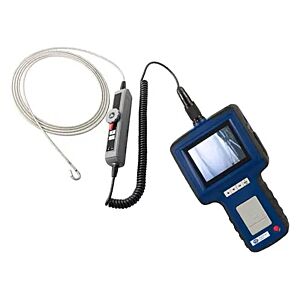
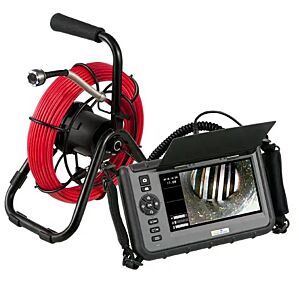
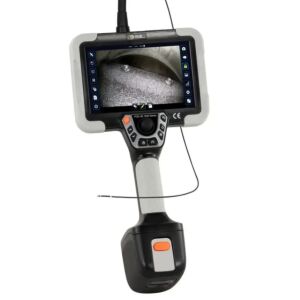
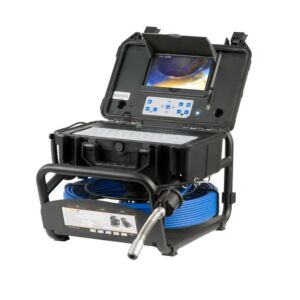
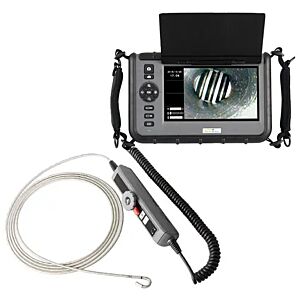
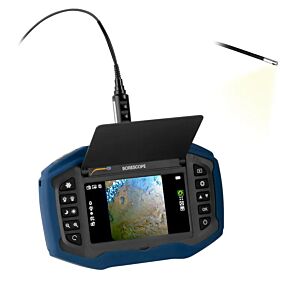
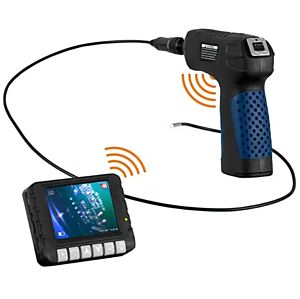
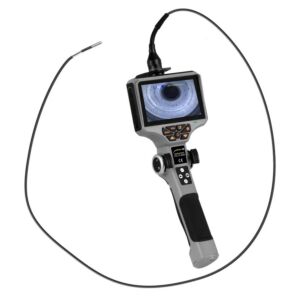
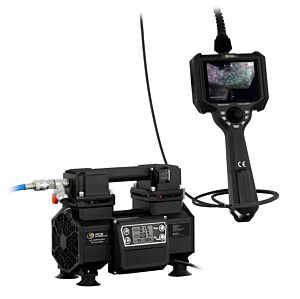
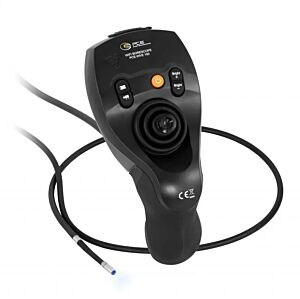
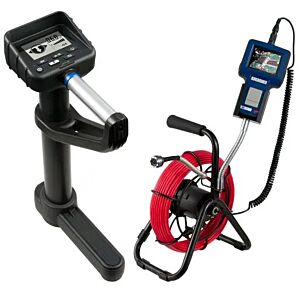
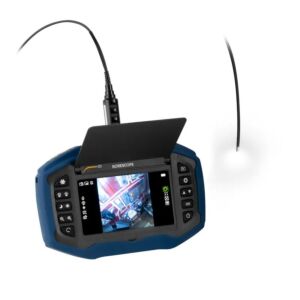
The Optics category includes professional instruments designed for visual inspection, magnification, image acquisition, technical analysis and inspection of components, surfaces, materials, samples, mechanical parts, electronic boards, internal cavities, welds, tools, moulds, coatings, finishes and areas that are difficult to observe directly. This category includes microscopes, endoscopes, borescopes, inspection cameras, digital optical systems, magnifying lenses, image acquisition devices and instruments for industrial and laboratory visual inspection.
Optical instruments are used whenever details must be observed that the human eye cannot evaluate with sufficient accuracy, or when the area to be checked is not easily accessible. A machined surface may show scratches, burrs, cracks, residues, finish defects or localised wear. An assembled component may have play, misalignment or friction marks. An internal cavity may require inspection with an endoscope or borescope without dismantling the entire system. An electronic board may require magnification to inspect solder joints, tracks, microcomponents or contamination. Optics therefore turns a generic visual check into a more precise, documentable technical inspection useful for diagnosis.
In industrial quality control, optical instruments are used to inspect machining operations, surface finishes, engravings, markings, edges, holes, threads, ground surfaces, plastic components, small parts, moulds, tools, welds and assembled parts. Magnification makes it possible to detect defects that may influence functionality, durability, appearance, safety or product compliance. In many production departments, optical inspection is performed before or after dimensional measurement because it helps verify that the component is clean, intact, properly machined and free from visible anomalies.
Microscopes and magnification systems are suitable for laboratories, quality control, electronics, precision mechanics, materials, metrology and analysis of small parts. They allow surfaces, edges, microdefects, grains, deposits, contamination, layers, engravings and small components to be observed. Digital models or systems connected to displays and software can also acquire images, archive inspections, compare samples and document defects. The choice of microscope should consider magnification, field of view, illumination, working distance, depth of field, support stability and image acquisition requirements.
Endoscopes and borescopes are optical instruments used to inspect internal or hard-to-reach areas such as pipes, engines, gearboxes, moulds, cavities, internal welds, plants, assembled components, machines and closed systems. They are particularly useful in preventive and corrective maintenance because they allow the inside of a component to be checked without invasive disassembly. This reduces downtime, intervention costs and the risk of damaging healthy parts during diagnosis. A borescope can reveal wear, corrosion, deposits, breakages, cracks, foreign bodies, leaks or abnormal conditions inside a system.
Inspection cameras and digital optical systems are useful when the inspection must be displayed on a screen, shared with several operators, archived or used for technical reports. In laboratories and production, the possibility of recording images or videos makes inspection more traceable and facilitates comparison between batches, samples or conditions before and after an intervention. In quality departments, photographic documentation of a defect helps communicate clearly with suppliers, customers, technicians and production managers.
Accuracy in optical instruments does not only concern image quality, but also stability, focusing, lighting, real magnification, optical resolution and the ability to distinguish close details. Resolution indicates the system’s ability to separate small details close to each other. A highly magnified but unclear image does not provide reliable inspection. For this reason, it is important to choose instruments with suitable optics, correct illumination, stable support and a field of observation consistent with the part being checked. In some cases, lower magnification with better sharpness, stability and depth of field is preferable.
Lighting is a fundamental technical element. A glossy, satin, dark, transparent or reflective surface may require different lighting conditions. Excessive light can generate reflections and hide defects, while insufficient light can reduce contrast and detail. Ring, side, adjustable or integrated illumination can improve visibility of scratches, edges, particles, porosity, cracks and surface differences. In professional inspections, consistent lighting conditions are recommended, especially when comparing several samples.
The Optics category is also very useful in preventive maintenance. Magnified visual inspection makes it possible to identify early wear, incorrect lubrication, contamination, oxidation, microfractures, deformation, residues, friction marks, damage to tools or contact surfaces. Detecting these signals before failure helps schedule interventions, avoid unexpected downtime and reduce the risk of greater damage. In corrective maintenance, optical instruments help determine the cause of an existing problem, such as breakage, localised wear, a foreign body, internal damage or an assembly defect.
The connection with heights, transmission backlash, form errors and geometry is direct when optical instruments are used to observe the behaviour and appearance of mechanical components. Excessive backlash may leave impact marks, friction marks, irregular wear or visible imprints. A geometry error may generate uneven contact, scratches, local deformation, wear on one side only or incorrect seating. A height difference or misalignment may be visually recognised through surface position, edge continuity, contact mark distribution or the presence of interference. Optical instruments do not always directly measure these values, but they allow the real effects they produce to be observed.
In machine tools, moulds, cutting tools, guideways, transmissions and precision couplings, optical inspection makes it possible to evaluate conditions that directly influence machining quality. A worn tool can generate burrs, poorer finishes or dimensional errors. A contaminated guideway can produce abnormal sliding marks. A damaged reference surface can cause seating errors. A defective thread may show deformation, tearing or residues. These details are often the first sign of a mechanical, geometric or process problem.
To obtain reliable results, inspection must be prepared correctly. The component must be clean, stable and observed with suitable lighting. Focus must be precise and the field of view must include the detail to be evaluated. When using digital instruments, it is useful to acquire images with the same magnification and lighting settings so results can be compared over time. For documented inspections, it is advisable to record the inspected point, magnification, instrument used, date, batch and any technical reference.
The correct optical instrument depends on the application. For small components, electronics and precision surfaces, a microscope may be most suitable. For internal cavities, pipes, engines or inaccessible areas, an endoscope or borescope is preferable. For quick workshop checks, a lens or portable digital system may be sufficient. For documentation, reports and shared analysis, an instrument with image acquisition is useful. For reflective surfaces or machined parts, lighting quality and contrast adjustment must be considered.
Tadaah presents the Optics category as a technical reference for companies, technicians, engineers, maintenance specialists, laboratories and quality departments that need to observe, magnify, inspect and document technical details professionally. Correct selection of microscopes, endoscopes, borescopes, inspection cameras, lenses and optical systems helps improve quality control, preventive maintenance, fault diagnosis, surface inspection, material analysis, component checking and technical documentation. To select the most suitable product, it is advisable to evaluate magnification, resolution, field of view, illumination, depth of field, accessibility of the inspection point, image acquisition capability and real operating conditions.