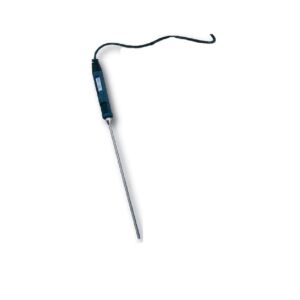
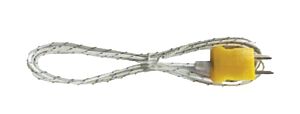
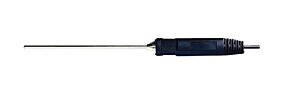
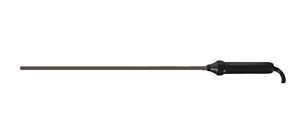
Probes and thermocouples are professional components used to detect temperature and transfer the measured value to a reading, recording or control instrument. They are essential accessories for digital thermometers, data loggers, multi-channel recorders, laboratory instruments and technical inspection systems because they allow the measurement to be adapted to the real point to be monitored. Temperature can be measured in air, on surfaces, inside liquids, in food products, in semi-solid materials, on mechanical parts, in industrial systems, in production environments and in heating, cooling, storage and maintenance processes.
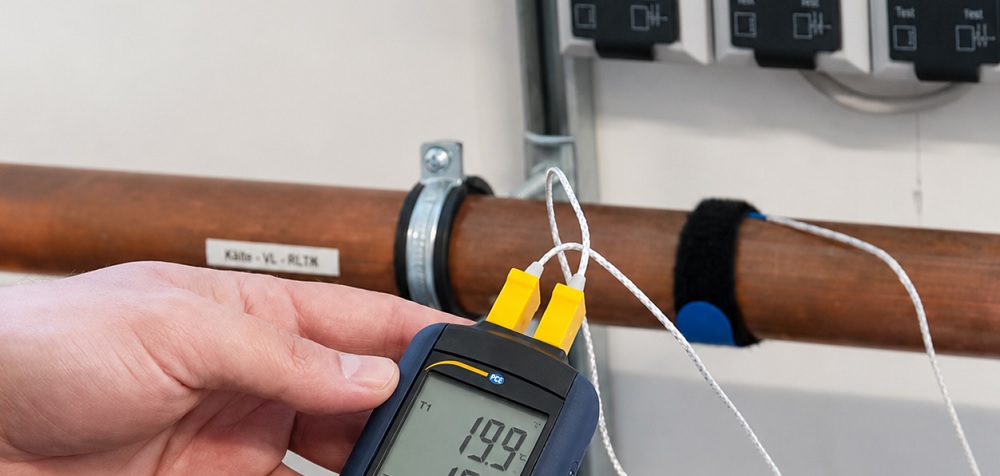
Thermocouples are sensors based on the junction of two different metals that generate a voltage proportional to the temperature difference. Among the most widely used in technical and industrial environments are type K thermocouples, valued for their versatility, broad measuring range and compatibility with many portable and bench instruments. A type K probe can be manufactured in several forms: penetration probe, air probe, liquid probe, surface probe, roller probe, rigid tip, flexible cable, insulated handle or miniature connector. Each geometry is designed for a specific application and should not be selected only according to the nominal temperature range.
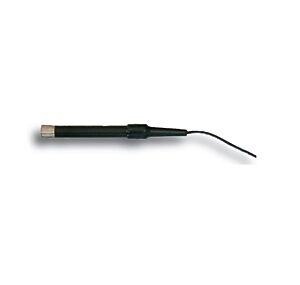
Air probes are designed to measure ambient temperature, airflows, ducts, ventilated areas, climatic chambers, HVAC systems, test benches and working environments. In these cases, the sensor must be correctly exposed to the flow and not influenced by hot walls, cold surfaces, radiation or accidental contact with materials other than air. Reliable ambient measurement requires correct positioning, sufficient distance from heat sources and adequate stabilization time. If the probe is used in an airflow, orientation and flow speed can influence response time and reading stability.
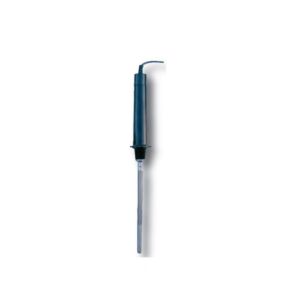
Liquid probes are used to measure temperatures in water, solutions, technical baths, oils, detergents, food fluids, chemical processes and laboratory samples. They must ensure proper immersion of the tip, resistance of the material in contact with the fluid and response times consistent with the application. Immersion depth is critical: a probe inserted too little may read a temperature influenced by the external environment, while a correctly inserted probe better measures the real volume of the liquid. In stratified or unmixed liquids, temperature may differ between surface, bottom and central area, so professional measurements should always define the control point.
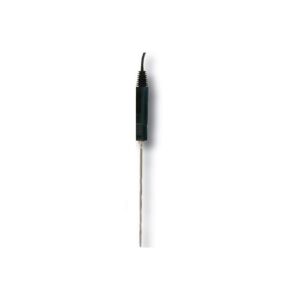
Penetration probes are designed to enter the material and measure internal temperature. They are widely used in the food sector, professional catering, laboratories, quality control, storage and processes where the internal temperature of the product is more important than the surface temperature. They can be used on foods, soft materials, semi-solid samples, doughs, creams, packaged products or compatible technical materials. The tip must be inserted carefully, avoiding bending, excessive pressure or contact with hard parts that could damage the probe. In food controls, the probe must be cleaned and sanitized before and after use to avoid contamination between different samples.
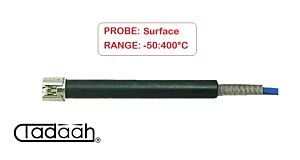
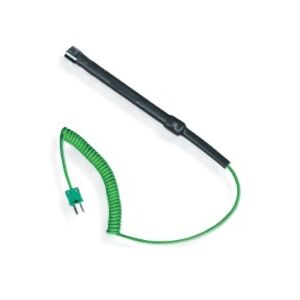
Surface probes are designed to check the temperature of plates, rollers, metal components, pipes, molds, heated surfaces, mechanical parts, processed materials and technical surfaces. The main difficulty in surface measurements is obtaining stable and repeatable thermal contact. If the surface is curved, rough, dirty, oxidized, moving or not fully accessible, the reading may vary. Roller probes are particularly useful when the surface is moving, such as on rollers, belts or flowing materials, because they maintain contact while reducing friction and instability. In these applications, the probe must be applied with correct pressure and kept aligned with the surface.
Measurement accuracy and resolution depend on the probe, the connected instrument and the operating procedure. Accuracy indicates how close the reading is to the real temperature, while resolution indicates the smallest increment displayed by the instrument. A good quality probe must be connected to a compatible thermometer or data logger correctly configured for the thermocouple type used. If the instrument is set for a different sensor type, the measurement may be wrong. Cold junction compensation, connector quality, cable condition and connection stability also influence the final value.
Response time is a very important technical parameter. A thin probe responds faster but may be more delicate; a robust probe better withstands impacts, penetration and industrial environments but may require more time to stabilize. In dynamic processes where temperature changes quickly, a probe with an adequate response is necessary. In static checks, reading stability may be more important. To compare different measurements, the same procedure, measuring point and stabilization times should always be used.
The application field of probes and thermocouples is very broad. In the food industry, they are used to control cooking, blast chilling, storage, transport, refrigeration, pasteurization, cold chain and product compliance. In laboratories, they are used for sample testing, thermostatic baths, climatic chambers, measuring instruments and experimental processes. In industrial maintenance, they are used to check motors, bearings, electrical panels, pipes, heating and cooling systems, compressors, pumps, heat exchangers and components subject to overheating. In HVAC, they verify air, ducts, ventilation, air conditioning and temperature differences between system points.
Adjustments mainly concern selection of the sensor type on the instrument, measurement unit, possible offset, compensation, recording frequency when the probe is connected to a data logger and channel selection in multi-channel systems. In professional checks, each probe and measuring point must be clearly identified, especially when several channels are used at the same time. A connection error or a probe swapped between two points can lead to incorrect process interpretation even when displayed values appear technically plausible.
The topic of height and positioning is decisive in ambient and process measurements. In an environment, a measurement taken near the floor may differ from one taken at working height or near the ceiling. In a cold room, oven, warehouse or climatic chamber, temperature can vary according to height, distance from walls, vent position and load distribution. In liquids, temperature may differ between surface, central zone and bottom. In solids or semi-solids, surface temperature may differ from internal temperature. For this reason, the probe must be positioned consistently with the control objective.
The concept of transmission backlash in this category can be interpreted as stability of the connection system and absence of mechanical or electrical instability. A loose connector, damaged cable, bent sheath, compromised internal junction or incorrectly fixed probe can cause unstable readings, signal interruptions or errors that are difficult to detect. In measurements on moving machines or dynamic surfaces, an unstable probe may lose contact, vibrate or generate non-repeatable values. For this reason, the mechanical condition of the probe must be checked and accessories suitable for the application must be used.
Shape and geometry errors directly affect measurement quality. A curved surface, non-perfectly cylindrical roller, irregular wall, narrow hole, food with non-uniform structure or non-homogeneous sample may create differences between the measured temperature and the representative real temperature. In penetration probes, if the tip does not reach the thermal center of the product, the measurement may be partial. In surface probes, if contact occurs only at a small or inclined point, the value may be influenced by surrounding air. In air probes, if the sensor is close to a hot or cold surface, it may read a temperature that is not representative of the environment.
To obtain reliable results, the probe should be selected according to the application, compatibility with the instrument verified, temperature range checked, tip cleaned, impacts and bending avoided, and reading stabilization awaited. When the measurement has documentary value, it is useful to record probe type, measuring point, insertion depth, ambient temperature, stabilization time and instrument used. In repeated controls, the same procedure should always be maintained, so that real process variations can be distinguished from differences caused by the measuring method.
Probes and thermocouples are therefore essential professional instruments for companies, technicians, engineers, maintenance operators and laboratories that need to measure temperature accurately, repeatably and in a way suited to the operating context. The availability of type K probes for air, liquids, surfaces, rollers, penetration and ambient measurements makes it possible to select the correct accessory according to the point to be checked. For Tadaah, a category dedicated to probes and thermocouples provides a complete technical reference to support professionals and companies in choosing the most suitable sensor, improving measurement quality, maintenance, process control, traceability and reliability of thermal data.